
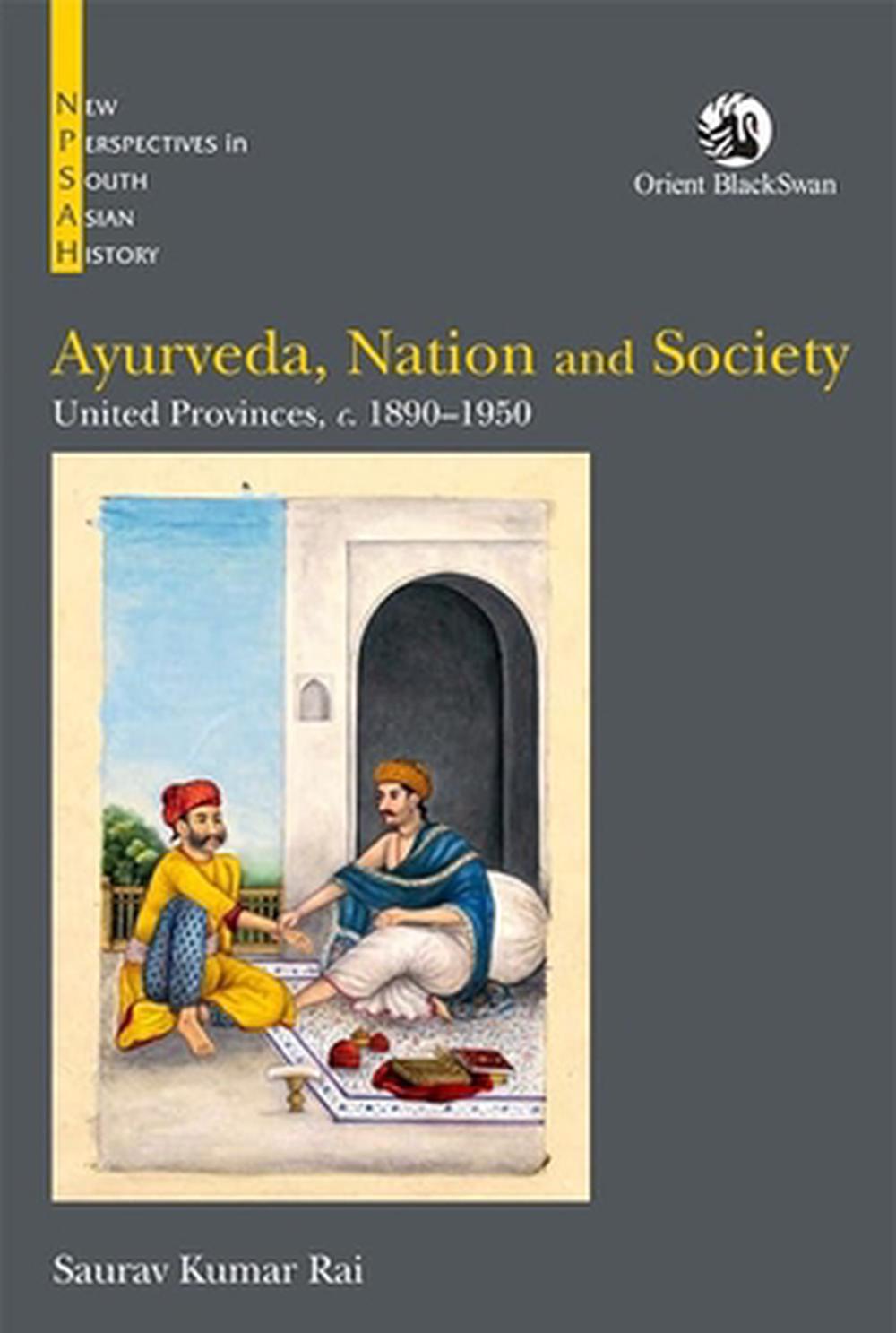
Ayurveda, Nation and Society
by Saurav Kumar Rai
The volume critiques the casteist, communal, class- and gender-biased social culture inherent in Ayurvedic discourse of the period under discussion, and notes how the constant blaming of the 'Other' for spreading diseases detrimental to the 'Hindu' male.
Paperback
Brand New
Publisher Description
Ayurveda enjoys a growing global appeal, and is often touted as 'true' and 'time-tested' by contemporary political actors, governments, social groups, practitioners and NGOs in India. With 'indigenous' healing systems enjoying increasing state support today, an examination of the socio-political aspects of medicine, in particular Ayurveda, and its role in nation-building is critically important. Ayurveda, Nation and Society, the latest in Orient BlackSwan's 'New Perspectives in South Asian History' series, captures the late nineteenth and early twentieth century growth of 'medical nationalism' through the Ayurvedic revivalist movement in the United Provinces, and observes the ensuing change and continuity in the attitude towards 'indigenous' medicine in independent India.
Details
