Déposition Lamentation Christ mort Peinture huile toile antique tableau 600
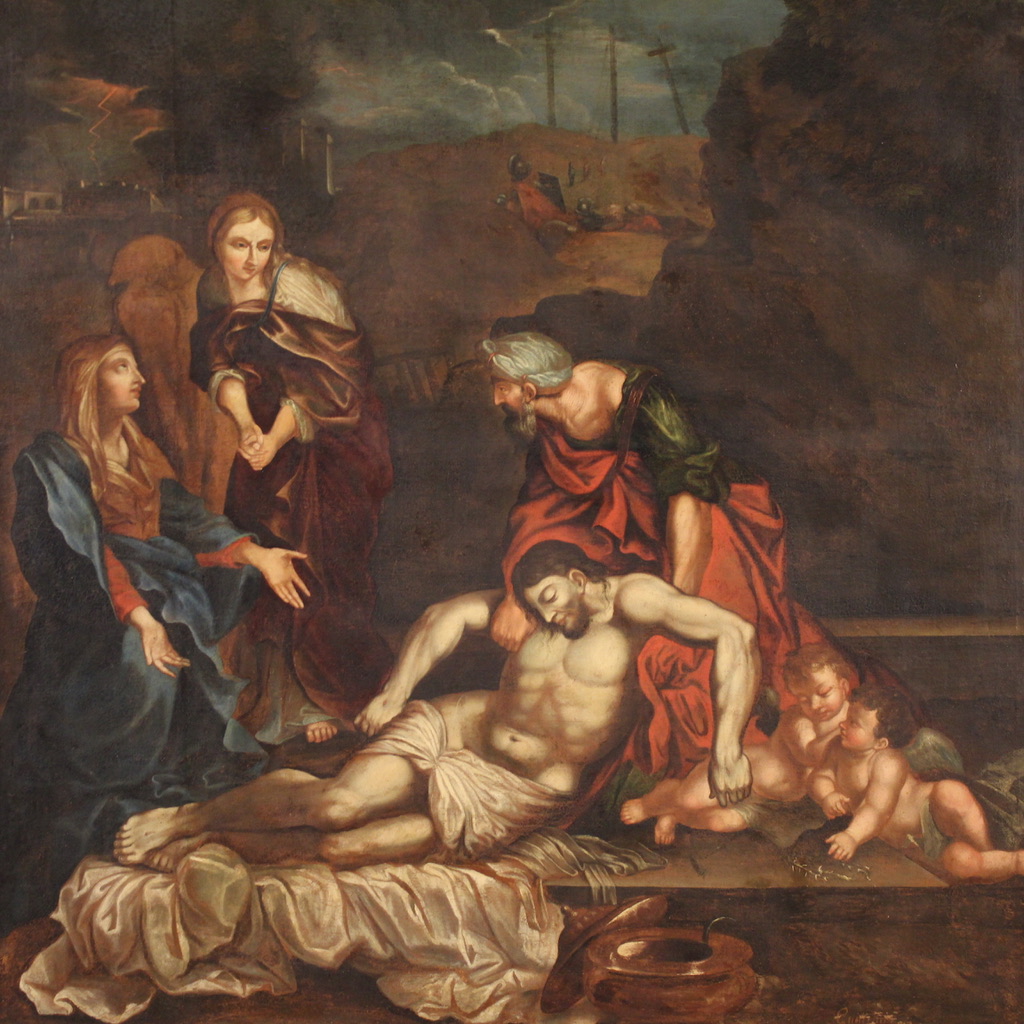
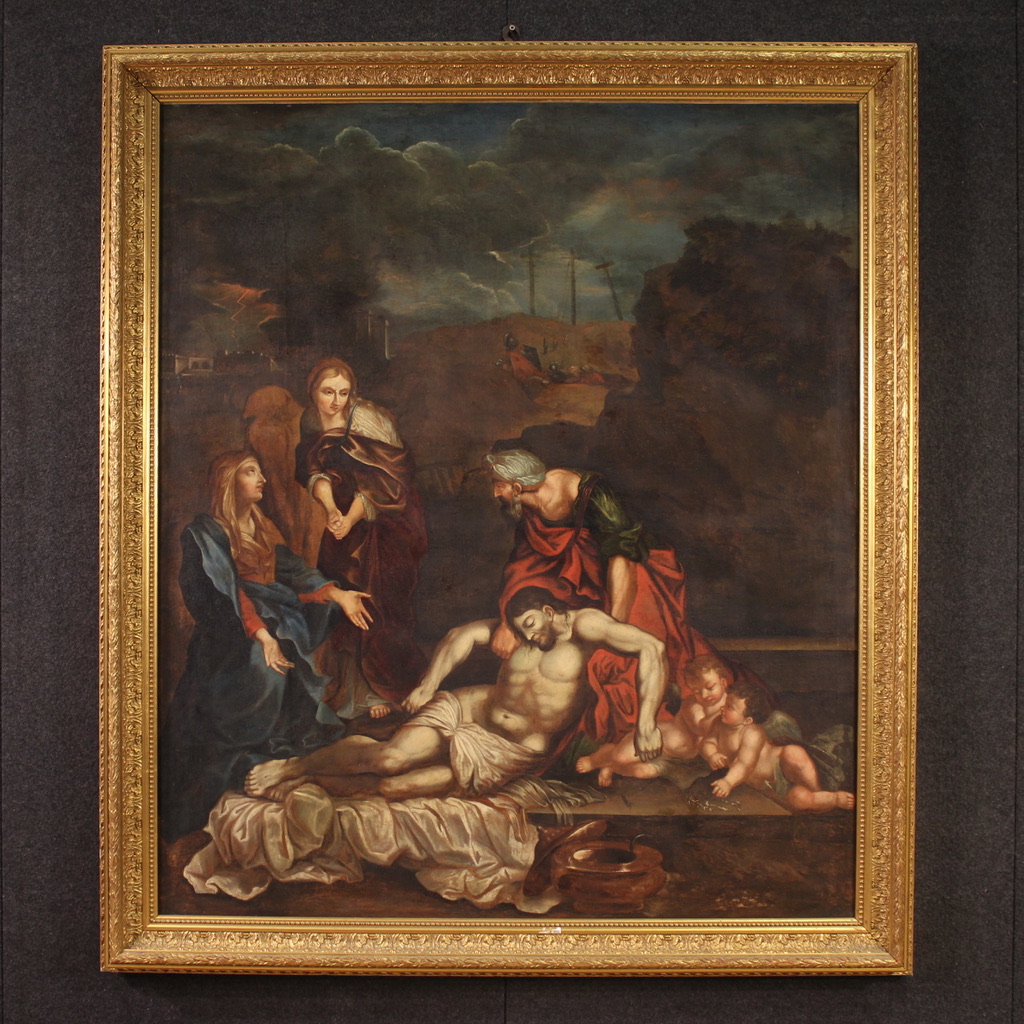
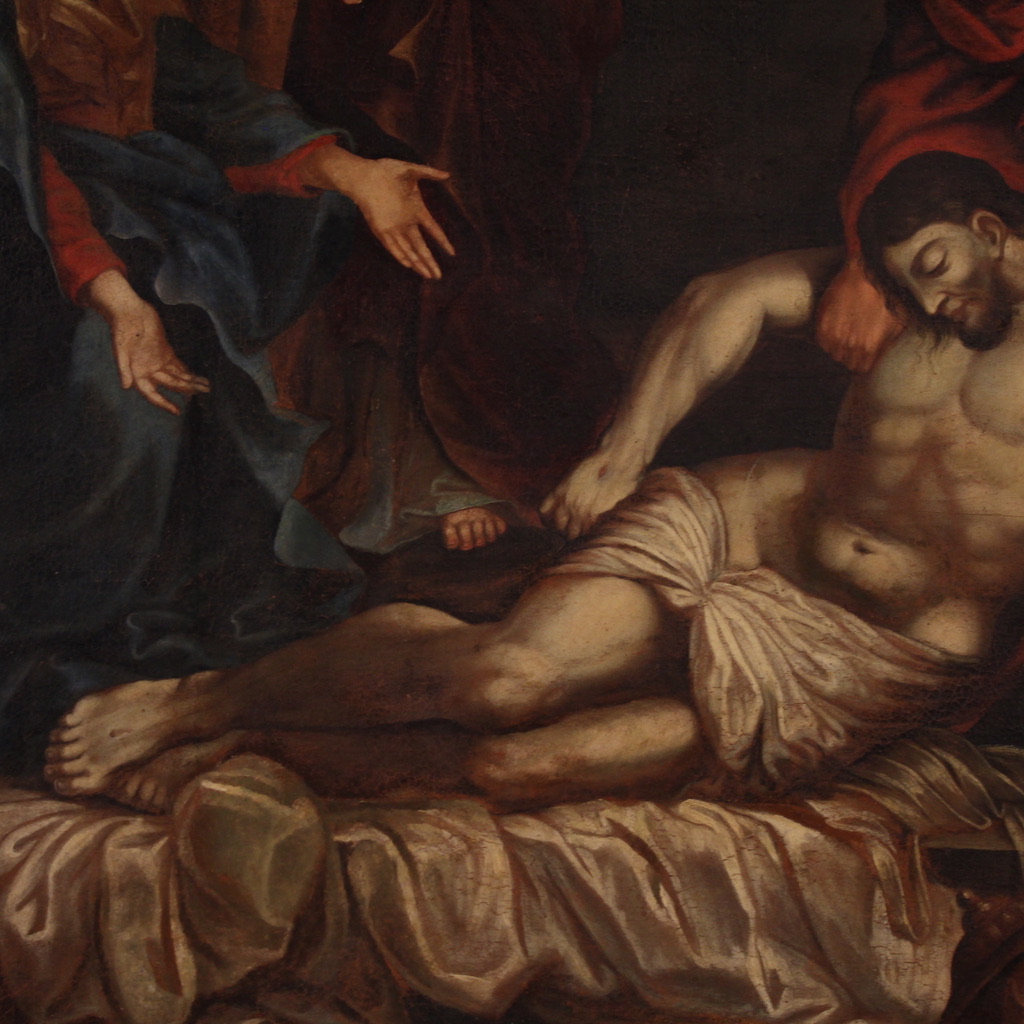
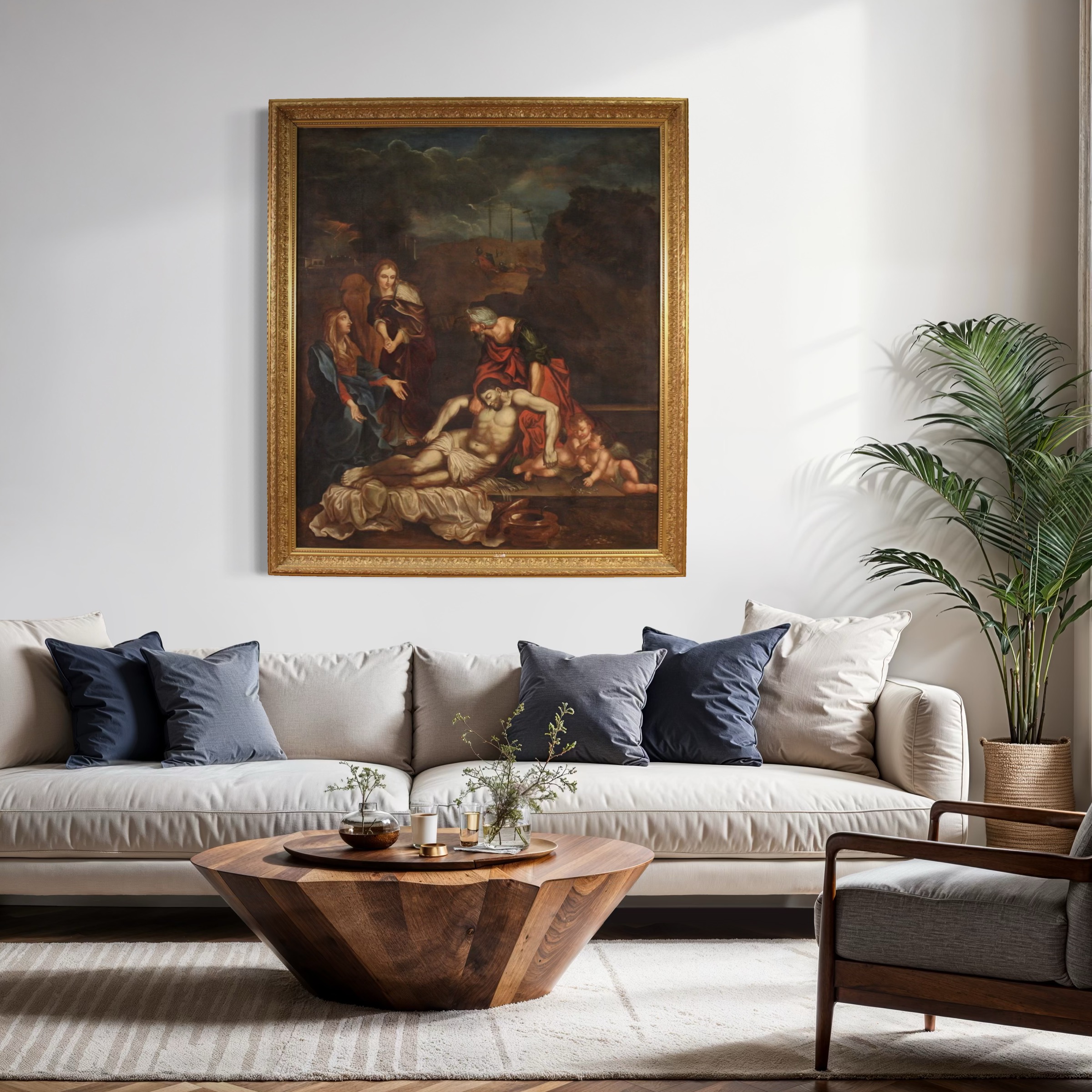
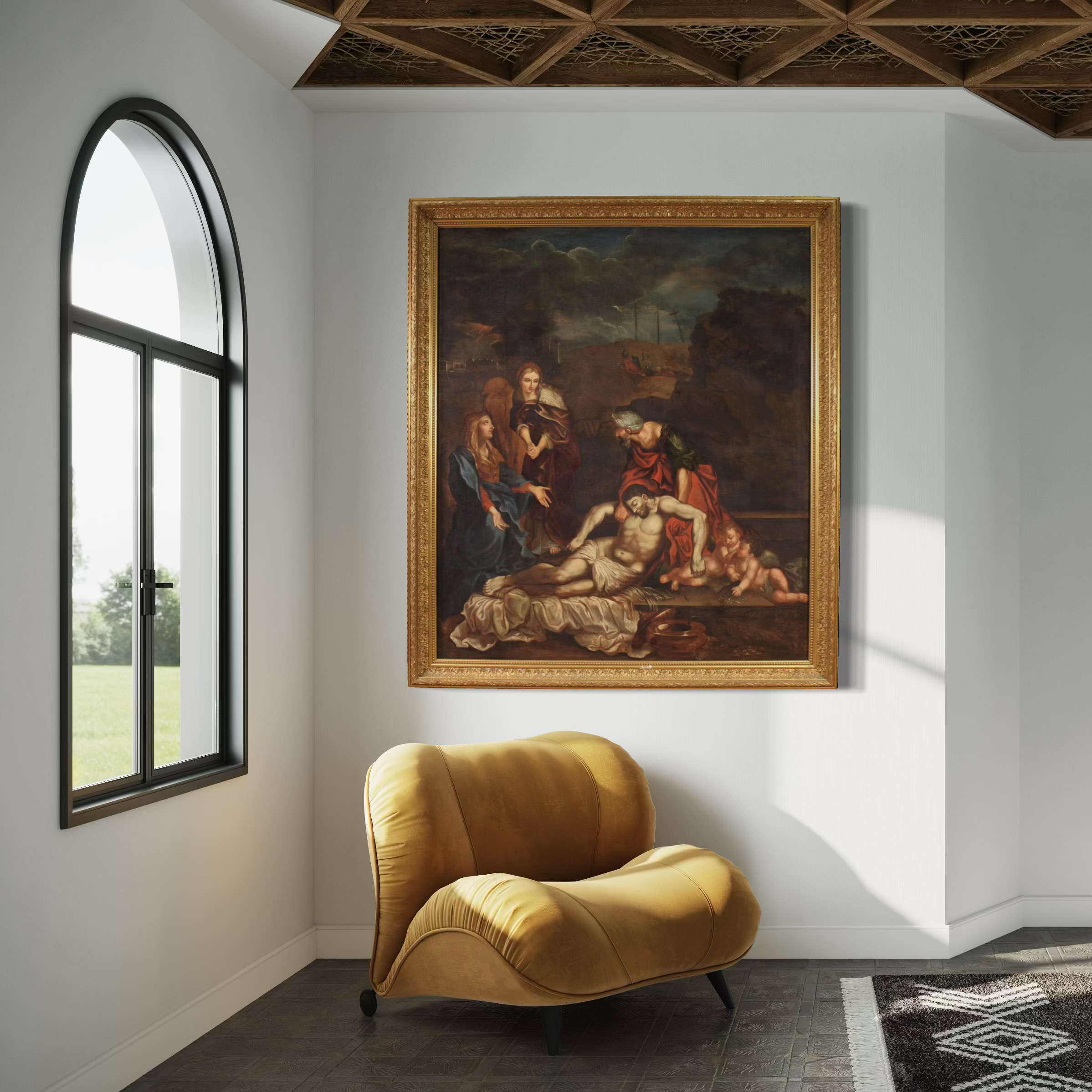
Un chef-d'œuvre de la peinture religieuse du 17ème siècle. Cette peinture huile sur toile représente un sujet poignant, très populaire à l'époque baroque : la Lamentation sur le Christ mort. Cette œuvre intense et d'une grande force émotionnelle se caractérise par une palette de tons terreux bruns et rouges. Le Christ gisant est entouré de figures sculptées par la lumière, baignées dans une atmosphère dramatique accentuée par le ciel orageux au-dessus du Golgotha.
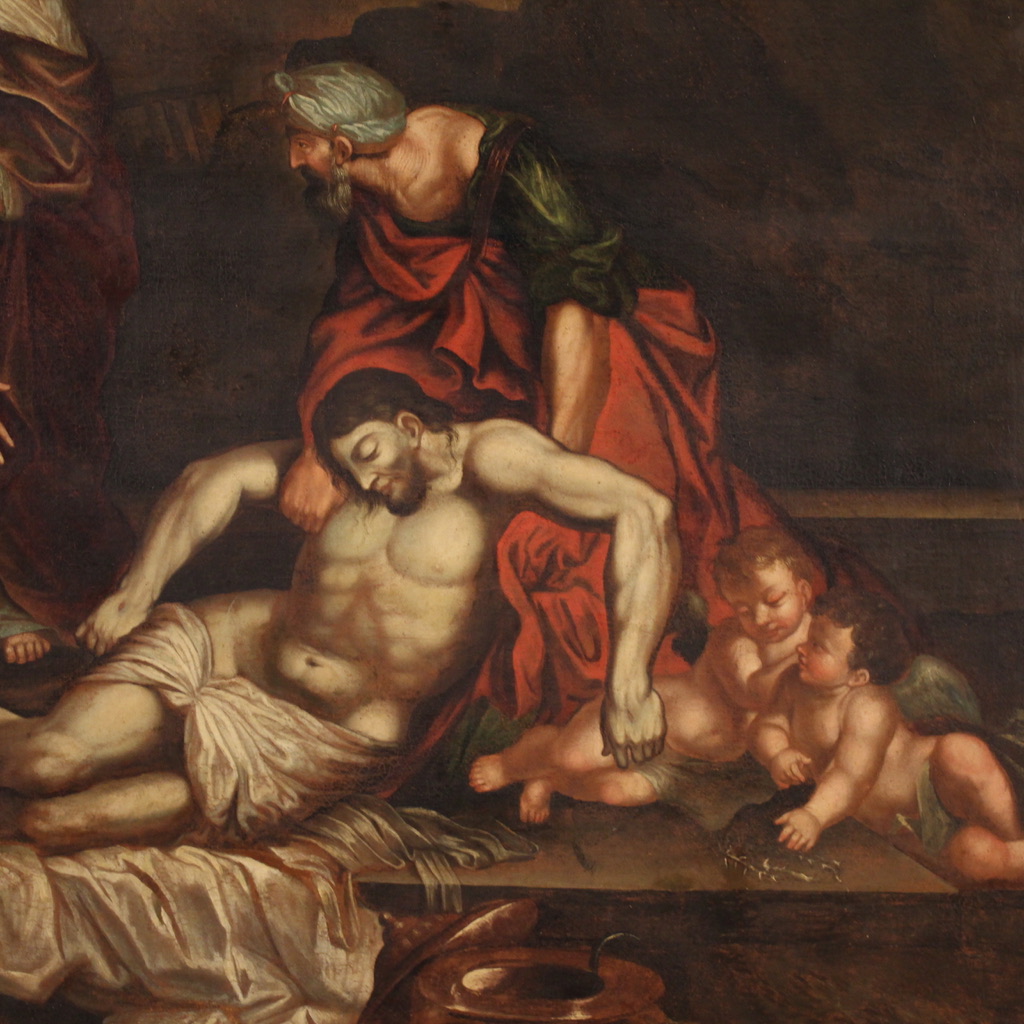
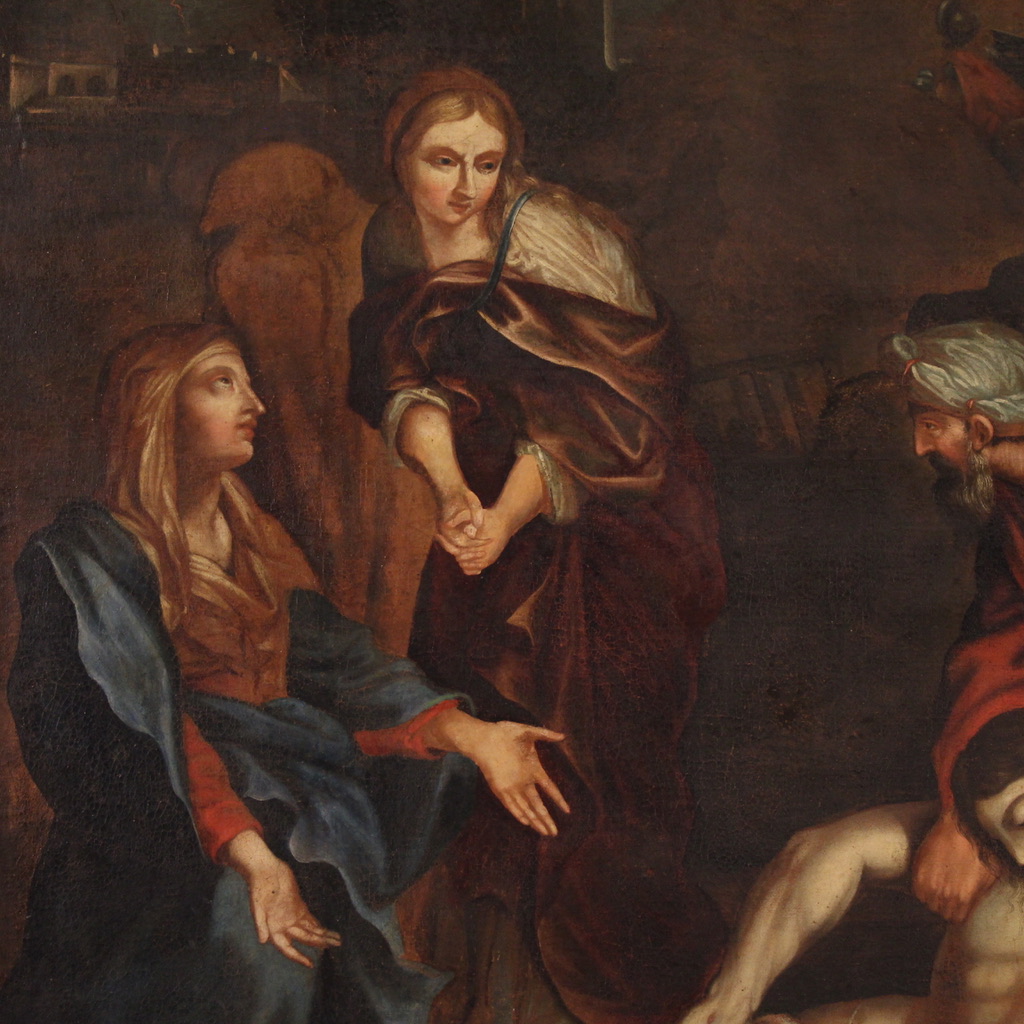
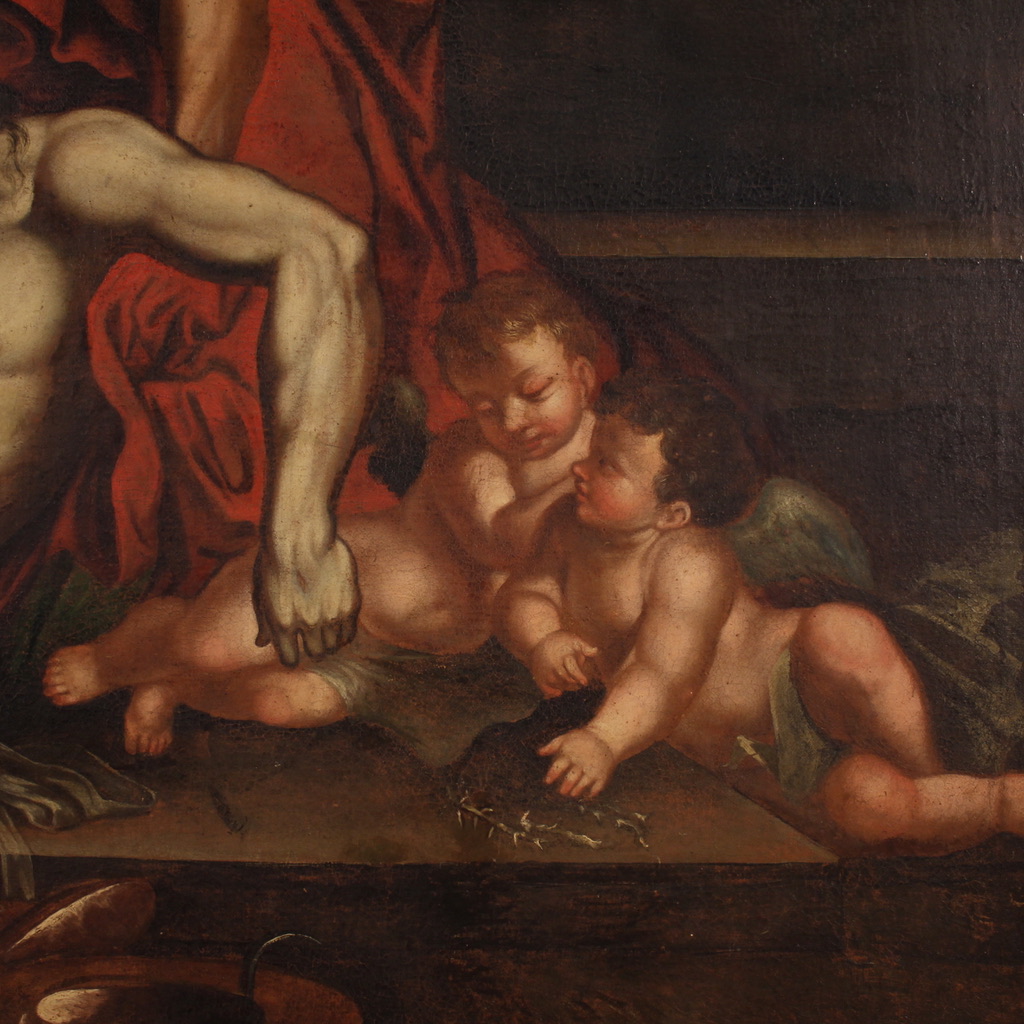
On aperçoit la Vierge à gauche, près de Marie-Madeleine, tandis que Joseph d'Arimathie soutient le corps de Jésus. En contrebas, deux chérubins en deuil se tiennent près du sarcophage et de la couronne d'épines. Derrière le groupe, un vaste paysage se déploie. Sur la crête se dessine le Golgotha avec ses trois croix désormais vides, tandis qu'à gauche apparaît le Temple de Jérusalem, soudainement frappé par la foudre.
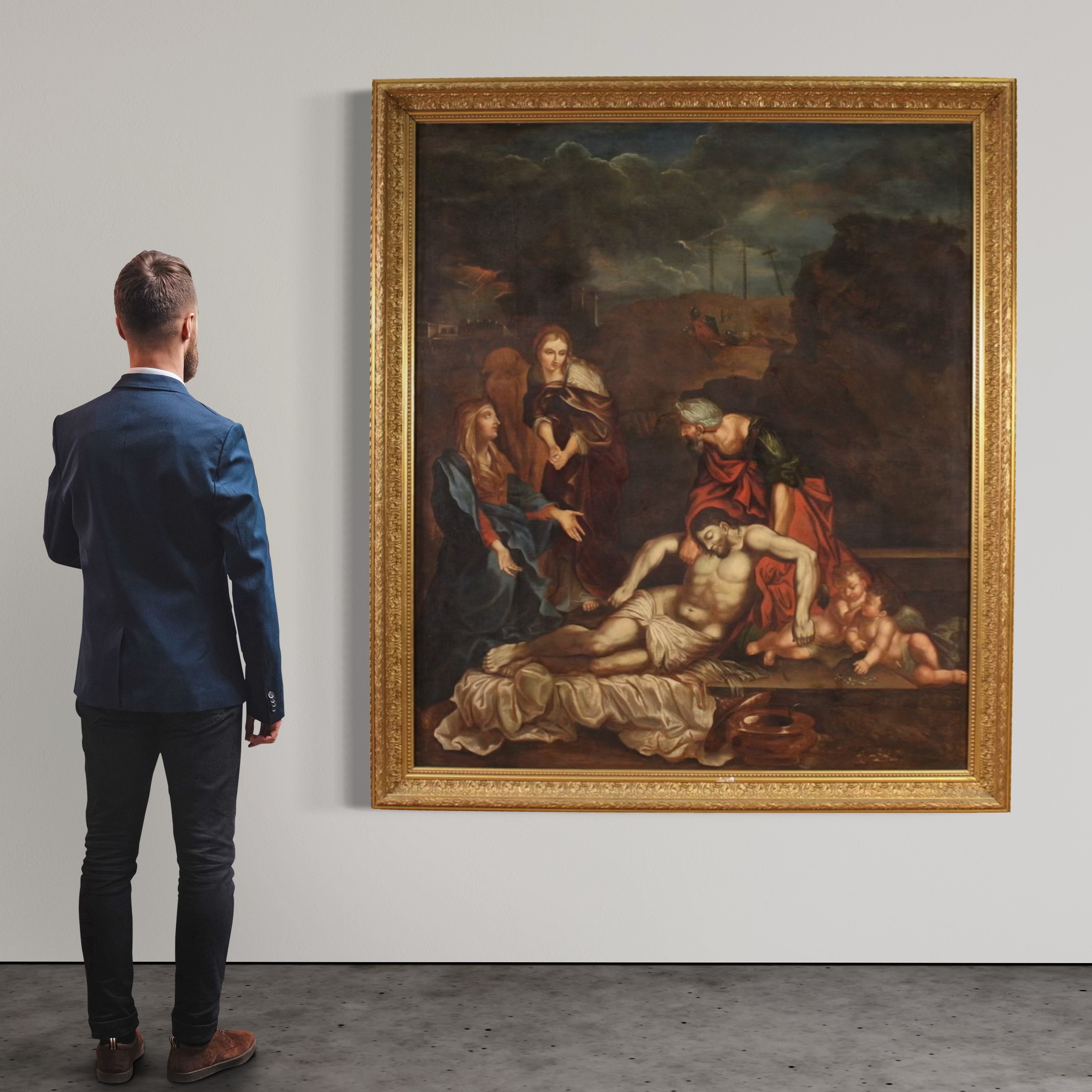
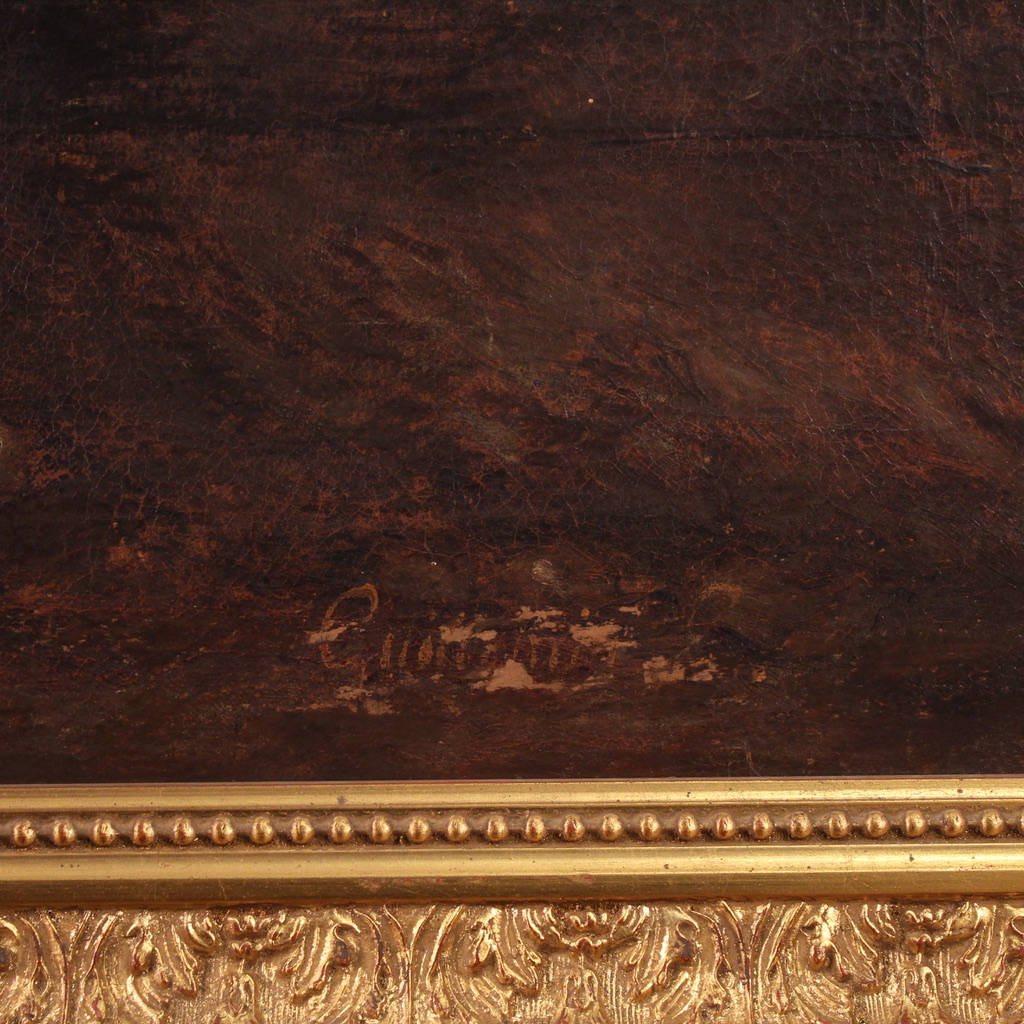
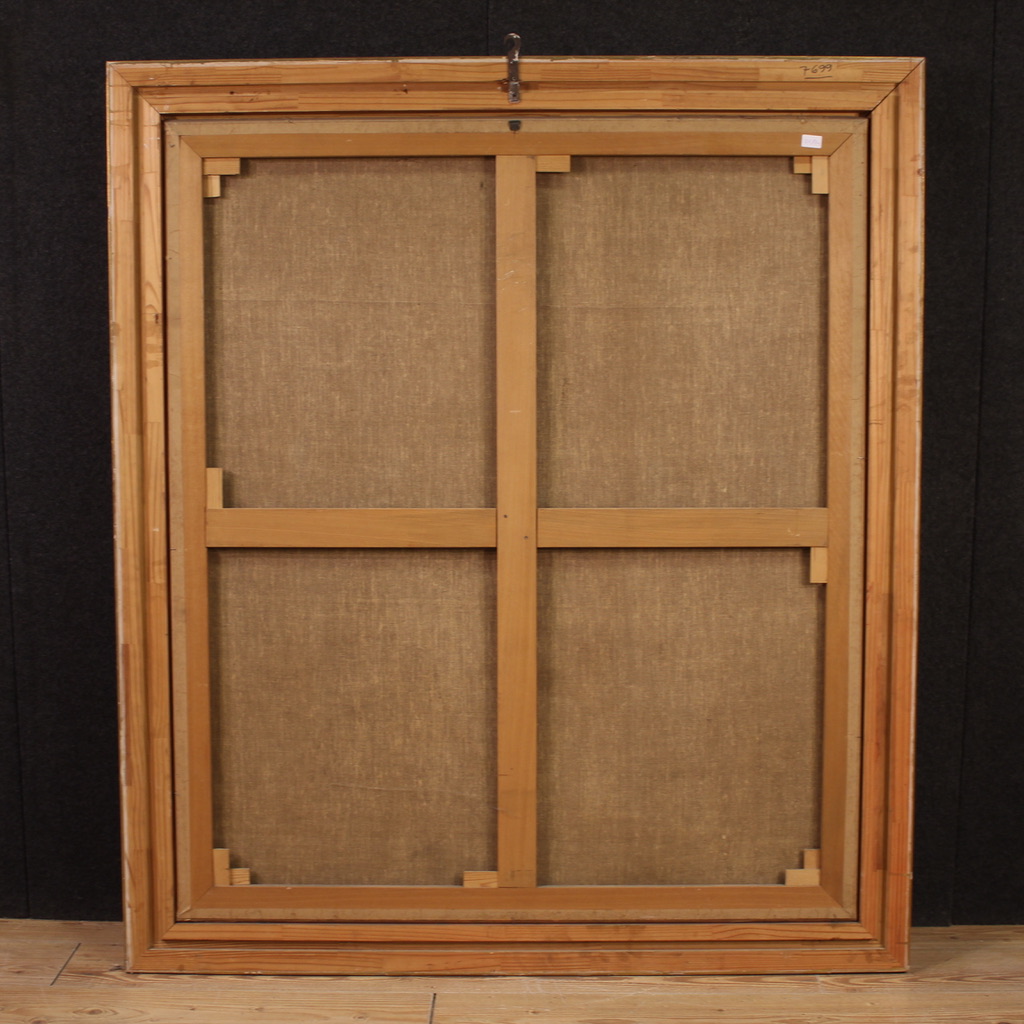
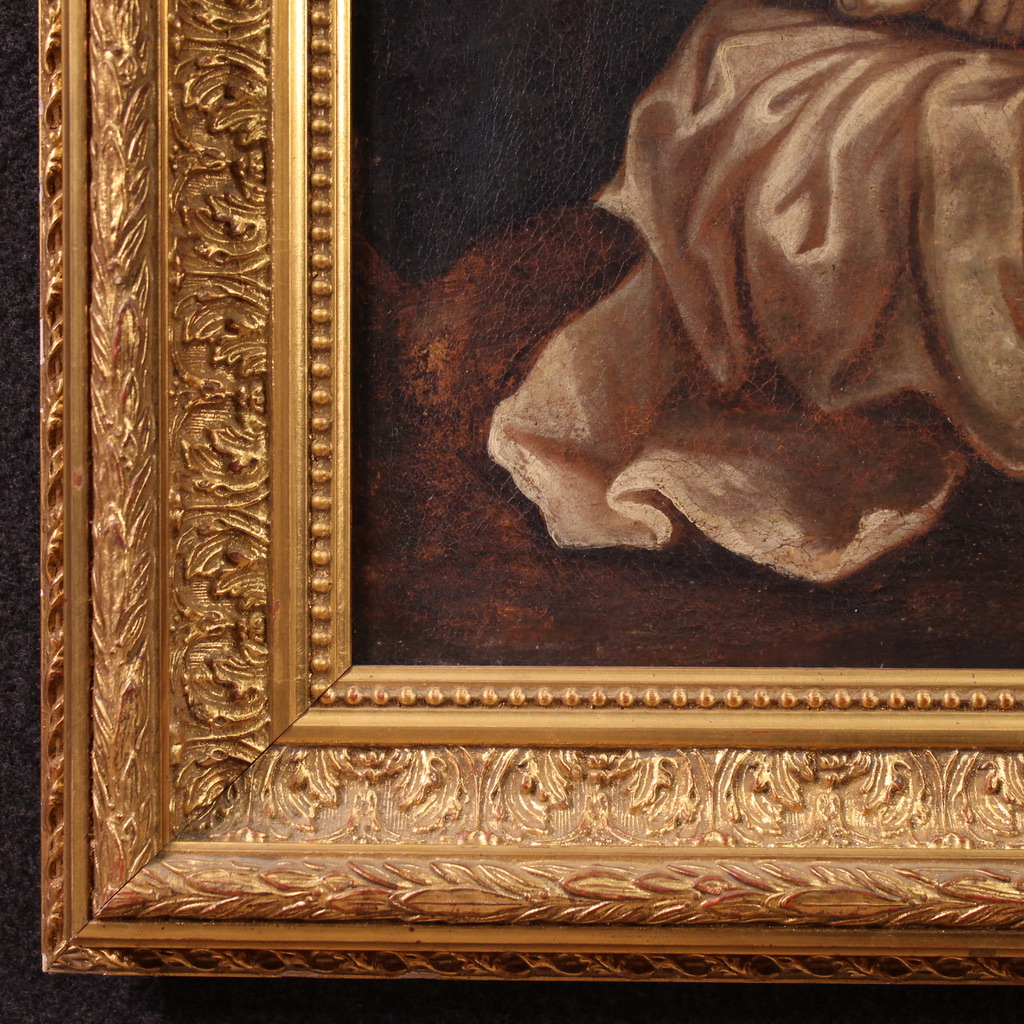
La qualité du drapé, la précision anatomique et la théâtralité de la composition suggèrent qu'il s'agit de l'œuvre d'un grand artiste émilien de la seconde moitié du 17ème siècle. En bas à droite, on distingue les traces d'une signature difficile à déchiffrer (voir photo), actuellement à l'étude. Tableau dramatique de grand format, il s'intègre parfaitement dans un décor classique ou une collection de peintures sacrées baroques. Son cadre, un remarquable cadre en bois doré et plâtre du 20ème siècle, est richement orné et présente quelques marques du temps. L'œuvre a déjà été restaurée : rentoilage, remplacement du châssis et retouches de peinture. Elle est en bon état général. Dimensions intérieures : H 142,5 x L 122 cm.
Le payement doit être effectué dans le délai de 7 jours ouvrables du moment de l'acquisition, dans le cas contraire, l'article sera considéré invendu et remis en vente. Chaque objet sera accompagné de ticket fiscal, si vous désirez la facture celle-ci doit être demandée au moment de l'acquisition. On offre et on exige le plus grand sérieux dans la transaction, vous êtes donc priés de faire vos offres seulement si sérieusement intentionnés à l'acquisition.
A great 17th-century religious painting. This painting oil on canvas depicts a poignant subject, highly popular in the Baroque era: The Lamentation over the Dead Christ. This intense and emotionally powerful artwork features a palette of brown and red earth tones. The reclining Christ is surrounded by figures sculpted by light, immersed in a dramatic atmosphere accentuated by the stormy sky over Golgotha.
We see the Virgin on the left next to Mary Magdalene, while Joseph of Arimathea supports the body of Jesus. Below, we find two mourning cherubs next to the sarcophagus and the crown of thorns. Behind the group, a vast landscape unfolds. On the ridge, Golgotha can be seen with its three now-empty crosses, while to the left, the Temple of Jerusalem appears, struck by a sudden lightning bolt.
The quality of the drapery, the anatomical power, and the theatricality of the composition suggest this is the work of a great Emilian artist from the second half of the 17th century. A large-format, dramatic painting, ideal for classical settings or a collection of Baroque sacred paintings. The frame is a striking 20th-century gilded wood and plaster frame, beautifully decorated, with some signs of aging. The artwork has already been restored with re-lining, replacement of the stretcher, and repainting in some areas. Overall, it is in good condition. Internal dimensions: H 142.5 x W 122 cm.
Grande quadro religioso del XVII secolo. Dipinto ad olio su tela raffigurante un soggetto struggente e di grande successo in epoca barocca, Compianto sul Cristo morto. Opera intensa e di grande forza emotiva dove domina una tavolozza di terre brune e rosse. Il Cristo disteso è circondato da figure scolpite dalla luce, immerse in un'atmosfera drammatica enfatizzata dal cielo tempestoso sul Golgota.
Vediamo la Vergine sulla sinistra accanto a Maria Maddalena mentre Giuseppe d'Arimatea sorregge il corpo di Gesù. Troviamo poi in basso due putti dolenti accanto al sarcofago e alla corona di spine. Dietro al gruppo si dispiega un vasto scenario. Sul crinale si riconosce il Golgota con le tre croci ormai vuote, mentre a sinistra compare il Tempio di Gerusalemme colpito da un fulmine improvviso.
La qualità del drappeggio, la potenza anatomica e la teatralità della composizione fanno presumere si tratti di un grande artista emiliano della seconda metà del XVII secolo. Presenta in basso a destra tracce di una firma di difficile lettura (vedi foto), in fase di studio. Un dipinto di grande formato e impatto scenico, ideale per ambienti classici o per una collezione dedicata alla pittura sacra barocca. Scenografica cornice del XX secolo in legno e gesso dorato, di bella decorazione, con alcuni segni del tempo. Opera già restaurata con rintelo, sostituzione del telaio e ripresa del colore in alcuni punti. Nel complesso in buono stato conservativo. Luce dipinto H 142,5 x L 122 cm.
H 164 x L 144 x P 8 cm
Il pagamento deve essere effettuato entro 7 giorni lavorativi dal momento dell'acquisto, in caso contrario l'articolo sarà considerato invenduto e rimesso in vendita. Ogni oggetto spedito sarà accompagnato da scontrino fiscale, se desiderate la fattura questa va richiesta al momento dell'acquisto. Si offre e si pretende la massima serietà nella transazione, siete pregati di fare offerte solo se seriamente intenzionati all'acquisto.
Ein großes religiöses Gemälde aus dem 17. Jahrhundert. Dieses Ölgemälde auf Leinwand zeigt ein ergreifendes Thema, das in der Barockzeit sehr beliebt war: die Beweinung Christi. Das intensive und emotional kraftvolle Kunstwerk besticht durch seine Farbpalette in Braun- und Rottönen. Der liegende Christus ist von lichtdurchfluteten Figuren umgeben, eingebettet in eine dramatische Atmosphäre, die durch den stürmischen Himmel über Golgatha noch verstärkt wird.
Links sehen wir die Jungfrau Maria neben Maria Magdalena, während Josef von Arimathäa den Leichnam Jesu stützt. Darunter befinden sich zwei trauernde Cherubim neben dem Sarkophag und der Dornenkrone. Hinter der Gruppe erstreckt sich eine weite Landschaft. Auf dem Bergrücken ist Golgatha mit seinen drei nun leeren Kreuzen zu sehen, während links der von einem Blitz getroffene Tempel von Jerusalem erscheint.
Die Qualität der Draperie, die anatomische Präzision und die Theatralik der Komposition lassen vermuten, dass es sich um das Werk eines bedeutenden emilianischen Künstlers aus der zweiten Hälfte des 17. Jahrhunderts handelt. Im unteren rechten Bereich sind Spuren einer schwer lesbaren Signatur zu erkennen (siehe Foto), die derzeit untersucht wird. Ein großformatiges, ausdrucksstarkes Gemälde, ideal für klassische Umgebungen oder eine Sammlung barocker Sakralbilder. Der Rahmen ist ein markanter, vergoldeter Holz- und Gipsrahmen aus dem 20. Jahrhundert, reich verziert und weist einige Altersspuren auf. Das Kunstwerk wurde bereits restauriert: Die Unterkonstruktion wurde neu kaschiert, der Keilrahmen ersetzt und einige Bereiche übermalt. Insgesamt befindet es sich in einem guten Zustand. Innenmaße: H 142,5 x B 122 cm.
Parino Antiquitätenhändler zeichnet sich auf dem Markt durch besten und kostenlosen Verpackungs- und Versandservice aus. Nach Eingang der Zahlung wir die Ware sofort bis vor das Haus verschickt.
Die Zahlung muss innerhalb von 7 Arbeitstagen nach dem Kauf erfolgen, andernfalls wird der Artikel als unverkauft erachtet und erneut zum Verkauf freigegeben. Jedem verkauften Objekt liegt eine steuergültige Quittung bei, sollten Sie eine Rechnung wünschen, teilen Sie das bitte gleich beim Kauf mit. Wir bieten und erwarten höchste Seriosität bei der Geschäftsabwicklung und möchten Sie daher bitten, nur Angebote zu machen, wenn Sie ernsthaft am Kauf interessiert sind.


Powered by Store360