AMALRIC WALTER & HENRI BERGÉ NANCY FRANCE
PAPERWEIGHT 'ESCARGOT'
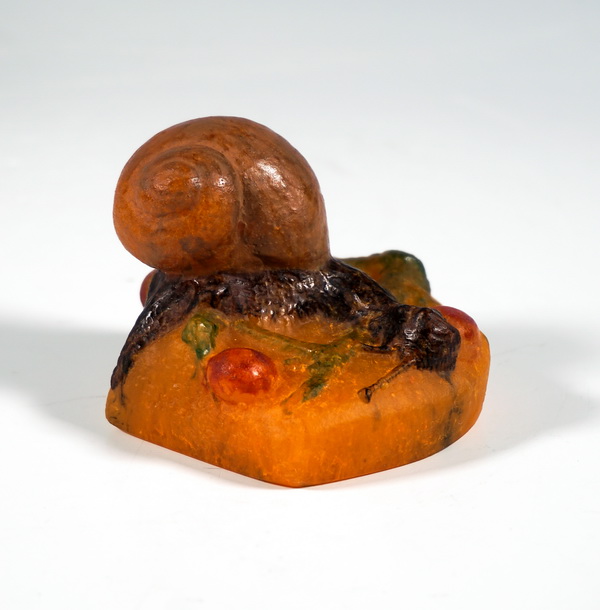
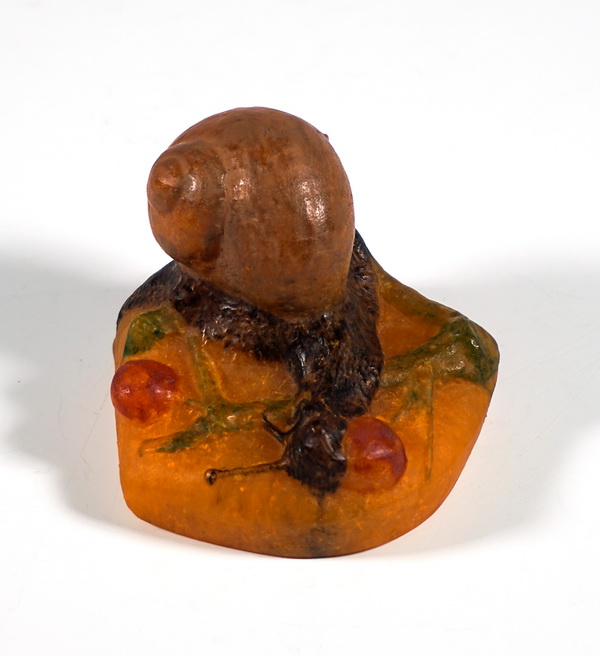
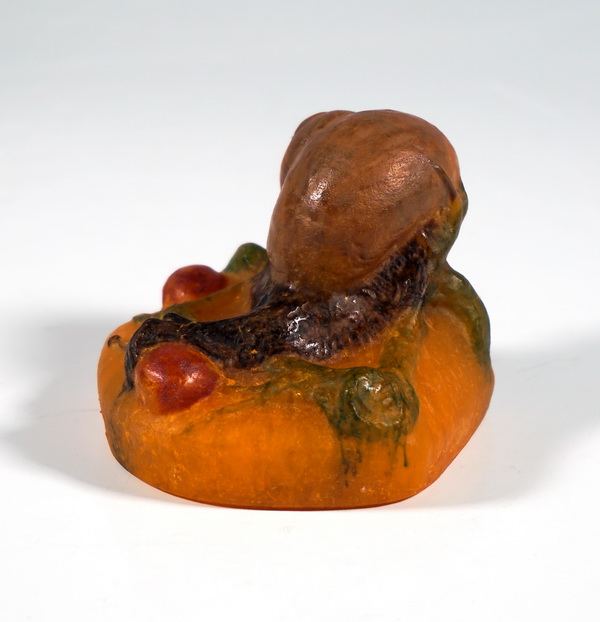
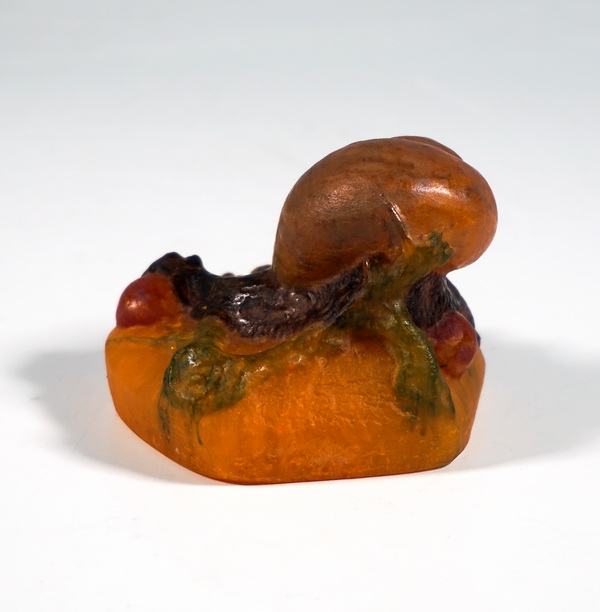
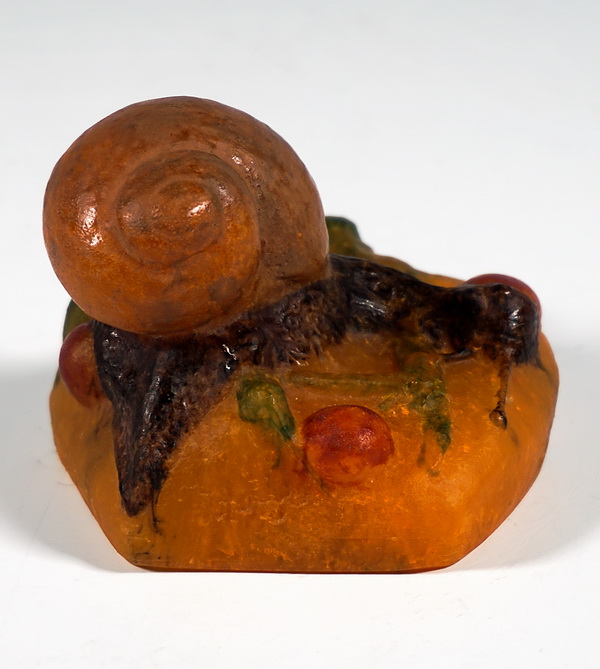
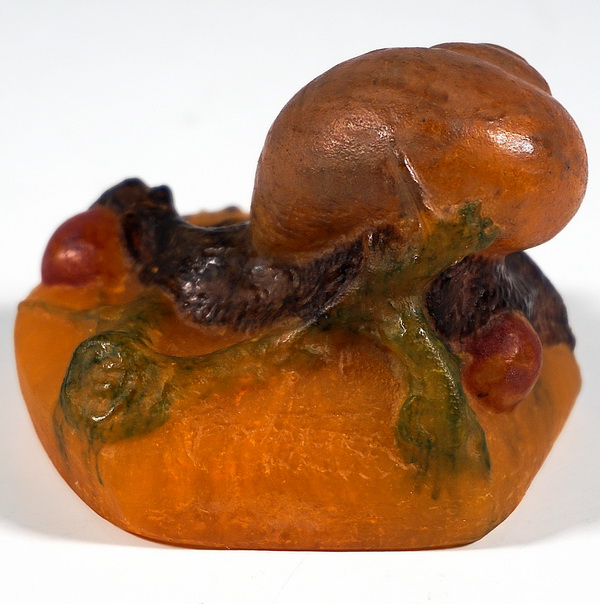
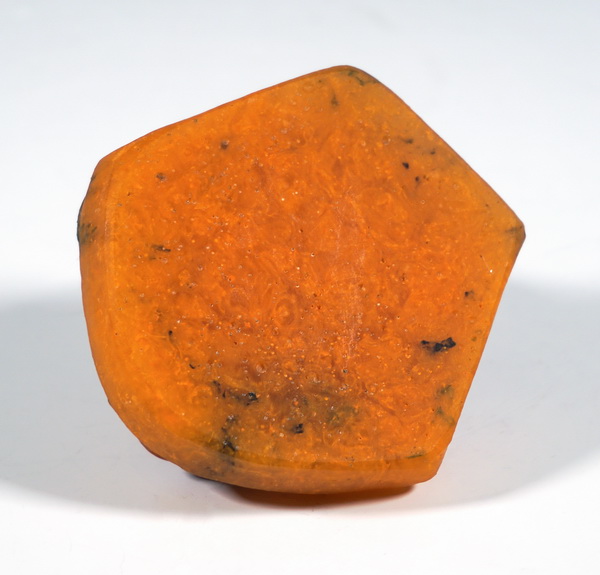
Dark brown snail with a light brown snail shell crawling over scattered green branches with red berries, on a yellow-orange base with a five-sided plan.
Signed 'HBergé SC.' and 'AWALTER NANCY' on the sides.
MANUFACTURE:
AMALRIC WALTER & HENRI BERGÉ / NANCY, LORRAINE, FRANCE
DATING:
1920/1925
ARTIST:
AMALRIC WALTER (1870-1959) & HENRI BERGÉ (1870-1937)
AMALRIC WALTER was a French glassmaker primarily known for his Pâte de verre pieces. At the Daum crystalry in Nancy, France, he met the designer and fashionist HENRI BERGÉ, with whom he produced the first pâtes de verre, which at the time were only signed 'Daum Nancy'. After the war he continued his collaboration with Henri Bergé. From 1919 to 1935, together with Bergé and other famous sculptors and designers, he cast no fewer than 500 models, always only in a small number due to the sophisticated technique of glass furnace casting.
TECHNOLOGY:
PÂTE DE VERRE
(German glass paste) is a technique used in the production of multi-colored glass and one of the basic variants of the process known in modern German as fusing. A cold-formed paste made of glass powder and dyes is filled into a fireproof mold and then fired in a muffle furnace, melting the glass into the desired shape. To achieve polychrome color effects, the process is repeated with other colors.
The technique was already known in ancient Rome and Egypt. Especially in the Art Nouveau period and later in the Art Deco period, it found artistic use again in works by French glass artists such as Gabriel Argy-Rousseau, Henry Cros, Albert Dammouse, François Décorchemont, Amalric Walter, Émile Gallé and George Despret.
DIMENSIONS:
Height: 5.5cm
Diameter: 8.0cm
PROOF:
Carolus Hartmann, Glasmarken-Lexikon, Stuttgart 1997, page 128, signature number 3473, page 519, Bergé, Henri and page 866, Walter, Victor Amalric.
CONDITION: VERY GOOD
AMALRIC WALTER & HENRI BERGÉ NANCY FRANCE
PAPERWEIGHT 'ESCARGOT'
A dark brown snail with a light brown shell, crawling over scattered green twigs bearing red berries, on a yellow-orange base with a pentagonal outline.
Signed 'HBergé SC.' and 'AWALTER NANCY' on the sides.
MANUFACTORY:
AMALRIC WALTER & HENRI BERGÉ / NANCY, LORRAINE, FRANCE
DATING:
circa 1920/1925
DESIGNER:
VICTOR AMALRIC WALTER (1870-1959) & HENRI BERGÉ (1870-1937)
AMALRIC WALTER was a French glass manufacturer mainly known for his pâte de verre pieces. In the Cristalleries Daum at Nancy, France, he met the designer and modelist HENRI BERGÉ, with whom he produced the first pâtes de verre, which at the time were only signed with 'Daum Nancy'. After the war he continued to work with Henri Bergé. From 1919 to 1935 he cast no fewer than 500 models with Bergé and other famous sculptors or designers, always in a few numbers due to the sophisticated technique of glass kiln casting.
TECHNIQUE:
PÂTE DE VERRE
(English glass paste) is a technique used in the production of multi-colored glass. A cold-formed paste made of glass powder and dyes is filled into a refractory mold and then fired in a muffle furnace, whereby the glass melts into the desired shape. To achieve polychrome color effects, the process is repeated with other colors. The technique was already known in ancient Rome and Egypt. Particularly in the Art Nouveau period and later in the Art Deco period, she found artistic use again in works by French glass artists such as Gabriel Argy-Rousseau, Henry Cros, Albert Dammouse, François Décorchemont, Amalric Walter, Émile Gallé and George Despret.
SIZE:
Height: 2.16 in
Diameter: 3.14 in
BIBLIOGRAPHY:
Carolus Hartmann, Glasmarken-Lexikon (= Encyclopedia of Glass Marks), Stuttgart (Germany) 1997, page 128 signature number 2473, page 519, Bergé, Henri and page 866, Walter, Victor Amalric.
CONDITION:
VERY GOOD
The goods we offer are subject to differential taxation according to the UstG. The sales tax included in the purchase price is not shown separately on the invoice.
The goods offered by us are subject to differential taxation according to the sales tax law. The sales tax included in the purchase price is not shown separately on the invoice.