
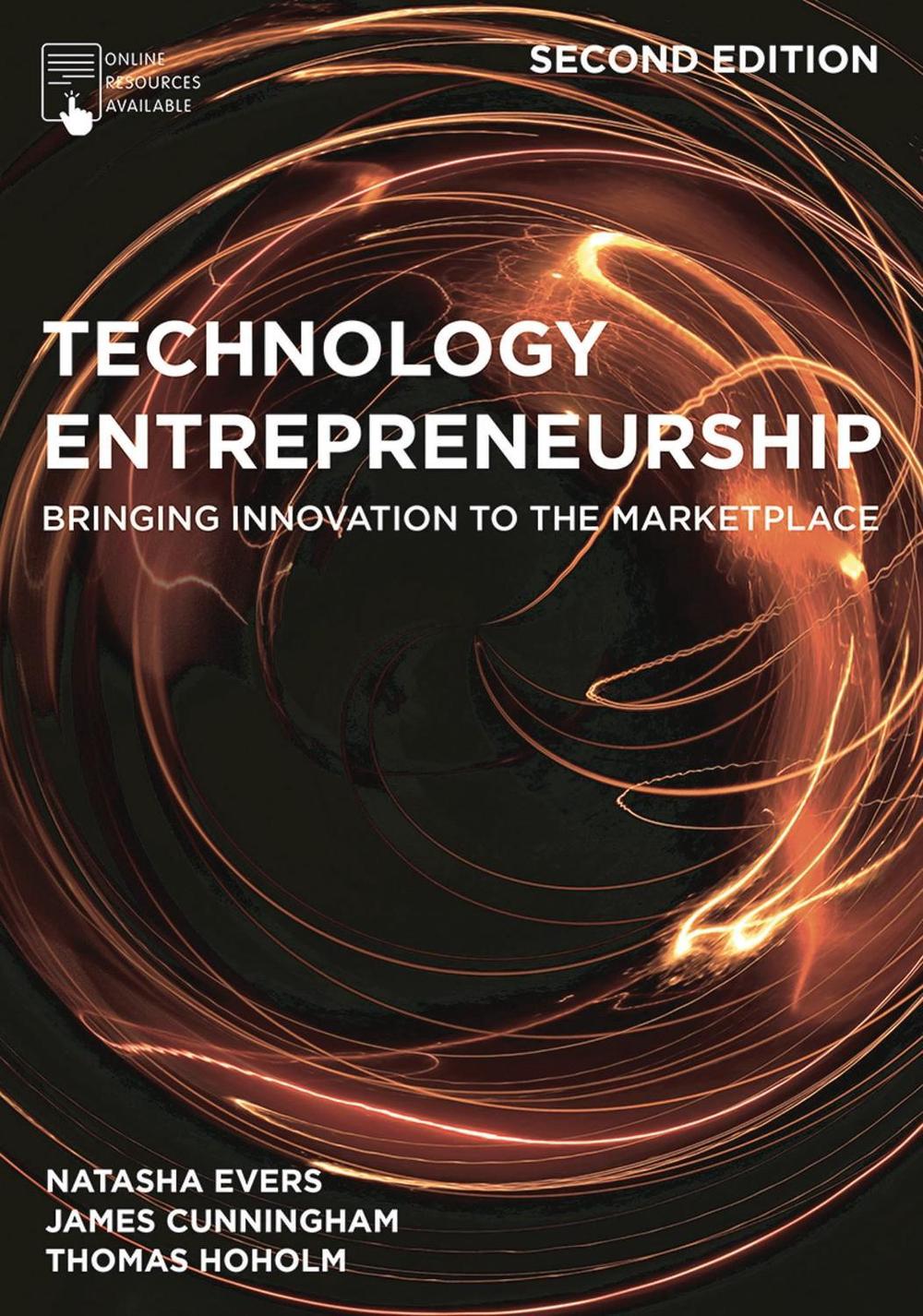
Technology Entrepreneurship
by Dr Natasha Evers, James Cunningham, Thomas Hoholm
This second edition of the critically acclaimed core textbook provides students from technology and science based backgrounds with the theoretical knowledge and practical skills required to transform innovative ideas into commercially viable businesses for profit or social ends.
Paperback
English
Brand New
Publisher Description
This second edition of the critically acclaimed core textbook provides students from technology and science based backgrounds with the theoretical knowledge and practical skills required to transform innovative ideas into commercially viable businesses for profit or social ends. Blending theory, policy and practice in a manner that is accessible to readers with little prior knowledge of business commercialisation, it offers a framework for understanding the entrepreneurial process for technological ideas. The book provides students with comprehensive guidance on the specialized field of 'technopreneurship'. It provides the tools and frameworks required for managing, commercialising and marketing technological innovation. With real life examples and case studies from a range of countries and industries, it will equip students with the understanding required to successfully launch their product.
This text caters for undergraduate and postgraduate students studying technology entrepreneurship modules on engineering, science and computing technology programmes.
New to this edition:
-All chapters updated to reflect the evolution of theory and practice in the field
-New cases on digital entrepreneurship, growth and scaling
-Extended geographical coverage of case studies
-Entrepreneurial practices updated to include recent research
-Strategic context of business models, business growth and scaling, digital entrepreneurship, entrepreneurial marketing, organization design and crowdfunding developed and updated.
Table of Contents
PART ITECHNOLOGY ENTREPRENEURSHIP AND INNOVATION
1. Policy and environmental conditions for technology entrepreneurship
2. Technology entrepreneurs and new technology ventures
3. Technology transfer from universities
PART II CREATING, PROTECTING AND MANAGING TECHNOLOGY AND INNOVATION.
4. Innovation and diffusion of technology in products and services
5. Intellectual Property and Routes to Commercialisation
6. Business modelling: value creation in lean start-ups
PART III MARKET OPPORTUNITY AND STRATEGY
7. Market Validation and Analysis
8. The Marketing Strategy
9. The Business Plan and Pitching
PART IV GROWING AND MANAGING THE NEW VENTURE
10. Developing teams and building the organisation
11. International Entrepreneurship
12. Funding and Financing New Ventures.
Review
A comprehensive text detailing how to launch a new technology venture. It includes a number of useful frameworks and tools to help the STEM student who is unfamiliar with Business, at various stages of the entrepreneurial process, from idea inception and fundraising to marketing and growth. * Vangelis Souitaris, City University of London, UK *
This is the most comprehensive and up-to-date textbook on Technology Entrepreneurship I know. It provides in-depth coverage of key topics ranging from entrepreneurial ecosystems to international entrepreneurship. The clear writing, rich examples and detailed references make it useful for researchers and entrepreneurs alike. Almost an encyclopedia of technology entrepreneurship! * Sai Lan, Emlyon Business School Shanghai, China *
Technology Entrepreneurship offers powerful methods for building high-tech startups. The book covers highly relevant topics that can help science, technology, engineering and mathematics (STEM) students move from conceptualising innovative ideas, all the way to business model development, building prototypes or minimum viable products (MVPs), growing and internationalising their startups; thus making the entrepreneurial journey accessible. * Yazid Abdullah, Universiti Brunei Darussalam *
Outstanding among the few texts on Technopreneurship, Technology Entrepreneurship is packed with insight, tools and global examples that make the process of commercialisation relevant to students with a technology or science background, and accessible to gradates and undergraduates alike. * Rod McNaughton, University of Auckland *
Promotional
Technology Entrepreneurship provides students from technology and science based backgrounds with the theoretical knowledge and practical skills required to transform innovative ideas into commercially viable businesses for profit or social ends.
Review Quote
"A comprehensive text detailing how to launch a new technology venture. It includes a number of useful frameworks and tools to help the STEM student who is unfamiliar with Business, at various stages of the entrepreneurial process, from idea inception and fundraising to marketing and growth." -- Vangelis Souitaris, City University of London, UK "This is the most comprehensive and up-to-date textbook on Technology Entrepreneurship I know. It provides in-depth coverage of key topics ranging from entrepreneurial ecosystems to international entrepreneurship. The clear writing, rich examples and detailed references make it useful for researchers and entrepreneurs alike. Almost an encyclopedia of technology entrepreneurship!" -- Sai Lan, Emlyon Business School Shanghai, China "Technology Entrepreneurship offers powerful methods for building high-tech startups. The book covers highly relevant topics that can help science, technology, engineering and mathematics (STEM) students move from conceptualising innovative ideas, all the way to business model development, building prototypes or minimum viable products (MVPs), growing and internationalising their startups; thus making the entrepreneurial journey accessible." -- Yazid Abdullah, Universiti Brunei Darussalam "Outstanding among the few texts on Technopreneurship, Technology Entrepreneurship is packed with insight, tools and global examples that make the process of commercialisation relevant to students with a technology or science background, and accessible to gradates and undergraduates alike." -- Rod McNaughton, University of Auckland
Promotional "Headline"
Technology Entrepreneurship provides students from technology and science based backgrounds with the theoretical knowledge and practical skills required to transform innovative ideas into commercially viable businesses for profit or social ends.
Feature
Readable explanations of underpinning knowledge and theory in combination with case studies, tools for practice, revision questions and guidance for further resources. Adopts a global approach to technology entrepreneurship supported by a suite of real-life international case studies related to different technologies, across diverse sectors and territories. Covers entrepreneurship in combination with innovation, commericalization, intellectual property issues, product-market fit, strategy and business modelling, value propositioning, internationalization, finance and organization. Addresses the topic of International Entrepreneurship, growth and scaling new venture and lends insight into Digital Entrepreneurship. Emphasis on marketing strategy, market validation and market research. Dedicated companion website with student and lecturer resources including Powerpoint slides, tools and framework templates, multiple-choice questions and case study solutions all designed to support student-centred learning and practice of Technology Entrepreneurship. New to this edition: All chapters updated to reflect the evolution of theory and practice in the field New cases on digital entrepreneurship, growth and scaling. Extended geographical coverage of case studies Entrepreneurial practices updated to include recent research Strategic context of business models, business growth and scaling, digital entrepreneurship, entrepreneurial marketing, organization design and crowdfunding developed and updated.
Details
