|
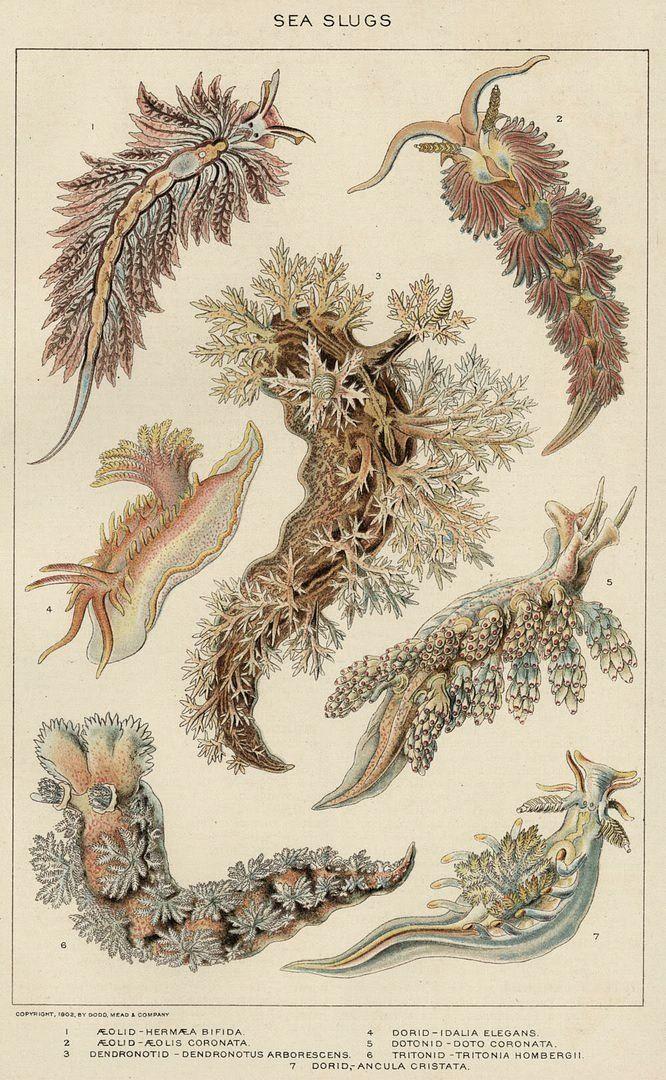
This plate features seven species of nudibranch, or sea slug, illustrated and identified, that were classified and considered representative species at the turn of the century when this print was designed and produced. Featured in this print are: 1. Aeolid-Hermaea Bifida, 2. Aeolid-Aeolis Coronata, 3. Dendronotid, 4. Dorid Idalia Elegans, 5. Dotonid, 6. Tritonid, and 7. Dorid Ancula Cristata. These are carefully drawn, with very fine detail and deliberate application of color to simulate the various delicate structure and .
Of interest in this plate is the conspicuously muted palette, which vastly underrepresents the bright, vivid coloring of these marine invertebrates, often referred to as "the butterflies of the sea." Until the advent of reliably accurate color photography in the mid- to late-20th century, natural history illustrations such as these were often the only way to represent such creatures to the scientific and public community. Illustrations were drawn outside the natural, living environment; artists' renditions relied on observation of specimens preserved in jars of formaldehyde or ethanol, as well as interpretation of written descriptions of the animals' coloration. While superb chemicals for preserving tissues and organs, formaldehyde and ethanol unfortunately robbed the specimens of their characteristic intense, often fluorescent, colors. As a result, the illustrations have a high affinity for capturing the physical characteristics of these invertebrates, but reveal a charming naivety with regard to the full spectrum of their coloration.
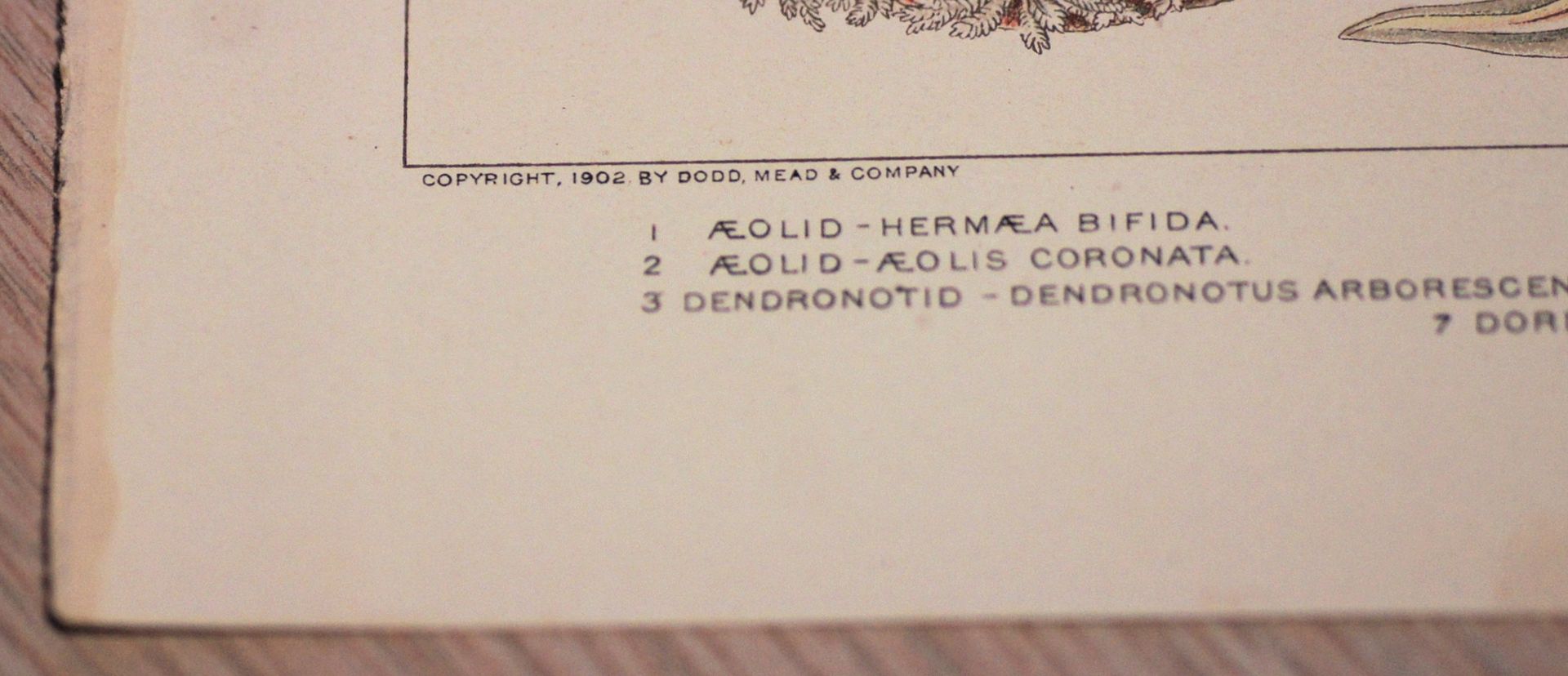
This beautiful illustration, dated 1902 in the plate, was exquisitely printed by the Julius Bien & Company in New York City, one of the most prestigious lithographers of the early 20th Century. This 1902 bookplate was printed for inclusion in a fine set of reference material published in 1903.
Printed on medium-weight paper, the overall sheet size is just over 7" x 9.75", and the printed portion (including the text above and below) is 5" x 8.75" (the narrow printed border is 5" x 8", text excluded), with blank margins of 1/4" - 1" all the way around to allow easy matting and framing.
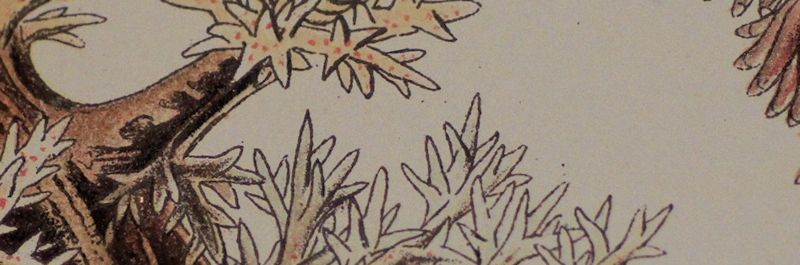
The print is a true stone chromolithograph with the distinctive saturated color and depth. It is a very attractive work, with special attention to detail and accurate hue, and exceptionally well-printed.
I've matted and framed several of these, and they look very nice. Please check my store for other botanical, natural history, or historical art prints perfect for framing or incorporating into other projects.
A Note on Lithography: One of the delightful and interesting results of the engraving and ink transfer process in lithography is that there can be variants of the prints which look slightly different when compared side-by-side, even though they were produced by the same engraved plates on the same press. This may be a result of additional passes by one color or another, subtle differences in the ink tone, varying pressure from the pressing of the plates, slight variation in the position of each color plate, or other choices made by the engravers or the printers. The result is that each print's appearance is truly unique.
Below is a cropped view of the sheet--without full margins. The image is a fairly accurate representation of the print. Please refer to closeups to see the depth of the margins, and the quality of the print.
|