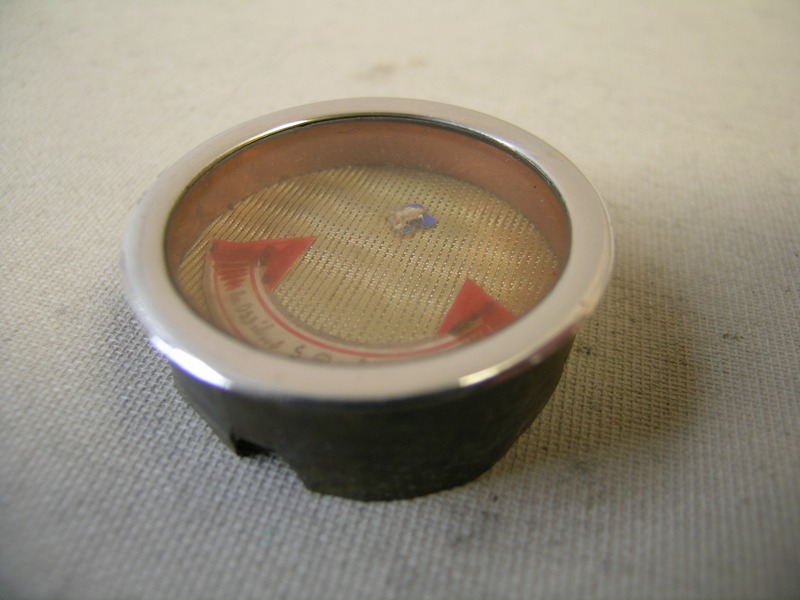
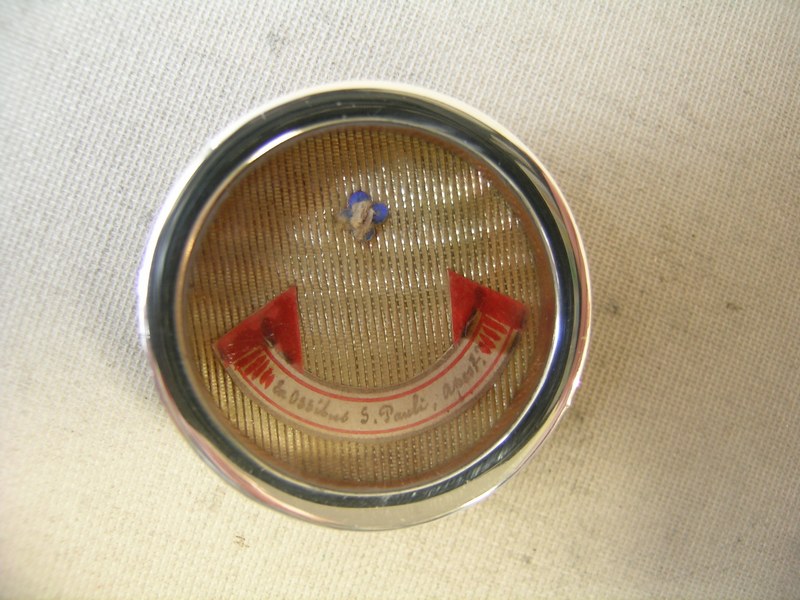
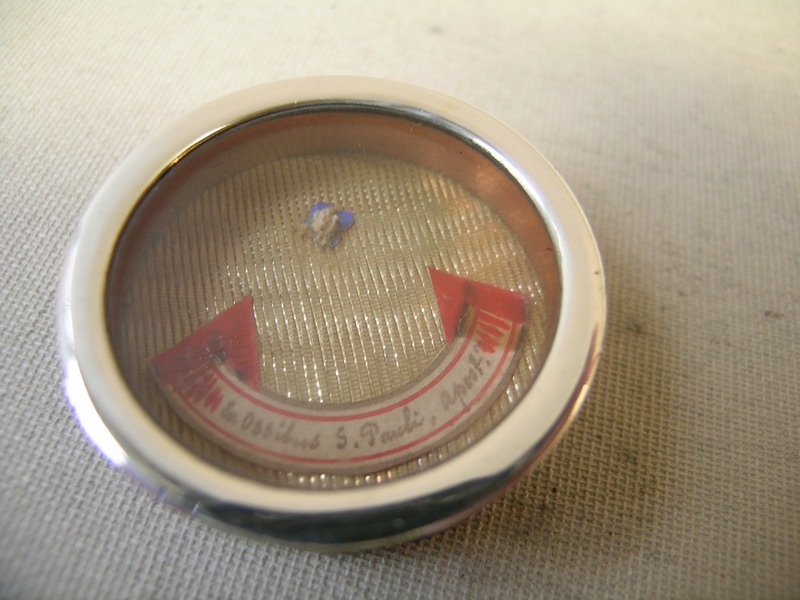
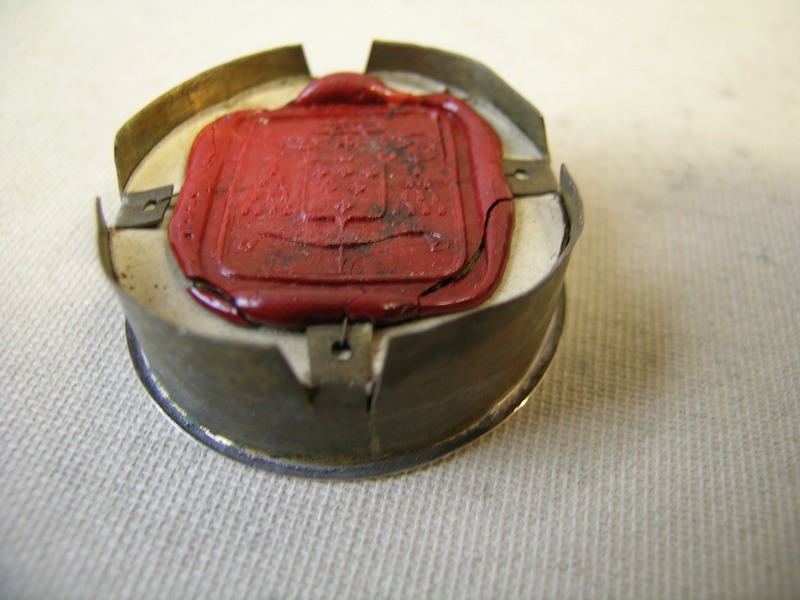
This is a antique copper theca with silver
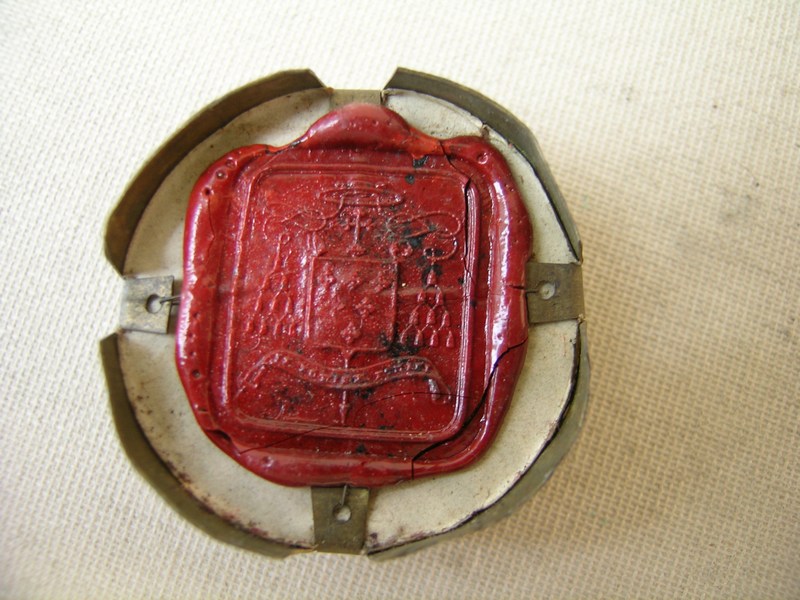
front, inside a fc relic of Saint Paul the Apostle. Relic in place,
and wax seal and threads intact. Sealed with the seal of Henricus
Franciscus Bracq (1804–1888) who was the 22nd bishop of Ghent, Belgium.Comes
from a convent in Belgium. Diameter 1,5 inch.Shipping and handling US$ 37.00 by insured priority mail
and tracking number. All my items are securely packet, to avoid all possible
damage ( look at my feedback).
Please contact me if you have any
questions. Items cannot be returned.
As per Ebay policy,this reliquary does not contain
human remains but only objects of devotion. The auction is for the theca, the
relic is a gift.
Please be carefull when buying relics online. Fake relics are
increasingly more and more of a problem. Most of the relics I sell are from
convents in Belgium and Italy. I have been collecting relics for more than 25
years. I consider myself an expert. Please contact me if you
have any questions.
I only
sell antique items and no copies or new made fakes!
Please see my other auctions for
more vestments,reliquary’s, relic’s and antiques items
Saint Paul the Apostle
Also known as
- Apostle Paul
- Apostle to the Gentiles
- Paul of Tarsus
- Saul of Tarsus
Memorial
- 25 January (celebration of his conversion)
- 10 February (Saint Paul Shipwrecked)
- 29 June (celebration of Saint Peter and Saint Paul
as co-founders of the Church)
- 18 November (feast of the dedication of the Basilicas of
Peter and Paul)
Profile
Jewish Talmudic student. Pharisee. Tent-maker by
trade. Saul the Jew hated and persecuted Christians as heretical,
even assisting at the stoning of Saint Stephen the Martyr.
On his way to Damascus, Syria, to arrest another group
of faithful, he was knocked to the ground, struck blind by a
heavenly light, and given the message that in persecuting Christians, he
was persecuting Christ. The experience had a profound spiritual effect on him,
causing his conversion to Christianity. He was baptized,
changed his name to Paul to
reflect his new persona, and began travelling, preaching and teaching.
His letters to the churches he help found form a large percentage of the New
Testament. Knew and worked with many of the earliest saints and fathers of
the Church. Martyr.
Born
- c.3 at Tarsus, Cilicia (modern Turkey) as Saul
Died
- beheaded c.65 at Rome, Italy
Canonized
- Pre-Congregation
Patronage
- against hailstorms
- against poisonous snakes
- against snake bites
- against snakes
- Catholic Action
- Cursillo movement (confirmed by Pope Paul
VI)
- Gentiles
- lay people
- Worshipful Company of Fruiterers
- Worshipful Company of Upholders
-
- authors
- evangelists
- hospital public relations
- journalists
- knights
- missionaries
- missionary bishops
- musicians
- newspaper editorial staff
- public relations personnel
- public relations work
- publishers
- reporters
- rope braiders
- rope makers
- saddle makers
- saddlers
- tent makers
- writers
Henricus
Franciscus Bracq (1804–1888) was the 22nd bishop of Ghent, Belgium.
Bracq was born in Ghent on 26 February 1804. He was
ordained to the priesthood on 2 August 1827. From 1830 to 1864 he taught Sacred
Scripture at the Major Seminary of Ghent, where he opposed the spread of the
opinions of Lamennais. He was one of the founding editors of the Mémorial du
Clergé (1833–1834) and of De Vlaming, and an active contributor to the Journal
historique et littéraire published in Liège. From 1836 to 1864 he was also
confessor to the refounded Visitation Sisters of Ghent.
In November 1864 Bracq was elected bishop of Ghent
in succession to Louis-Joseph Delebecque, who had died the previous month. He
was consecrated on 1 May 1865. As bishop he founded the Sint-Lievenscollege in
Ghent in 1865, as well as diocesan secondary schools in Ledeberg, Aalst and
Ninove (1872), and opposed the semi-traditionalism taught at the Catholic
University of Leuven by Casimir Ubaghs. In 1866 he founded a diocesan weekly, De
Godsdienstige Week van Vlaanderen. An Ultramontane by
inclination, he attended the First Vatican Council, promoted Peter's Pence, and
supported the Papal Zouaves. Bracq took an active role in the social and
political crisis known as the First School War, in opposition to the
encroachments of the state on Catholic education. He died in Ghent on 17 June
1888.