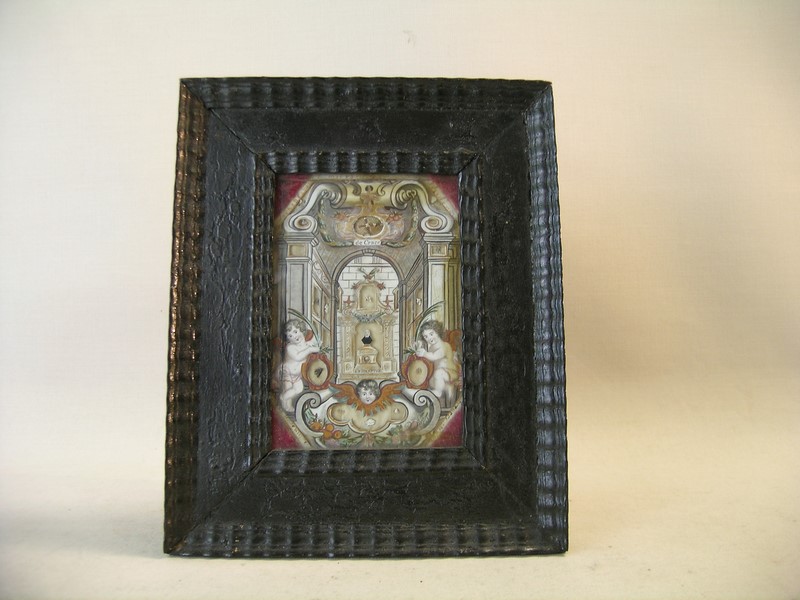
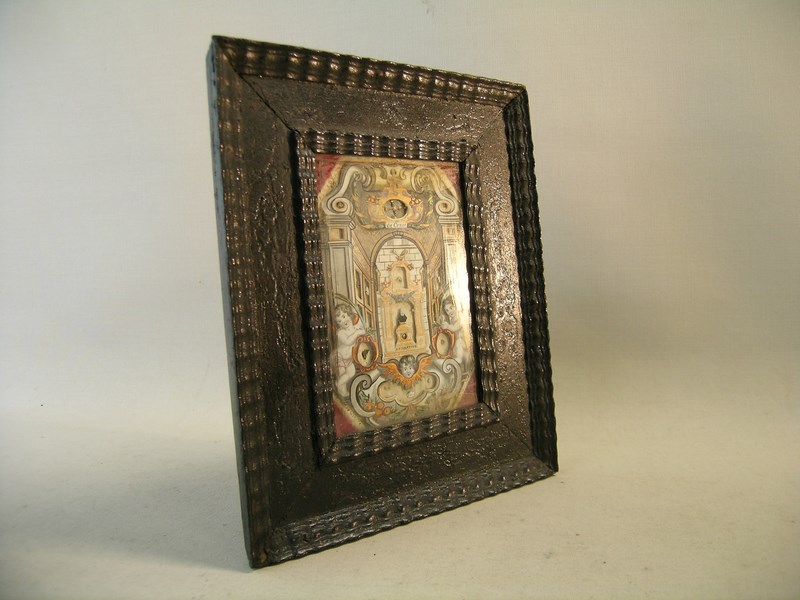
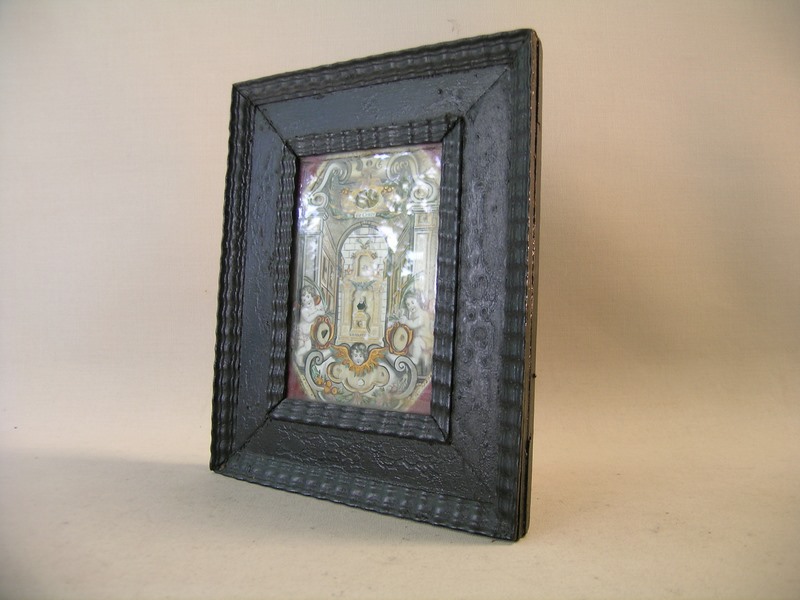
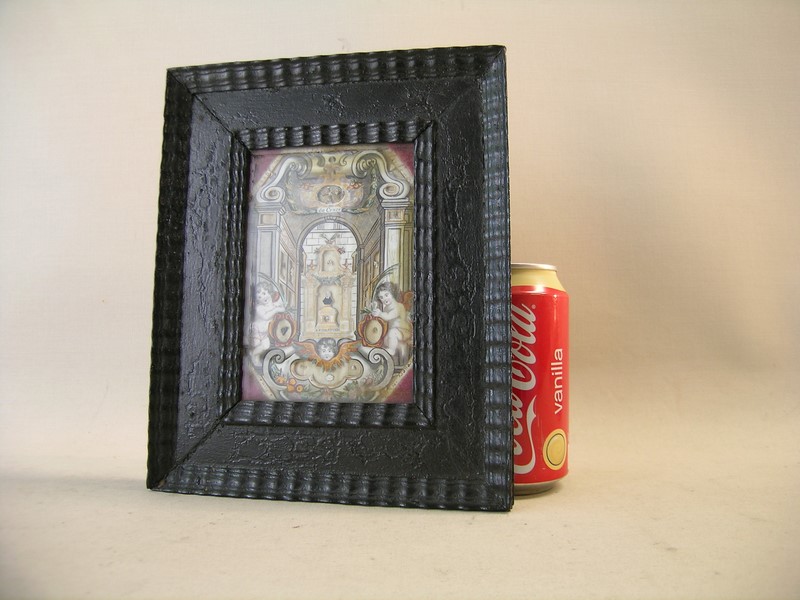
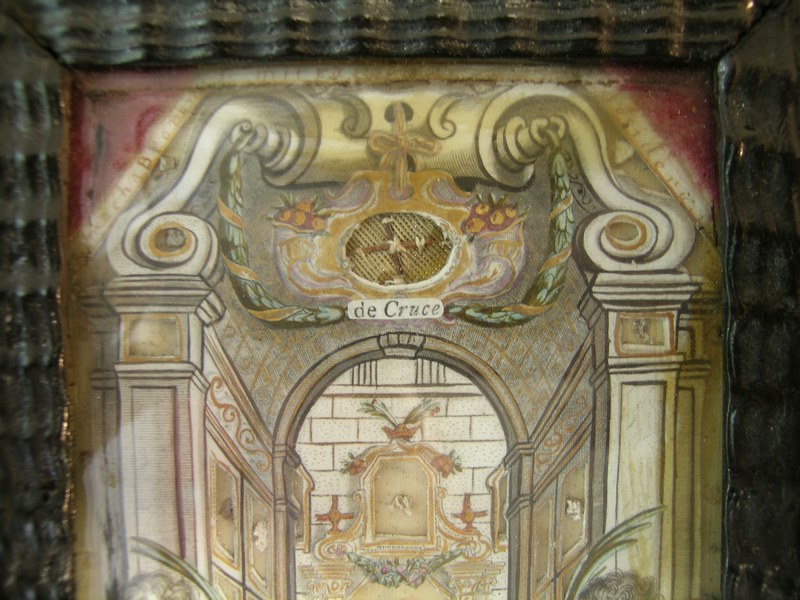
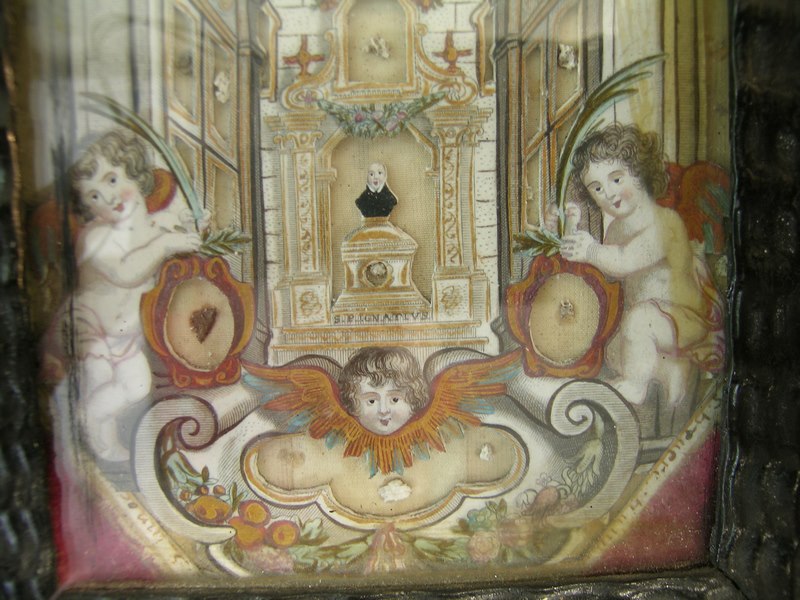
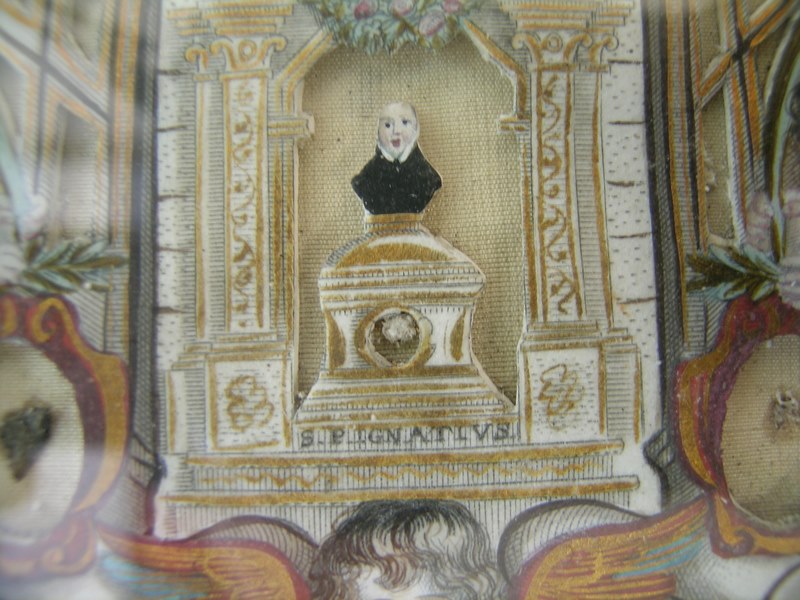
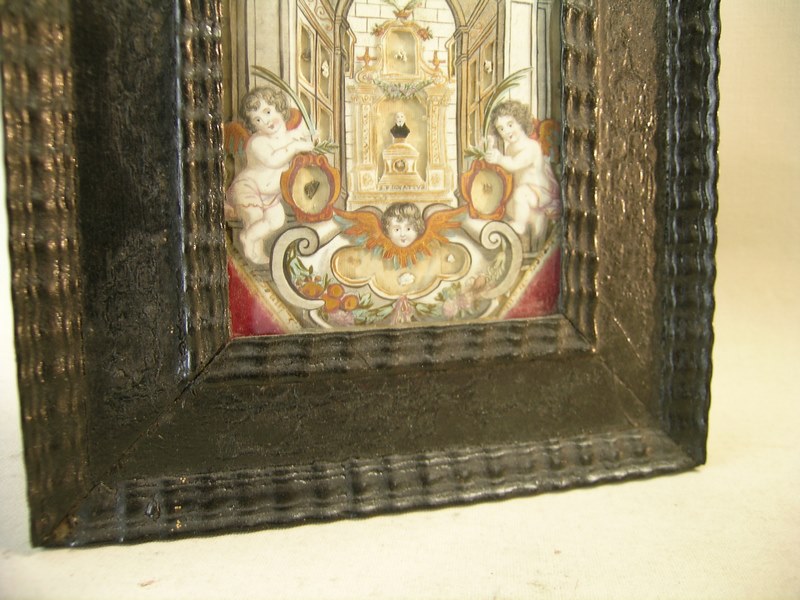
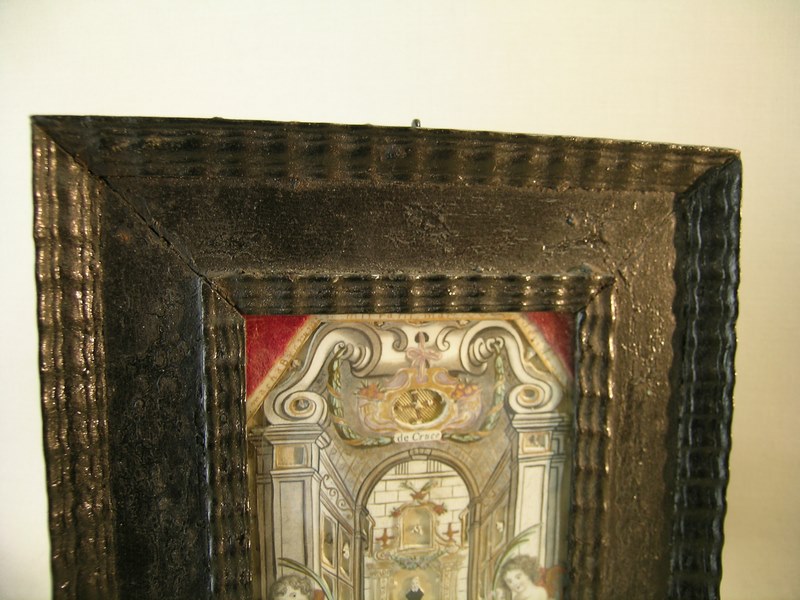
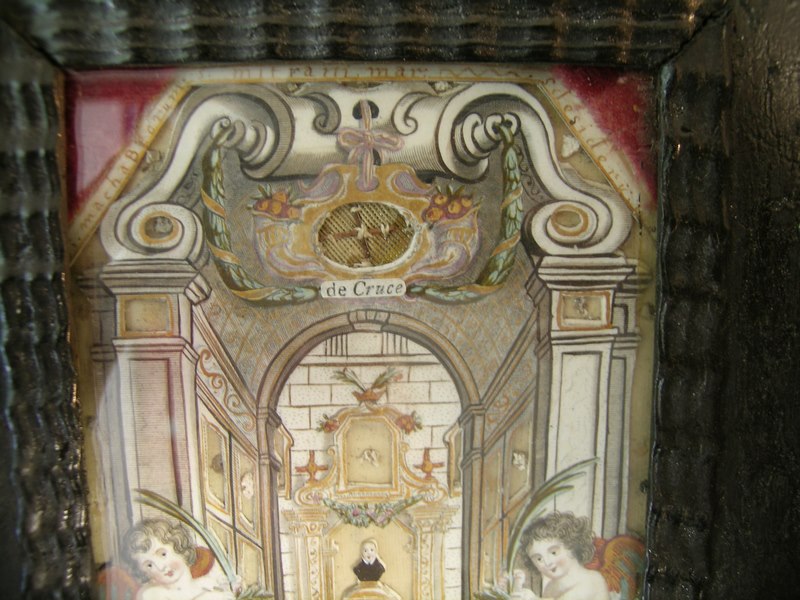
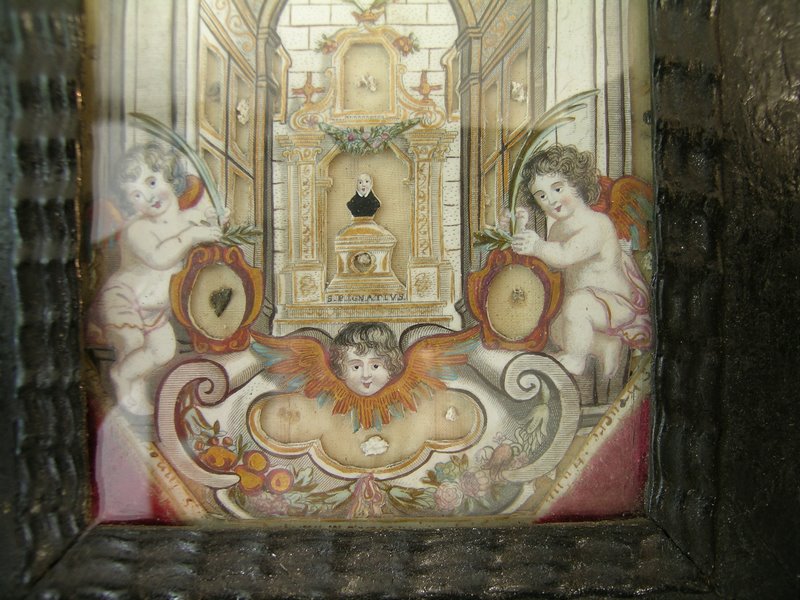
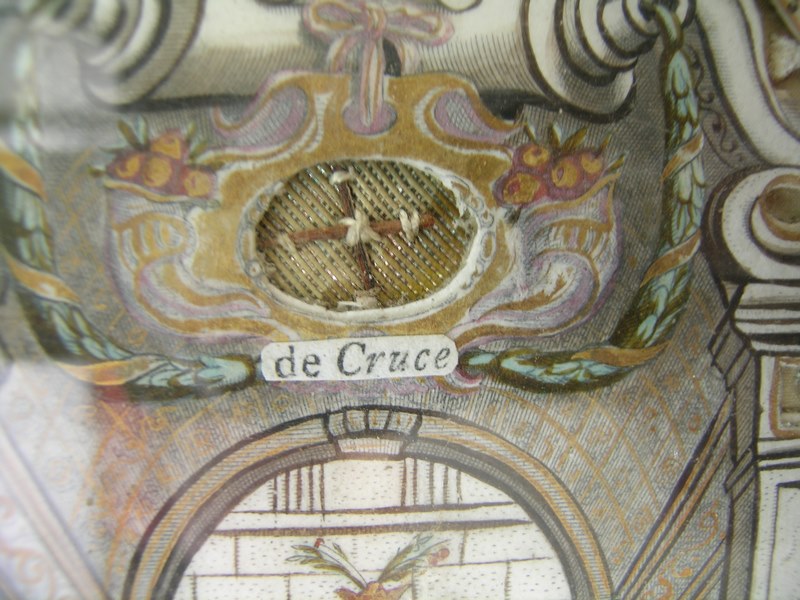
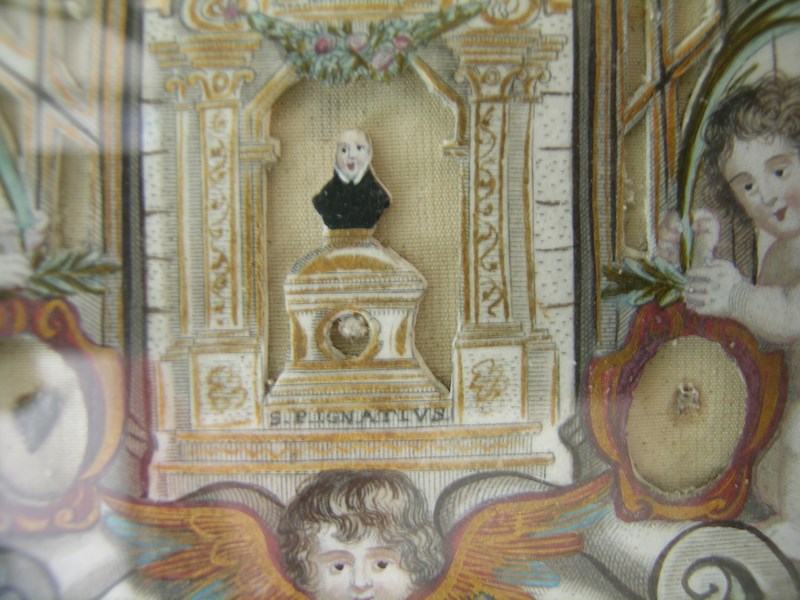
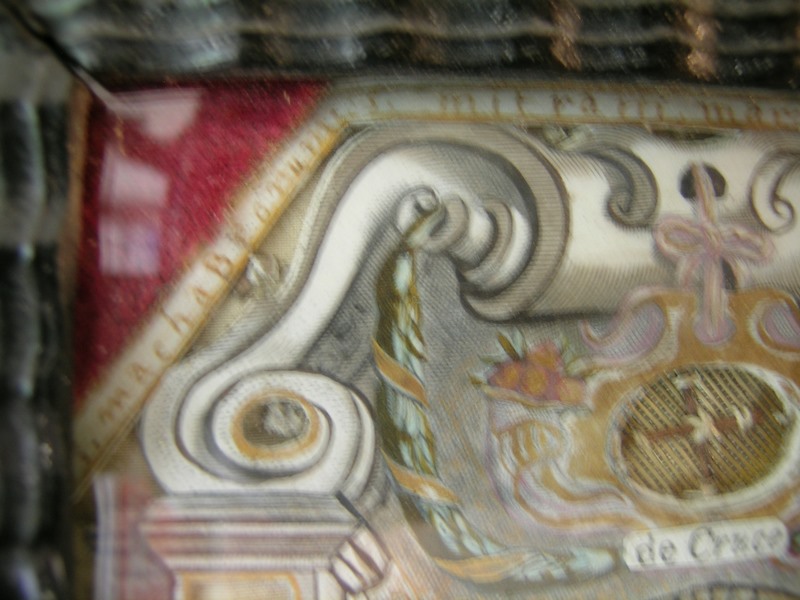
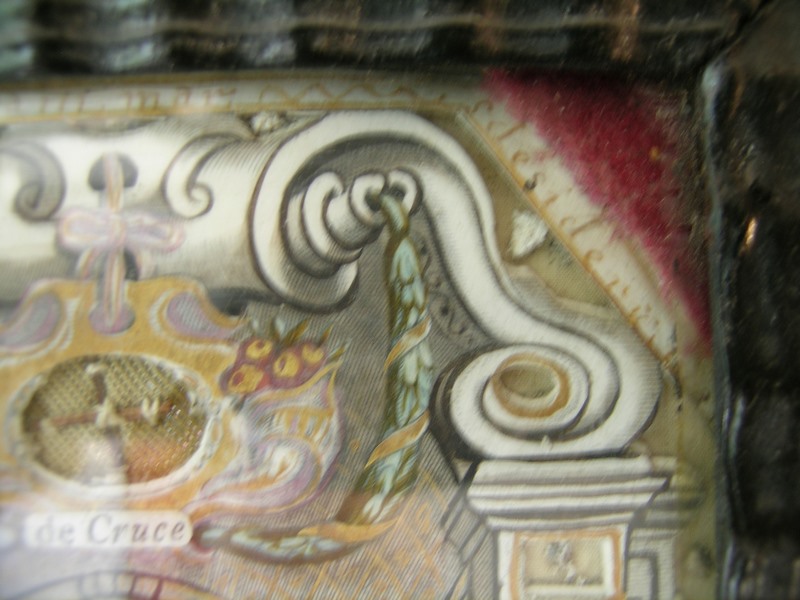
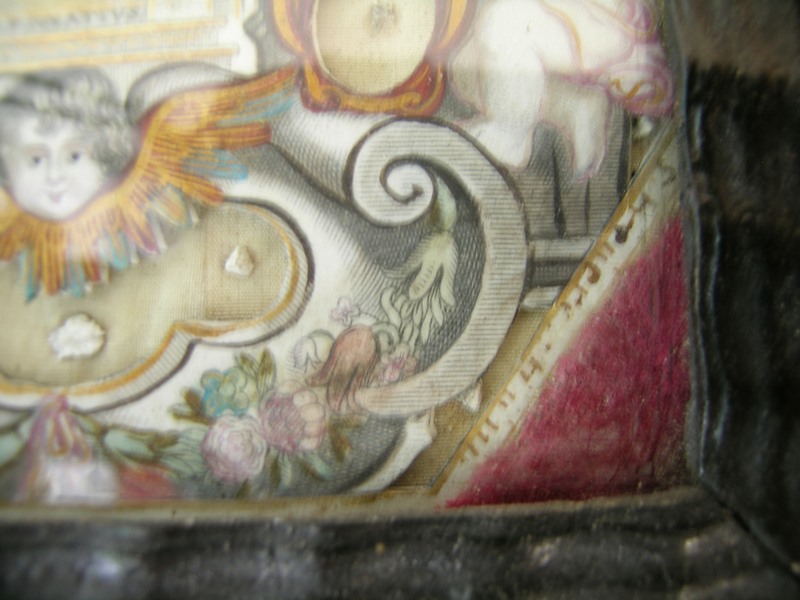
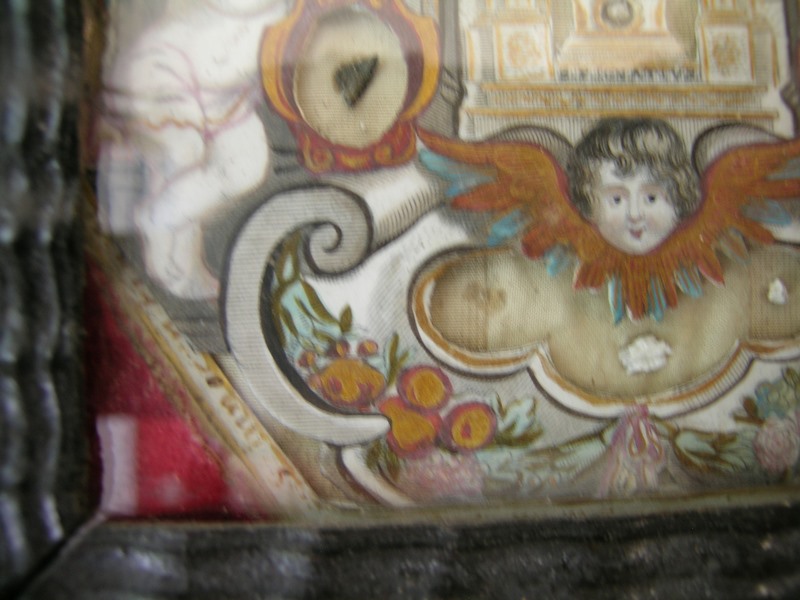
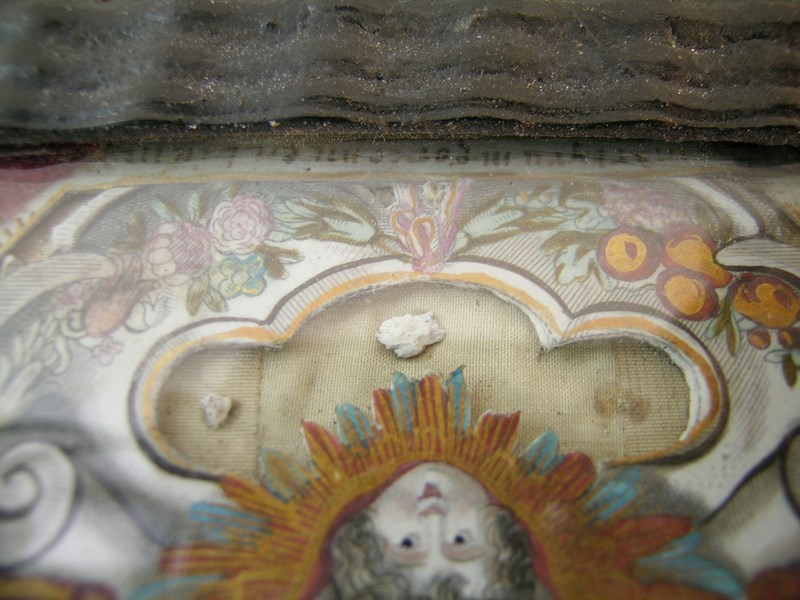
This is a very nice antique wooden frame
with relics of the True Cross of our
Lord Jesus,Saint Innocent, Martyrs of Gorkum, Saint Desiderius, Saint Ignatius
of Antioch, and some more, but they are difficult to read.Most relics in place.There is no
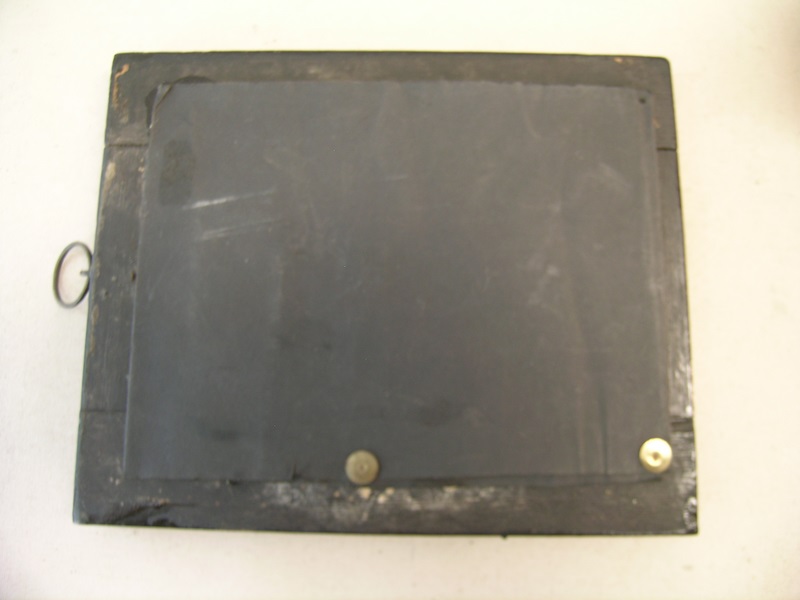
seal at the back, and its not possible to open it.Comes from a convent in Belgium. Measures 7,1x8,8 inch. Shipping and
handling US$ 47.00 by insured priority mail and tracking number. All my items
are securely packet, to avoid all possible damage.Our Non Paying Buyer process
is now automatically managed by Ebay.The process starts four days after auction
end and closes as soon as payment is received.
Please contact me if you have any
questions. Items cannot be returned.
Please contact me if you have any questions.
I only
sell antique items and no copies or new made fakes!
Please see my other auctions for more
vestments,reliquary’s, relic’s and antique catholic items.
As per Ebay
policy,this reliquary does not contain human remains but only objects of
devotion. The auction is for the theca, the relic is a gift.
Please be carefull when buying relics online. Fake relics are
increasingly more and more of a problem. Most of the relics I sell are from
convents in Belgium and Italy. I have been collecting relics for more than 25
years. I consider myself an expert. Please contact me if you
have any questions.
The Most
Holy Wood of the Cross of Our Lord Jesus Christ
According to several Church historians of the 4th and
5th century, the True Cross was discovered in 325 AD when Emperor Constantine
the Great ordered the removal of a pagan temple built by Hadrian over the site
of the Calvary and the Holy Sepulchre. Beneath the structure, in an old
cistern, three crosses, the title with the inscription "Jesus of Nazareth,
King of the Jews", and three nails were found. In the presence of the
Empress Helena, mother of Constantine, the Cross of Christ was identified by
the 'titulus' and the nail holes, and later confirmed by a miracle. It was laid
upon a sick woman who was immediately miraculously cured.
Helena divided the most precious wood into several
parts, leaving a fragment in Jerusalem, sending a second to her son in
Constantinople and taking a third to Rome. A part of it and half of the title
with the inscription I NAZARINUS R... is still preserved and venerated in the
Basilica di S. Croce, one of the seven main churches of the Eternal City. In
1998, a careful investigation was commissioned by the Holy See and seven
Israeli experts on the dating of inscriptions (comparative palaeography) dated
its letters into the 1st century, the time of Christ. This suddenly gave the
'legend of the Finding of the Cross' a lot of credibility.
Already in 349 AD, St. Cyril, bishop of Jerusalem,
stated that the True Cross "has been distributed, fragment by fragment,
from this spot (Jerusalem) and has already nearly filled the world",
confirming the early practise of distributing tiny particles of the Most Holy
Wood. When St. Paulinus of Nola sent one to a friend in ca. 401 AD, he wrote:
"Receive a great gift in a little case and take this segment as an
armament against the perils of the present and a pledge of everlasting safety".
He stressed that "even the smallest particle bears in it the whole power
of the Cross of Christ".
The claim of the "enlightened" sceptics,
that all relics of the True Cross would be sufficient to build a ship, was
proven wrong in 1870 by the French scholar Rohault de Fleury, who
mathematically calculated the volume of all relics of the True Cross in all
European Cathedrals and found them all together having the mass of only one
third of a Roman cross!
Martyrs
of Gorkum
Also known as
- Gorkum Martyrs
- Martyrs of Gorcum
Memorial
- 9 July
Profile
Nineteen martyrs killed by Calvinists for
loyalty to the Pope and for their belief in the Real Presence in
the Eucharist. They are
- Saint Adrianus van Hilvarenbeek
- Saint Andreas Wouters
- Saint Antonius van Hoornaar
- Saint Antonius van Weert
- Saint Cornelius van Wijk
- Saint Francisus de Roye
- Saint Godfried van Duynen
- Saint Godfried van Melveren
- Saint Hieronymus van Weert
- Saint Jacobus Lacops
- Saint Joannes Lenaerts
- Saint John of Cologne
- Saint Leonardus van Veghel
- Saint Nicasius Janssen van Heeze
- Saint Nicolaas Pieck
- Saint Nicolaas Poppel
- Saint Petrus van Assche
- Saint Theodorus van der Eem
- Saint Willehad van Deem
Died
- hanged on 9 July 1572 in Brielle,
Zuid-Holland, Netherlands
Beatified
- 14 November 1675 by Pope Clement X
Canonized
- 29 June 1867 by Pope Pius IX
Saint Ignatius of Antioch
Also known as
- God-Bearer
- Theophoros
Memorial
- 17 October
- formerly 1 February
- 29 January (translation of relics)
Profile
Convert from paganism to Christianity.
Succeeded Saint Peter the Apostle as bishop of Antioch, Syria.
Served during persecution of Domitian. During the persecution of
Trajan, he was ordered taken to Rome to be killed by wild
animals. On the way, a journey which took months, he wrote a series of
encouraging letters to the churches under his care. First writer to
use the term the Catholic
Church. Martyr. Apostolic Father. His name occurs in the “Nobis quoque peccatoribus” in
the Canon of the Mass. Legend says he was the infant that Jesus took into
his arms in Mark 9.
Born
- c.50 in Syria
Died
- thrown to wild animals c.107 at Rome, Italy
- relics at Saint Peter’s Basilica, Rome
Canonized
- Pre-Congregation
Patronage
- against throat diseases
- Church in eastern Mediterranean
- Church in North Africa