
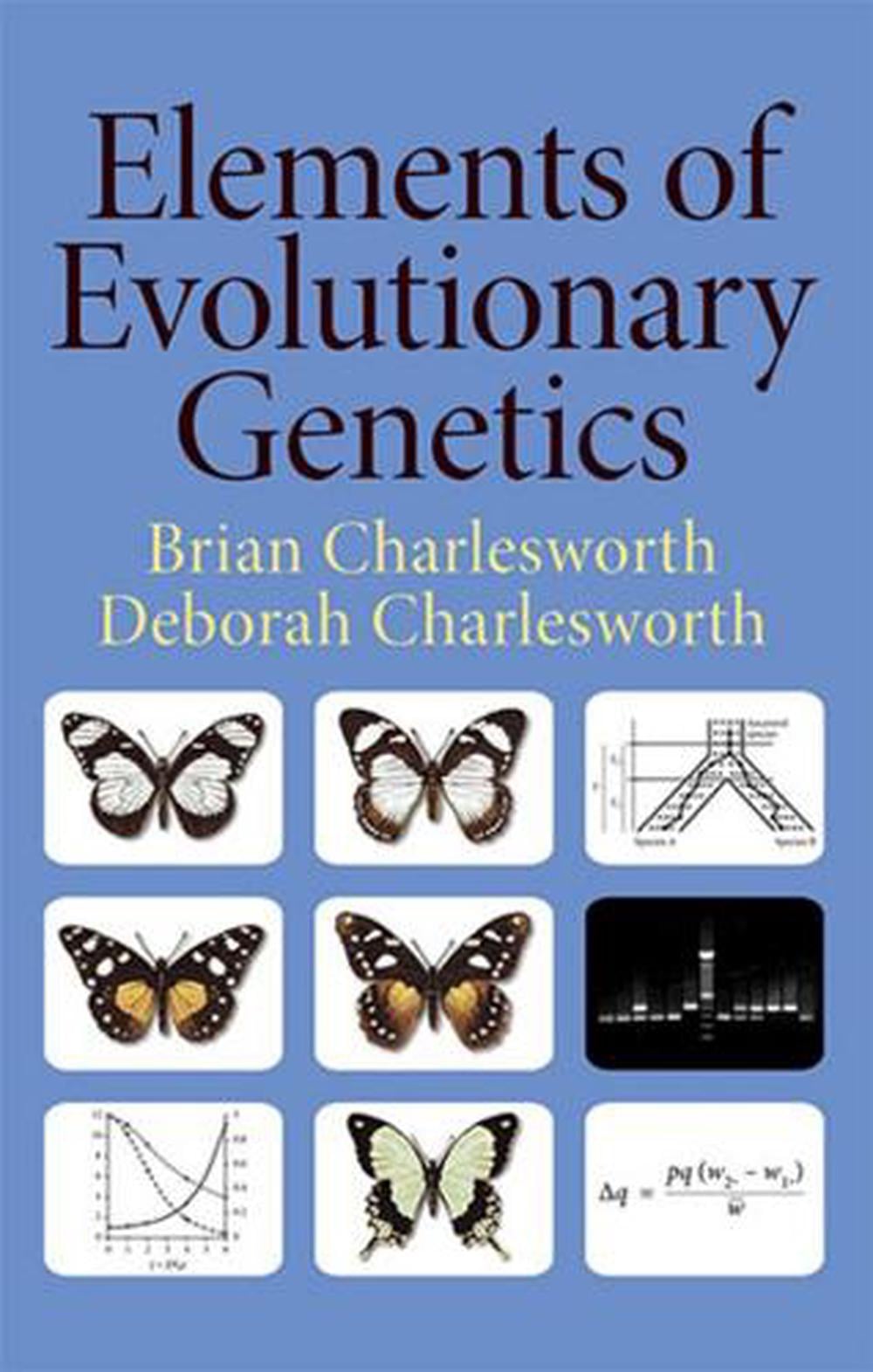
Elements of Evolutionary Genetics
by Brian Charlesworth, Deborah Charlesworth
This book shows readers how models of the genetic processes involved in evolution are made (including natural selection, migration, mutation and genetic drift in finite populations) and how the models are used to interpret classical and molecular genetic data.
Hardcover
English
Brand New
Publisher Description
Evolutionary genetics is concerned with nature of the variability used in evolution, and the causes of evolutionary change. The methods of evolutionary genetics are critically important for the analysis and interpretation of the massive datasets on DNA sequence variation and evolution that are becoming available, as well for our understanding of evolution in general. This book shows readers how models of the genetic processes involved in evolution are made (including natural selection, migration, mutation, and genetic drift in finite populations), and how the models are used to interpret classical and molecular genetic data. The material is intended for advanced level undergraduate courses in genetics and evolutionary biology, graduate students in evolutionary biology and human genetics, and researchers in related fields who wish to learn evolutionary genetics. The topics covered include genetic variation, DNA sequence variability and its measurement, the different types of natural selection and their effects (e.g. the maintenance of variation, directional selection, and adaptation), the interactions between selection and mutation or migration, the description and analysis of variation at multiple sites in the genome, genetic drift, and the effects of spatial final two chapters demonstrate how the theory illuminates our understanding of the evolution of breeding systems, sex ratios and life histories, and some aspects of genome evolution.
Table of Contents
1 Variability and its measurement 2 Basic selection theory and the maintenance of variation 3 Directional selection and adaptation 4 Migration, mutation and selection 5 The evolutionary effects of finite population size: basic theory 6 Molecular evolution and variation 7 Genetic effects of spatial structure 8 Multiple sites and loci 9 The evolution of breeding systems, sex ratios and life histories 10 Some Topics in Genome Evolution Mathematical and Statistical Appendix
Review
"The book by Charlesworth and Charlesworth provides an authoritative and accessible review of classical and modern population genetics. It can serve as a text for several graduate level courses and will be an invaluable reference to researchers in all areas of biology." -Montgomery Slatkin, University of California, Berkeley
Review Quote
"These two leaders of the field have given us a superb overview of evolutionary genetics. Their clear explanation of the key concepts is closely linked to biological examples, and especially, to the most recent data on genome evolution. This will be an essential text." Nick Barton, IST Austria and the University of Edinburgh
New Feature
1. Variability and its measurement 2. Basic selection theory and the maintenance of variation 3. Directional selection and adaptation 4. Migration, mutation and selection 5. The evolutionary effects of finite population size: basic theory 6. Molecular evolution and variation 7. Genetic effects of spatial structure 8. Multiple sites and loci 9. The evolution of breeding systems, sex ratios and life histories 10. Some Topics in Genome Evolution Mathematical and Statistical Appendix
Details
