Collect. Build. Play.
Woolworths Bricks Farm is the exciting Woolworths Bricks series that brings to life the journey from farm to supermarket, encouraging families to learn about where food comes from through play and creativity. There are 40 packs to collect.
Pick your favourite items!
How are your items packed and shipped?

Characters
Fruit and Vegetable Buyer
Meet the Buyer! A Woolies produce specialist, he ensures only the best fruit and veg gets delivered to your local store.

Woolworths sell 44,000 tonnes of carrots a year. About the same weight as 104 Airbus A380 planes!
Farmer
Meet the Farmer! As the head of the farm, he is responsible for ensuring the team has everything they need for a successful harvest.

51% of Australia is made up of farmland. That means over half of Australia's land is used for agriculture.
Agronomist
Meet the Agronomist! An expert in soil and produce science, she works with the the team to improve the quality of the produce.

Agronomists analyse data to help farms run better
Beekeeper
Meet the Beekeeper! Her job is to ensure the farm’s bees are happy and healthy.

There are 30,000 registered beekeepers in Australia. That's a lot of busy bees and honey!
Scarecrow
He may look scary to some, but he’s a cheerful fellow who works hard to keep pests away from the crops.

Back in the time of pharaohs, Ancient Egyptians used scarecrows to protect their wheat crops.
Fruit & Veg
Tomato plant
Did you know tomatoes are considered a fruit botanically? They are also an excellent addition to a fresh salad.

Tomatoes are considered both fruits and vegetables. Don't put them in a fruit salad, though!
Strawberry bush
Build out your farm’s orchard with some juicy, sweet strawberries.

On average, there are around 200 tiny seeds on a single strawberry.
Blueberry bush
Add some vibrant blueberries to your farm orchard. You can make all sorts of delicious treats with them.

Blueberries are technically deep purple due to the pigment anthocyanin.
Cauliflower
A cruciferous vegetable, cauliflower makes a yummy addition to any meal.

A cauliflower is made up of 92 per cent water and contains fibre and vitamin C.
Lettuce
From iceberg to oakleaf, and cos to little gem, there are so many varieties of lettuce. What is your favourite?

Lettuce and cucumber are both made up of around 96 per cent of water.
Carrots
A root vegetable, this vibrant orange veggie goes great in a meal or even on its own.

Carrots contain vitamin A, for healthy eyesight*.
*When eaten as part of a healthy diet.
Broccoli
Broccoli is part of the cabbage family and can be eaten fresh or cooked.

Broccoli contains vitamin C to help immune function*.
*When eaten as part of a healthy diet.
Corn
It’s an ear of corn! Crunchy, juicy, delicious corn is a staple vegetable for many cultures around the world.

A full cob of corn almost always has an even number of rows. Can you count them?
Wheat
Wheat is one of Australia’s major crops. It’s found in cereal, bread, crumpets, pasta, cakes and many more foods consumed every day.

Wheat crops need between 110 to 130 days to grow, from sowing to harvest.
Banana plant
Go bananas for bananas! But did you know that bananas don’t actually grow on trees? They grow on banana plants.

Queensland accounts for 94 per cent of the bananas grown in Australia, thanks to its warm climate.
Avocado tree
Whether they’re Shepard or Hass, all avocados are good avocados. Smash some up and enjoy it on wholegrain toast.

The two main types of avocados grown in Australia are Hass and Shepard.
Orange tree
An orange is a tasty citrus fruit that can also be juiced to create a refreshing beverage.

Here's a juicy fact: oranges were first cultivated from at least 2500BC, if not earlier!
Orange tree
An orange is a tasty citrus fruit that can also be juiced to create a refreshing beverage.
Here's a juicy fact: oranges were first cultivated from at least 2500BC, if not earlier!
Animals
Kelpie
Meet Rex! He is the farmer’s loyal companion and right-hand dog, and has his own kennel by the shed.

A working kelpie will run around 60 kilometres in a single day while herding sheep and cattle.
Cow
Our bovine residents are dairy cows, which means they produce milk.

There are seven breeds of dairy cow in Australia. The most popular is the Holstein Friesian.
Kookaburra
An Australian icon, this laughing larrikin watches over the farm from his sturdy fence post.

Did you know Kookaburras mate for life?
Chicken & eggs
Hens are stylish creatures. The red comb on their head is designed to keep them cool in the heat.

Chickens can fly! They can get airborne enough to jump over a fence or into a small tree!
Beehive
Built for our buzzing residents, these hives provide comfort, safety and a place for bees to sleep after a hard day’s work.

There are three types of honey bees in a colony: workers, drones and a queen.
Crates
Dairy products
Thanks to the efforts of our hardworking dairy cows, we are able to produce cheese, butter, cream and milk.

The average Australian dairy cow can produce up to 6170 litres of milk per year.
Honey
Bees produce sweet Australian honey in their beehives.

There are around 20,000 different types of bees, but only some produce honey.
Vegetable mix
Make sure you’re getting your daily vegetable serving! Avocados, carrots, beanettes and cauliflower are a tasty place to start.

One hundred per cent of Woolworths' fresh potatoes, carrots and onions are Australian grown.
Bread & wheat
One of the world's oldest foods, bread is the cornerstone of many delicious recipes found around the globe.
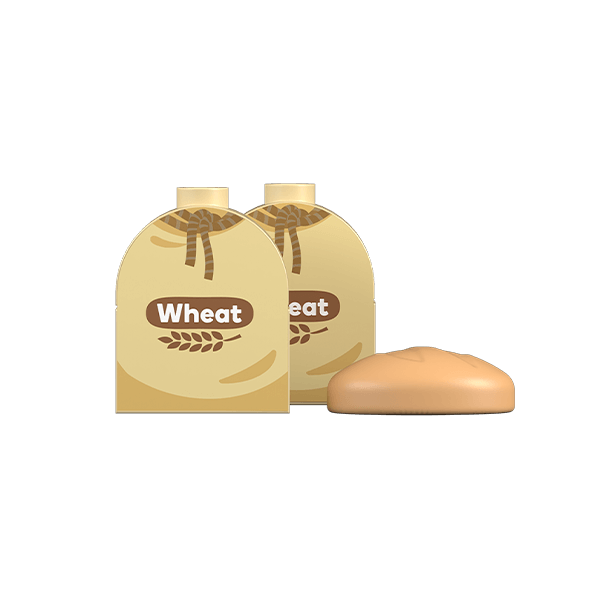
Bread makes a great snack! It contains carbohydrates, which our body breaks down and uses for energy.
Potato crate
Potatoes are a versatile and delicious vegetable. Mash them, boil them, stick them in stew, or try them baked for a crunchy bite.

Potatoes contain potassium, which helps nerves function*.
*When eaten as part of a healthy diet.
Carrot crate
Keep your carrots safely stored in their very own Woolworths crate.

Woolworths sells around 44,000 tonnes of carrots per year. That's about 76 Airbus A380s!
Pear crate
Keep your pears safely stored in their very own Woolworths crate.

The Packham is the most popular and well-known pear. It has a crisp skin and sweet, juicy flavour.
Mixed produce crate
We’re always looking to encourage organic farming with our partner farms. You can learn more about Macro Organic produce here.

Peaches and nectarines are closely related stone fruits.
The Odd Bunch
All produce is created equal and, even though it looks unique, this bunch of vegetables still tastes delicious! Find out more about The Odd Bunch here

The Odd Bunch saves millions of kilos of fruit and veggies from being wasted. It also enables farmers to sell more of their crop.
Berry crate
Keep your berries safely stored in their very own Woolworths crate.

Blackberries, like raspberries, grow on bushes or shrubs, are thorny and prickly.
Sustainability & other
Haystack
Haystacks are a nifty and convenient storage solution for livestock feed.

Hay is made up of grass, legumes & other plants that have been cut, dried & stored to feed animals.
Fence
Helpful for creating paddocks for our animals, fence posts are also a great seat for kookaburras.

Stretching more than 5600 kilometres, Australia's 'dingo fence' is one of the world's longest structures.
Compost bin
Compost bins are useful for recycling food waste into valuable fertiliser for the farms.

Compost worms play a big role in the composting process, they work to break down organic waste.
Trough
It can get hot out on the farm. Ensuring your animals have a long, open water container to drink from is critical.

Just like humans, animals need plenty of water to function properly.
Solar panels
An environmentally-friendly energy solution, solar panels convert the sun’s rays into valuable energy.

In one hour, the sun provides more energy to Earth than the human population uses in a year.
Drone
Drones are used to survey outback stations, which can stretch for thousands (or even millions!) of hectares.

Drone technology is very useful on farms, helping farmers track their cattle, crops, water and more.
Chicken coop
The chicken coop is a comfy spot for hens to lay their eggs and stay warm and dry.

On average a hen will lay around five eggs per week, depending on their breed, age, size and seasonal conditions.
We are looking forward to your purchase!
