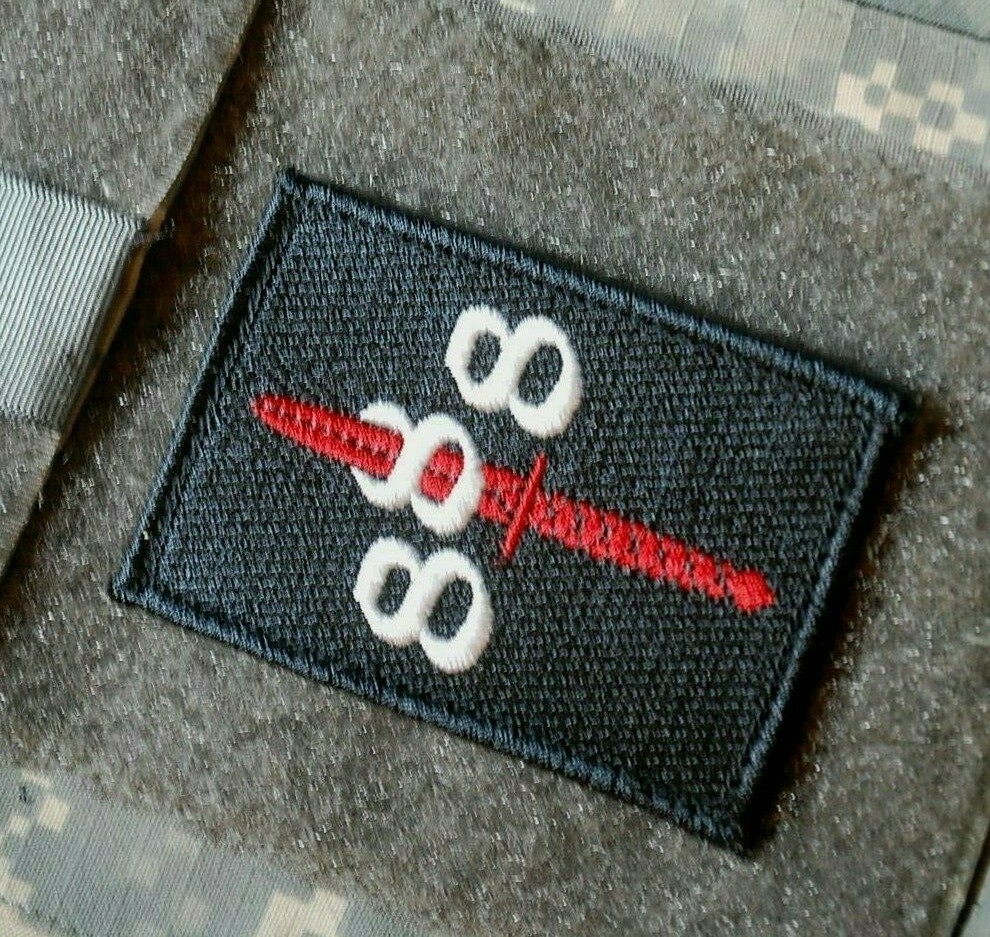
ANA Special Operations Command (ANASOC). This division sized headquarters grew from the SOF Brigade when the ANA decided to expand the ANASF and build support elements to augment the Commandos and ANASF. The ANA Commandos will be the 'direct action" force while the 1st Special Forces Brigade will conduct internal defense, reconnaissance, and direct action missions. Planned for the future are two Commando brigades, one Special Forces brigade, one training brigade, one support brigade, and one strategic battalion. Learn more about the Afghan National Army Special Operations Command. UPDATE: It appears the Afghan Army SOF forces have been reconfigured into SOF Brigades with the 1st SO Brigade at Gardez, Paktiya and the 2nd SO Brigade at Kandahar (2nd SOF BDE). Within the SOF brigades are found SOF kandaks comprised of ANA Special Forces and ANA Commandos.
The Korps Commandotroepen (KCT) (English: Commando Corps) is the special forces unit of the Royal Netherlands Army. It is one of the three principal units tasked with special operations in the Netherlands (the others being the Netherlands Maritime Special Operations Forces (NLMARSOF) of the Netherlands Marine Corps and the Brigade Speciale Beveiligingsopdrachten (BSB) of the Royal Marechaussee).
The KCT is deployable anywhere in the world under any circumstance, conducting all conceivable missions from the full spectrum of special operations, including counter-terrorism overseas. During the 1950s, the KCT transitioned to an organisation with three active companies made up of conscripts. In the context of heightened tensions between NATO and the Warsaw Pact during the Cold War, the commandos were trained for reconnaissances behind enemy lines, sabotage and intelligence operations.
In the 1960s, Korps Commandotroepen was greatly reduced in size to one active observation and reconnaissance company: 104 Waarnemings- en Verkenningscompagnie. This company was placed under the most senior field commander of the army, the commander of I Army Corps. In addition, commandos were selected to become part of the Dutch stay-behind network which was tasked with setting up an underground resistance organisation in the case of a Russian invasion.
The fall of the Berlin Wall in 1989 became a turning point for the Dutch armed forces in its entirety, and the KCT in particular. With the threat of Cold War receding, operational demands deviated significantly from the old set of tasks. Since the 9/11 Attacks, terrorism became the biggest threat, resulting in a high demand for specialist counter-terrorism units, capable of operating expeditionary. To keep up with these demands, the KCT's old role of Commando Waarnemer-verkenner (Commando Force Reconnaissance) was replaced by that of a role better suited for contemporary and versatile operations; Commando Speciale Operaties (Commando Special Operations). In addition, KCT switched from a "part conscript, part professional force" to a fully professional unit in 1995. The last conscripts made way for professional operators in 1996, when Dutch conscription was suspended. Since then, the KCT structure and operational capability have undergone a complete transformation, with great success. The unit grew from one active company to four, and matured into a professional and versatile SOF unit with a considerable reputation.
Special Operations Advisory Team
Commando in Afghanistan as part of the Special Operations Advisory Team, 2018.
Since 2018, KCT companies and NLMARSOF squadrons, together with operators of the German Kommando Spezialkräfte, form the Special Operations Advisory Team (SOAT) in northern Afghanistan. The SOAT, which is based near the city of Mazar-i-Sharif, is tasked with training the Afghan police tactical unit Afghan Territorial Force-888 (ATF-888). The commandos provide the Afghan troops with military training, and join them during operations to provide advice and, if needed, assistance. The SOAT was granted permission to conduct operations in the entirety of Afghanistan in May 2019.The roots of the KCT go back to World War II. The unit was formed under the name No. 2 (Dutch) Troop, which was part of No. 10 (Inter-Allied) Commando, on 22 March 1942. This date has lived on as the annual birthday of the present-day KCT. No. 2 (Dutch) Troop was tasked with conducting special operations, which, at the time, were operations that were considered too complex and too dangerous for conventional military units. In March 1942, the first 48 Dutch commandos were voluntarily selected from the Princess Irene Brigade and commenced training in four different British training centres, later rejoining in Achnacarry, Scotland. Of the 48 men, 25 managed to finish the intense commando course and were awarded the coveted green beret. From 1942 to 1943, the unit grew in size and achieved combat readiness. While the unit was initially supposed to deploy in Malaysia and Sumatra in 1944, this deployment was later called off. However, five Dutch commandos were sent to Burma to fight against the Japanese forces in the Arakan Campaign in 1943. The troop returned to Europe in July 1944; in the ensuing months, multiple commandos were dropped in the German-occupied Netherlands to establish contact with the Dutch resistance forces. In September 1944, Dutch commandos joined the Allied paratrooper force to fight in the failed airborne Operation Market Garden. In addition, the troop fought to free the Dutch island of Walcheren as part of the allied Operation Infatuate in November 1944.
The unit was disbanded shortly after the liberation of the Netherlands, in October 1945. However, its personnel continued fighting in the Dutch East Indies, while others formed the Stormschool training command, located in Bloemendaal. In 1949, the Stormschool was relocated to the Engelbrecht van Nassaukazerne in Roosendaal, which remains the garrison of the present-day KCT.[3] A contingent of approximately 150 troops of the Princess Irene Brigade was sent to the Dutch East Indies in January 1942, in order to strengthen the Dutch defences on the island. Their journey was aborted following the Japanese occupation of the Dutch East Indies, causing the troops to become stuck on the island state of British Ceylon. While the majority of the troops were recalled to Europe, a group of volunteers were selected to attend a special training course for jungle operations. This commando unit, named Korps Insulinde, was tasked with conducting guerrilla warfare, sabotage and intelligence operations on Sumatra, against the Japanese occupiers. Following the Japanese capitulation, Korps Insulinde was tasked with the search and rescue of (Dutch) POWs. In November 1945, the unit was disbanded - many of its members remained in military service and joined sister commando units.
During the Indonesian war of independence, which lasted from 1945 to 1949, the special operations unit Depot Speciale Troepen (DST) was established. The unit was part of the Royal Netherlands Indies Army and saw intense combat throughout the conflict. DST was tasked with conducting counterinsurgency operations and the elimination of Indonesian nationalists, and was commanded by Captain Raymond Westerling. The unit conducted numerous successful contraguerrilla operations, while simultaneously gaining notoriety for its harsh treatment of insurgents during the South Sulawesi campaign. This successful military campaign involved the alleged execution of thousands of Indonesian insurgents. In 1948, the unit, then renamed to Korps Speciale Troepen (KST), participated in Operation Kraai. During this operation, Dutch forces successfully captured Yogyakarta, the temporary capital of the Indonesian Republic. In addition, numerous high-ranking Indonesian leaders, including the Republican President Sukarno, were arrested. Following the acknowledgement of Indonesian independence by the Dutch government in 1949, the KST returned to the Netherlands. On 1 July 1950, via parliamentary recommendation, the KST merged with the training command Stormschool in Roosendaal to form the present Korps Commandotroepen (KCT). During the 1950s, the KCT transitioned to an organisation with three active companies made up of conscripts. In the context of heightened tensions between NATO and the Warsaw Pact during the Cold War, the commandos were trained to carry out reconnaissance behind enemy lines, sabotage and intelligence operations.
In the 1960s, Korps Commandotroepen was greatly reduced in size to one active observation and reconnaissance company: 104 Waarnemings- en Verkenningscompagnie. This company was placed under the most senior field commander of the army, the commander of I Army Corps. In addition, commandos were selected to become part of the Dutch stay-behind network which was tasked with setting up an underground resistance organisation in the case of a Russian invasion.
The fall of the Berlin Wall in 1989 became a turning point for the Dutch armed forces in its entirety, and the KCT in particular. With the threat of Cold War receding, operational demands deviated significantly from the old set of tasks. Since the 9/11 Attacks, terrorism became the biggest threat, resulting in a high demand for specialist counter-terrorism units, capable of operating expeditionary. To keep up with these demands, the KCT's old role of Commando Waarnemer-verkenner (Commando Force Reconnaissance) was replaced by that of a role better suited for contemporary and versatile operations; Commando Speciale Operaties (Commando Special Operations). In addition, KCT switched from a "part conscript, part professional force" to a fully professional unit in 1995. The last conscripts made way for professional operators in 1996, when Dutch conscription was suspended. Since then, the KCT structure and operational capability have undergone a complete transformation, with great success. The unit grew from one active company to four, and matured into a professional and versatile SOF unit with a considerable reputation.
The first batch of No. 2 (Dutch) Troop commandos wore the standard uniform of the British Army, supplemented with a field cap or the brodie helmet. With the changing mission set, the need for distinguishing headwear for the commandos arose. When the soldiers of No. 1 Commando chose a green beret as its standard headwear, No. 2 (Dutch) Troop soon followed suit. To this day, Dutch commandos have continued to wear the green beret.
The current KCT beret consists of the brass beret emblem, displaying a Fairbairn–Sykes fighting knife, a hand grenade and a ribbon with an inscription of the unit's motto Nunc aut Nunquam. The background of the emblem consists of a gothic typeface "W", referring to the name Wilhelmina, Queen of the Netherlands from 1898 to 1948. The beret emblem is worn on a black background with a green border. Although the KCT was established in 1942, the full dress uniform of the unit follows the uniform tradition of the conventional infantry units, dating back to 1912. The uniform consists of blue-black trousers and a blue-black jacket with a standing collar, the green commando aiguillette is worn on the left shoulder and the Fairbairn–Sykes fighting knife is attached to the belt on the left side.
While the conventional forces of the army continue to wear uniforms in Disruptive Pattern Material, the KCT switched to combat uniforms in the commercially produced MultiCam camouflage pattern. Uniforms in this pattern were earlier worn by commandos during deployments in Afghanistan and proved to be highly effective. Therefore, the KCT chose to implement MultiCam uniforms as their standard combat uniform.
Afghanistan
Special Reconnaissance Unit
Following the United States invasion of Afghanistan in late 2001, a commando platoon was deployed to the Afghan capital of Kabul in response to requests by the United States, in 2003. As Special Reconnaissance Unit of the International Security Assistance Force, the platoon was mainly active near Kabul; here they conducted reconnaissances, gathered intelligence, and provided security in the capital's safe zone. The deployment was relatively calm, and no intense fighting took place. However, in July 2003 a commando sergeant hit an improvised explosive device with his vehicle, resulting in heavy injuries to both of his legs. The detachment was recalled in the winter of 2003.
Task Group Orange
In February 2005, cabinet honoured a request by the United States to deploy special operations forces to the southern province of Kandahar, in Afghanistan as part of Operation Enduring Freedom. The contingent, called Special Forces Task Group-Afghanistan (SFTG-A) and known in the coalition as Task Group Orange, consisted of a staff, a KCT company supplemented with NLMARSOF operators, four CH-47 Chinook helicopters of the Royal Netherlands Air Force and a logistical detachment. The Task Group was tasked with tracking and neutralising insurgents, monitoring the Pakistan-Afghanistan border and preventing the infiltration of Pakistani insurgents. In 2006, their attention shifted to the province of Helmand, where the commandos were involved in multiple intense combat situations.
Task Force Viper
Task Force Viper, composed of commandos and marines, was deployed to the province of Uruzgan in the spring of 2006. The task force conducted the first reconnaissance in the run-up to the operations Deployment Task Force, which was tasked with building a vast base (Kamp Holland within Multi National Base Tarin Kot) for the Dutch troops of Task Force Uruzgan (TFU), which was part of the International Security Assistance Force. When TFU became operational, in August 2006, the commandos were tasked with conducting enemy disrupting reconnaissance and supported conventional troops when needed. In the spring of 2007, the commandos played a crucial role in the intense Battle of Chora where they performed a successful flanking of enemy positions in the Baluchi Valley. Until the end of 2007, the task force was engaged in a constant stream of troops-in-contact, during which they eliminated many Taliban insurgents while taking no casualties themselves. The courageous performance of Task Force Viper led to the awarding of numerous military decorations. This included the awarding of the highest Dutch military decoration to Marco Kroon, who became a knight of the Military William Order.
Task Force 55
In 2009, commandos were again deployed to Afghanistan, this time as part of Task Force 55 (TF-55). The commandos were tasked with combating, disrupting and attacking the Taliban insurgents, which led to this deployment being the most intense of the three task groups. TF-55 fought against local drug lords, militias, and Islamic extremists and was frequently involved in severe firefights. In July 2009, nine commandos conducted an operational combat parachute jump into enemy territory in an operation aimed at mapping the movements of local Taliban. During an operation in September 2009, corporal Kevin van de Rijdt was killed in action during a ferocious battle in the valley of the Helmand river. Six fellow commandos managed to evacuate his body under heavy enemy fire, for which they were awarded with multiple decorations. TF-55 ceased operations in August 2010, when the Dutch contribution to Task Force Uruzgan came to an end. Major Gijs Tuinman was awarded the Military William Order in 2014, for his heroic leadership during the evacuation efforts of the body of corporal Van de Rijdt.
Special Operations Advisory Team
Since 2018, KCT companies and NLMARSOF squadrons, together with operators of the German Kommando Spezialkräfte, form the Special Operations Advisory Team (SOAT) in northern Afghanistan. The SOAT, which is based near the city of Mazar-i-Sharif, is tasked with training the Afghan police tactical unit Afghan Territorial Force-888 (ATF-888). The commandos provide the Afghan troops with military training, and join them during operations to provide advice and, if needed, assistance. The SOAT was granted permission to conduct operations in the entirety of Afghanistan in May 2019.