MEHR ARTIKEL ANZEIGEN
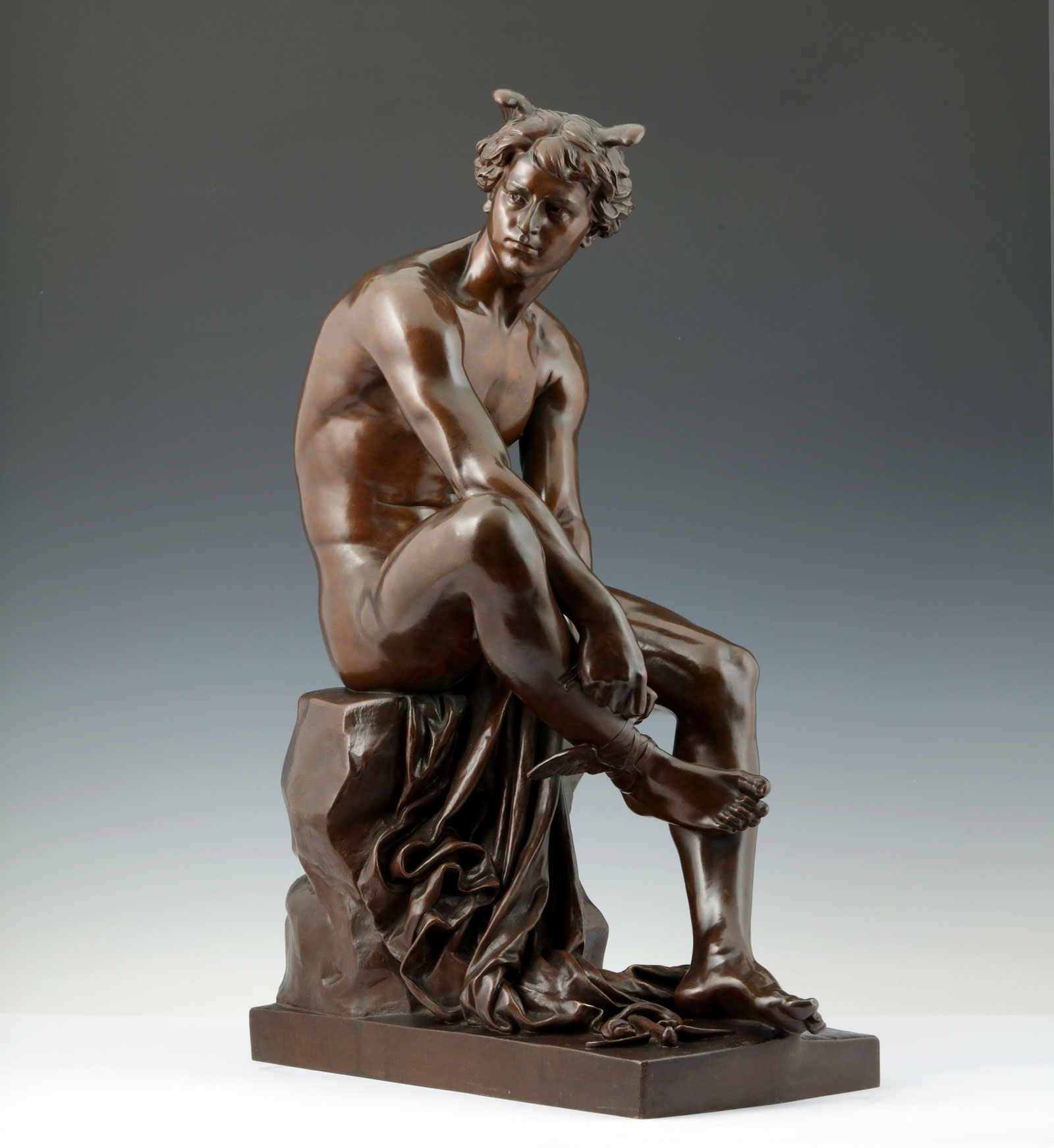
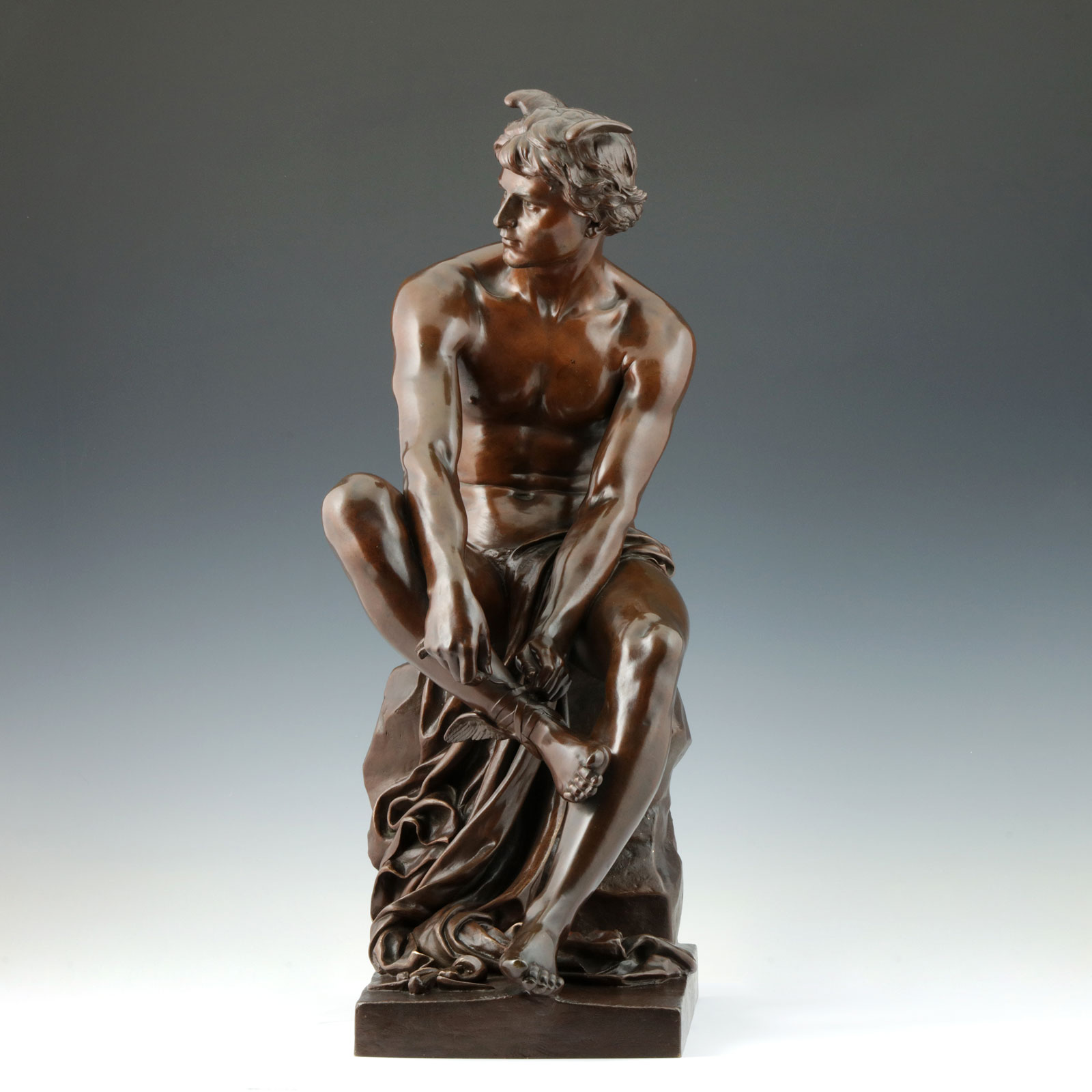
Jean-André Delorme (1829-1905) Mercure attachant ses talonnières/
Merkur bindet die Sandalen, Frankreich, 1880
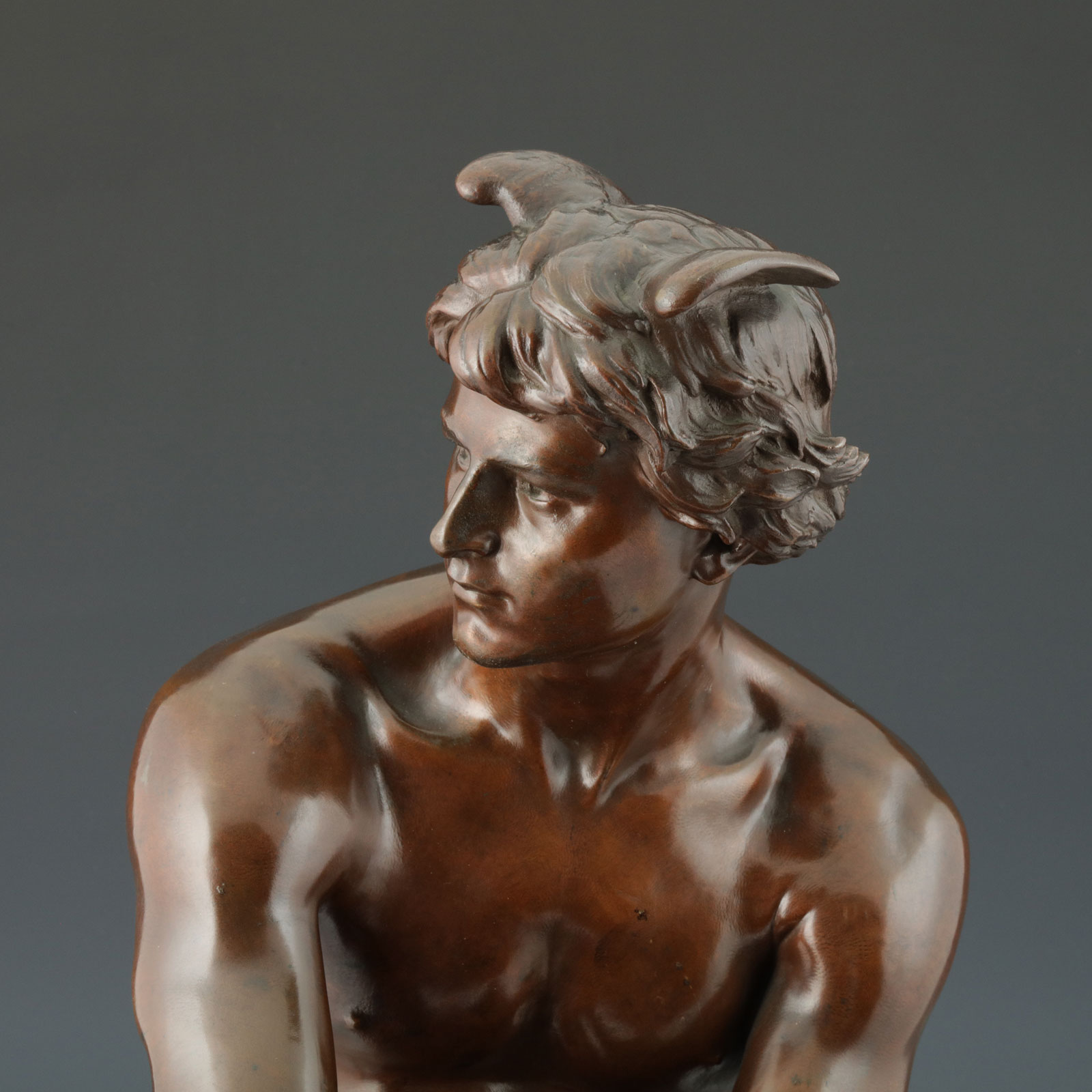
1876 präsentierte der französische Bildhauer Jean-André Delorme seine moderne Version des Götterboten Merkurs. Die wunderbare Skulptur wurde zunächst außer Konkurrenz als Gipsabguss im Pariser Salon ausgestellt. Auf dem Salon von 1880 dann in Marmor.
Die lebensgroße Statue wurde nicht nur von der Kritik begeistert gefeiert, umgehend erwarb sie der französische Staat für seine Sammlungen. Heute befindet sich die Skulptur im Musée des Tissus et des Arts décoratifs in Lyon.
Die wunderbare, vorliegende Ausführung in Bronze wurde sehr wahrscheinlich direkt nach der Präsentation im Salon (1880) in Auftrag gegeben. Weitere Ausführungen in Bronze sind zumindest nicht bekannt.
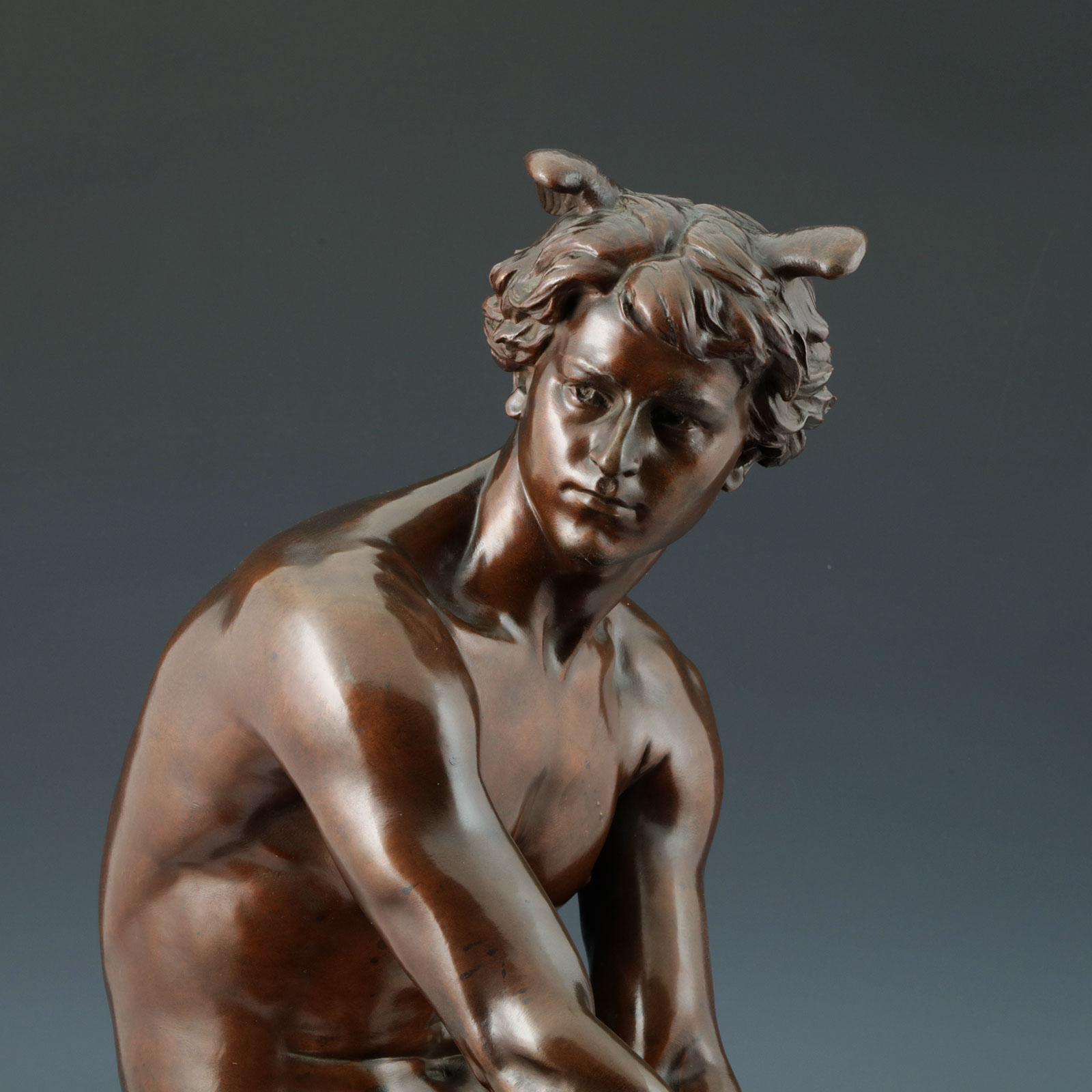
Sehr schöner, feiner Guss mit tiefer und gleichmäßiger, brauner Patinierung. Exzellenter Zustand.
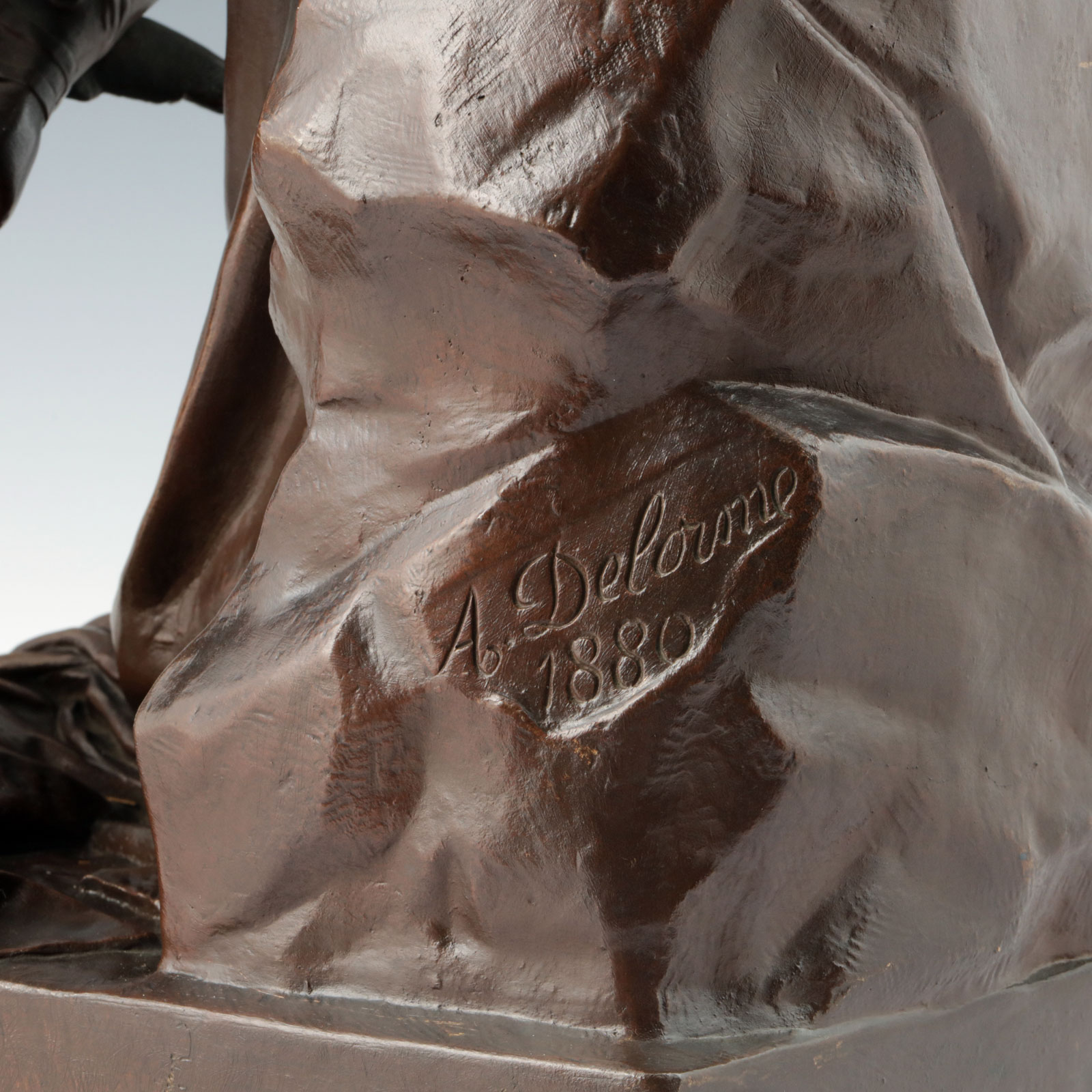
Signiert „A. Delorme 1880“
Größe: 63 cm Gewicht: 29,5 kg
Merkur, in seiner modernen, frischen Form – nur die Flügel, die in seinem Haar hervortreten zeigen seinen göttlichen Status.
Der Bote der Götter und engster Vertrauter des Zeus ist selbst ein Gott - Gott der Hirten und der Wege, des Handels und der Beschützer der Reisenden. Seine wichtigste Funktion ist die Vermittlung zwischen den Göttern untereinander und deren Beziehung zu den Menschen. Durch Merkurs diplomatische Gabe zur Versöhnung, zum harmonischen Verbinden unterschiedlicher Sichtweisen und Haltungen wurde er zum engen Vertrauten und Helfer von Zeus.
Als facettenreicher, jugendlicher und vor allem schillernder Gott wurden seine zahllosen Abenteurer von Homer in der „Ilias“ und der „Odyssee“ besungen.
Ein Exemplar der Skulptur wurde als Ausführung in Marmor 2018 bei Sotheby’s London für 24.861 Euro (ohne Aufschlag) versteigert.
Jean-André Delorme (1829 – 1905) begann sein Studium zunächst in Lyon. 1851 ließ er sich in Paris nieder und trat in die École nationale supérieure des beaux-arts ein, wo er bei Jean-Marie Bonnassieux und Auguste Dumont seine Ausbildung fortsetzte. 1857 gewann er den zweiten Prix de Rome.
1861 stellte er erstmalig im Pariser Salon aus, wo er eine Medaille zweiter Klasse erhielt. Bis zu seinem Tod war er dort regelmäßig vertreten. 1863 wurde er als „hors concours“ eingestuft und wurde 1881 Mitglied der Jury der Société des artistes français. Auf der Weltausstellung 1889 in Paris wurde er mit einer Bronzemedaille ausgezeichnet.
Seine Arbeiten sind in zahlreichen öffentlichen Sammlungen vertreten.
Mercure attachant ses talonnières /Mercury tying his sandals by Jean-André Delorme (1829–1905)
Bronze, 1880
In 1876, the French sculptor Jean-André Delorme presented his modern interpretation of Mercury, the messenger of the gods. This magnificent sculpture was first exhibited as a plaster cast outside the competition at the Paris Salon. It was then exhibited in marble at the 1880 Salon. The life-size statue was not only enthusiastically celebrated by critics; the French government immediately acquired it for its collections. Today, the sculpture is housed at the Musée des Tissus et des Arts décoratifs in Lyon.
This exquisite bronze version was most likely commissioned immediately after its presentation at the Salon (1880). At least no other bronze versions are known to exist.
A very beautiful, finely cast piece with a deep and even brown patina. Excellent condition.
Signed “A. Delorme 1880”
Height: 63 cm Weight: 29.5 kg
Mercury, in his modern, fresh form—only the wings protruding from his hair reveal his divine status.
The messenger of the gods and Zeus’s closest confidant is a god in his own right—the god of shepherds and roads, of commerce, and the protector of travelers. His most important role is to mediate among the gods themselves and in their relationship with humans.
Through Mercury’s diplomatic gift for reconciliation—for harmoniously uniting different perspectives and attitudes—he became Zeus’s close confidant and helper.
As a multifaceted, youthful, and above all dazzling god, his countless adventures were celebrated by Homer in the Iliad and the Odyssey.
A marble version of this sculpture was auctioned at Sotheby’s London in 2018 for 24,861 Euro (excluding the buyer’s premium).
Jean-André Delorme (1829–1905) began his studies in Lyon. In 1851, he settled in Paris and enrolled at the École nationale supérieure des beaux-arts, where he continued his training under Jean-Marie Bonnassieux and Auguste Dumont. In 1857, he won second prize in the Prix de Rome.
In 1861, he exhibited for the first time at the Paris Salon, where he received a second-class medal. He was a regular exhibitor there until his death. In 1863, he was classified as “hors concours,” and in 1881 he became a member of the jury of the Société des artistes français. At the 1889 World’s Fair in Paris, he was awarded a bronze medal.
His works are represented in numerous public collections.
| Hersteller: | Jean-André Delorme |
| Material: | Bronze |
| Größe: | 63 cm |
| Gewicht: | 29,5 kg |
| Stempel: | signiert |
| Alter: | 1880 |
| Zustand: | exzellent |
| Land: | Frankreich |
I enjoy beautiful things and it is my greatest pleasure to find them, to lure them into their stories, to spend time with them and then set them free again. Add to that a passionate interest in exceptional and high crafted objects. You surely know the exciting feeling when you see or experience something special, when the heart bounces in excitement and the joy inside it spreads. That's what I wanted more in my life and that's how this shop came about. The foundation stone was a study of literature and art history as well as cultural communication. Curiosity, thirst for knowledge and a lot of collaboration with amazing personalities in the art and design world are how I got myself to where I am today. Through antiquities, history becomes tangible in the literal sense, one can perceive it sensually. They calmly defy the constant change of fashions and the taste of the times. They are like a bridge between past and present. For me personally they are an inexhaustible source of inspiration. Some objects give up puzzles, lock themselves up; others quite frankly reveal their past. They radiate joie de vivre, astonish or enchant us; make a collector's heart beat faster or become good friends and a meaningful place in your lives. They may be bulky or controversial, but they are never boring. I believe the stories, the hands, and the tradition behind the objects are equally as important as their aesthetic qualities. Antique objects can adds so much value to your life, and I personally cannot imagine a home without it. Each piece in my shop has been thoughtfully and personally chosen. What unites them is their craftsmanship, care and attention to detail. Enjoy them.