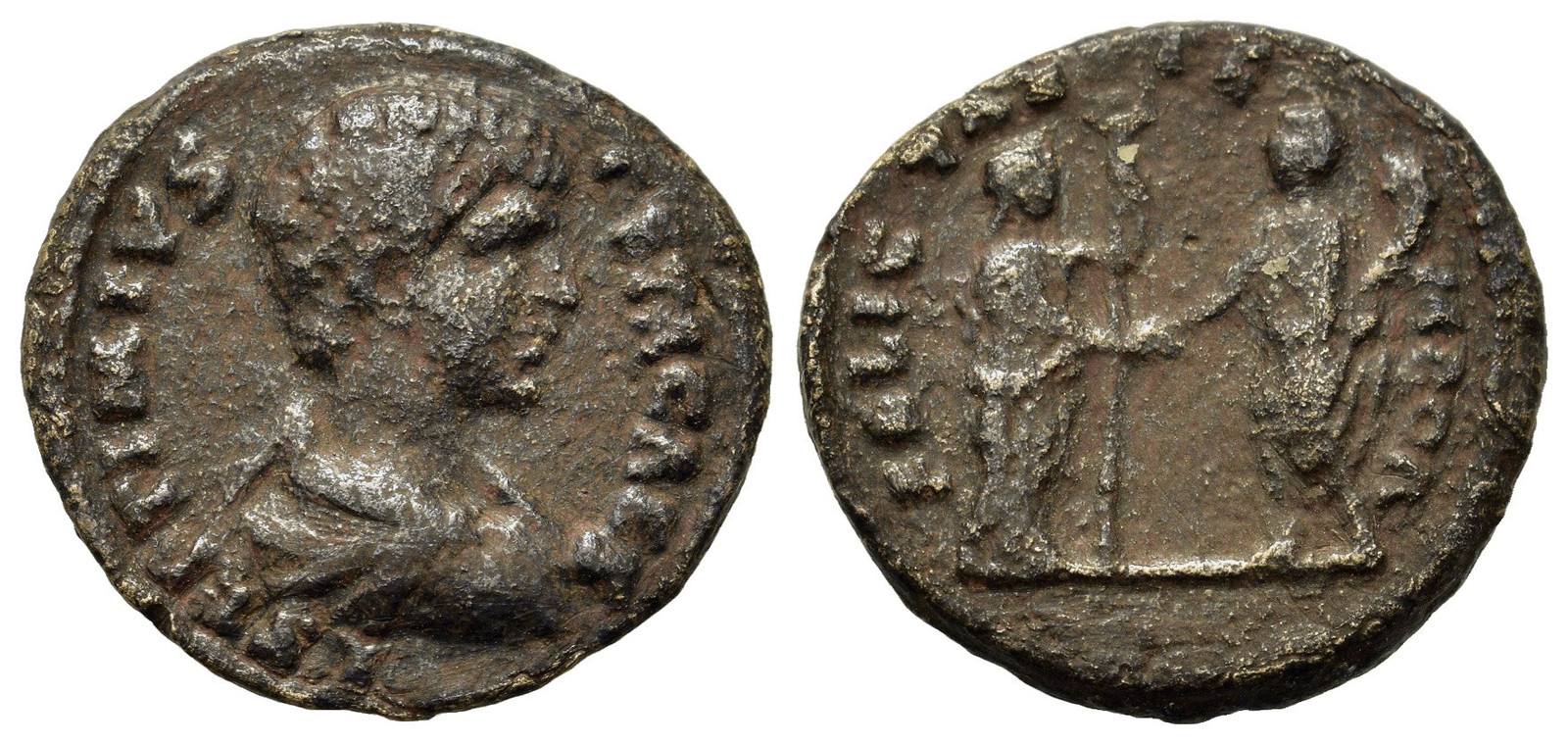
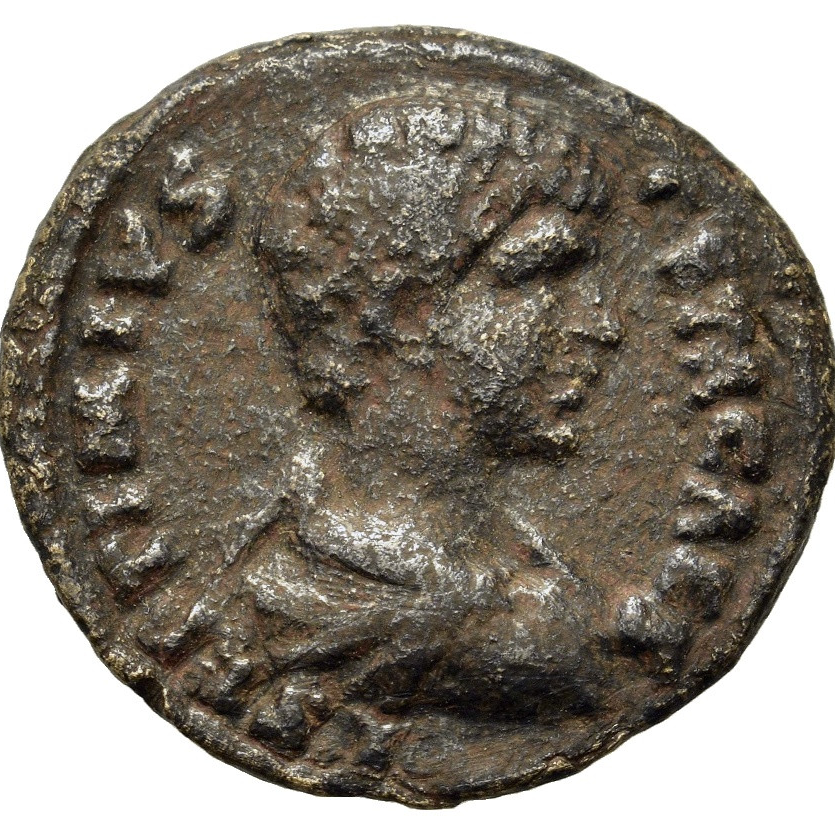
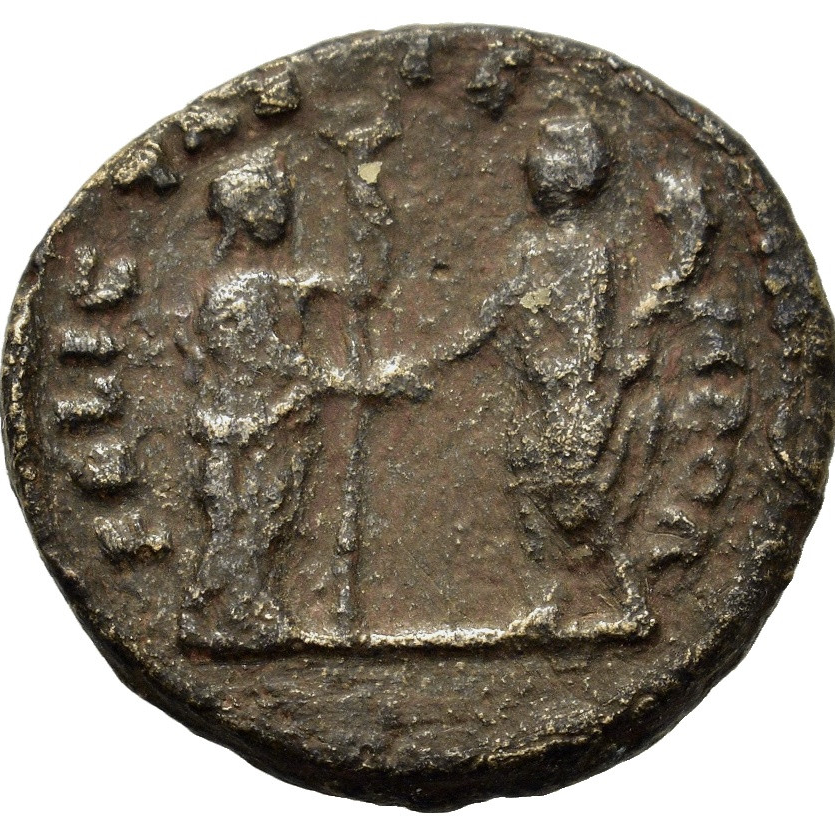
Roman Silver Denarius - Rome 198-209 AD - Geta - Felicitas
- Obverse: Bare-headed and draped bust of Geta facing right.
- Reverse: Felicitas standing to the right, holding a caduceus in her left hand and clasping hands with Geta, who stands to the left holding a cornucopiae in his left hand.
- Date: 198-209 AD
- Size: 18 mm, 2 g
- Composition: Silver
- Reference: Geta (Caesar, 198-209). Fourée Denarius. Rome. RIC 1.
- Internal SKU: 130X463
HISTORICAL NOTE: The Roman silver denarius struck during the reign of Emperor Septimius Severus' son Geta, between 198 and 209 AD, is a significant numismatic artifact reflecting the themes of prosperity and divine favor associated with the imperial family. The obverse of this coin typically features a portrait of Geta, often portrayed with a youthful visage and the laurel wreath, symbolizing triumph and divine approval. The reverse usually depicts Felicitas, the personification of good fortune and prosperity, signifying the hopes and expectations associated with Geta's rule. This period was marked by political instability and familial conflict, particularly the tumultuous relationship between Geta and his brother Caracalla, culminating in Geta's assassination in 211 AD. Thus, the denarius serves not only as a monetary instrument but also as a narrative resource that encapsulates the complexities of imperial power dynamics in early 3rd century Rome. The coin's design and inscriptions reflect contemporary values and highlight the importance of familial lineage and favor from divine entities, particularly in a volatile political landscape.