Focus on Solar Imaging!
Apollo series is the world's first camera line specifically designed for solar photography. This series is named after Apollo.
The Apollo series features sensors for Sony with global shutters and a focus on monochrome sensors.

We have launched 4 models of Apollo cameras:
Apollo-M MAX (IMX432) monochrome camera with a 1.1" sensor.
Apollo-M MINI (IMX429) monochrome camera with a 2/3" sensor.
Apollo-M (IMX174) monochrome camera with a 1/1.2" sensor.
Apollo-C (IMX174) color camera with a 1/1.2" sensor.
Note:
- The solar camera needs to be used with a device such as baader film or Herschel wedge prism for energy cut-off or light reduction. Do not use the camera directly on a telescope without a dimming device.
- Other accessories are not included in the package. If you need them, please contact us before purchasing.
Product Description:
Apollo-M MINI is a solar camera developed by Player One Astronomy. It adopts the IMX429 2/3" format monochrome sensor for Sony. The 4.5um pixel size accommodates a well depth of 24.8Ke with a total of 2.8MP (the resolution is 1944*1472), and the diagonal is 11mm.

Pregius Technology
Apollo-M MINI (IMX429) is based on Pregius 3rd Generation. According to the introduction of technical documents, pixel size of 3rd Gen usually is 4.5um, and full well is 25Ke.
Format
Apollo-M MINI (IMX429) has a 2/3" format. This size is between IMX178 and IMX174.

Pixel Size
4.5um pixel size is smaller than that of IMX174 camera, which means that it can provide higher resolution in the same focal length.

HCG Mode
Apollo-M MINI has HCG mode. When the gain is over 71, HCG mode will turn on automatically.
Highlights:
With a global shutter, Apollo-M MINI is very suitable for sun and space station imaging. 4.5um pixel size and resolution 1944*1472 make it easy to get high resolution images of the sun.
Recommended Accessories (Optional):
ACS (Active Cooling System)
ACS is an external air-cooled system. It is designed for solar and big format planetary cameras with PCS (Passive Cooling System). ACS can provide much better temperature control. When your camera has PCS + ACS, its temperature is only 7â higher than the ambient temperature. The camera body is a little warm, but it is not hot. ACS can be used in daylight for solar imaging and used at night for DSO lucky imaging.
https://player-one-astronomy.com/product/active-cooling-system-acs-for-uncooled-cameras/

For better contrast, Player One Photosphere 10nm filter will be a good choice.

Photosphere in white light


Chromosphere in H-Alpha
Introduce new 1.25" ERF filter for Quark Chromosphere (Ha version), to reject energy and extend life time of your Quark.

When used with solar telescopes for Lunt and other brands, Apollo-M MINI also can provide a very good performance at f15-f20 focal ratio.
Apollo-M MINI Users:

Akihiro Yamazaki: CFF200mm (F8), for PowerMate 4x, for Daystar ION (0.5A), Player One Apollo-M MINI
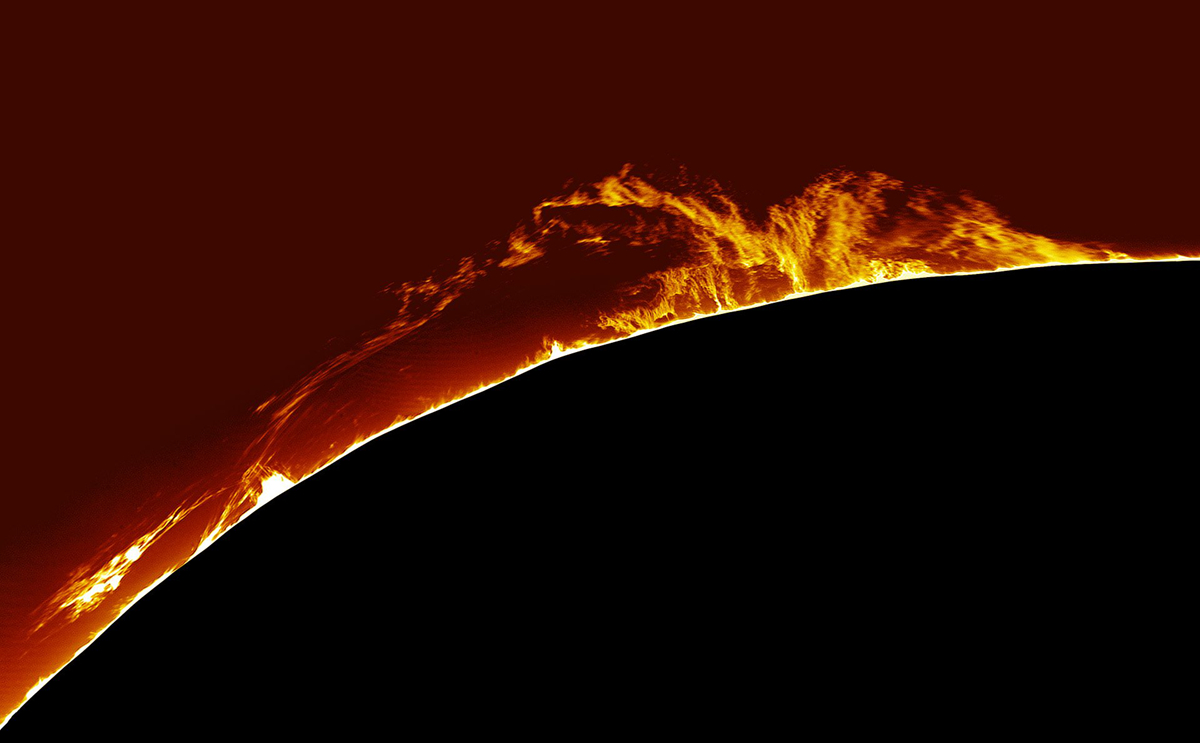
Akihiro Yamazaki: CFF200mm (F8), for PowerMate 4x, for Daystar ION (0.5A), Player One Apollo-M MINI, 20sec x 4pics (Mosaic)

Akihiro Yamazaki: CFF200mm (F8), for PowerMate 4x, Player One Apollo-M MINI
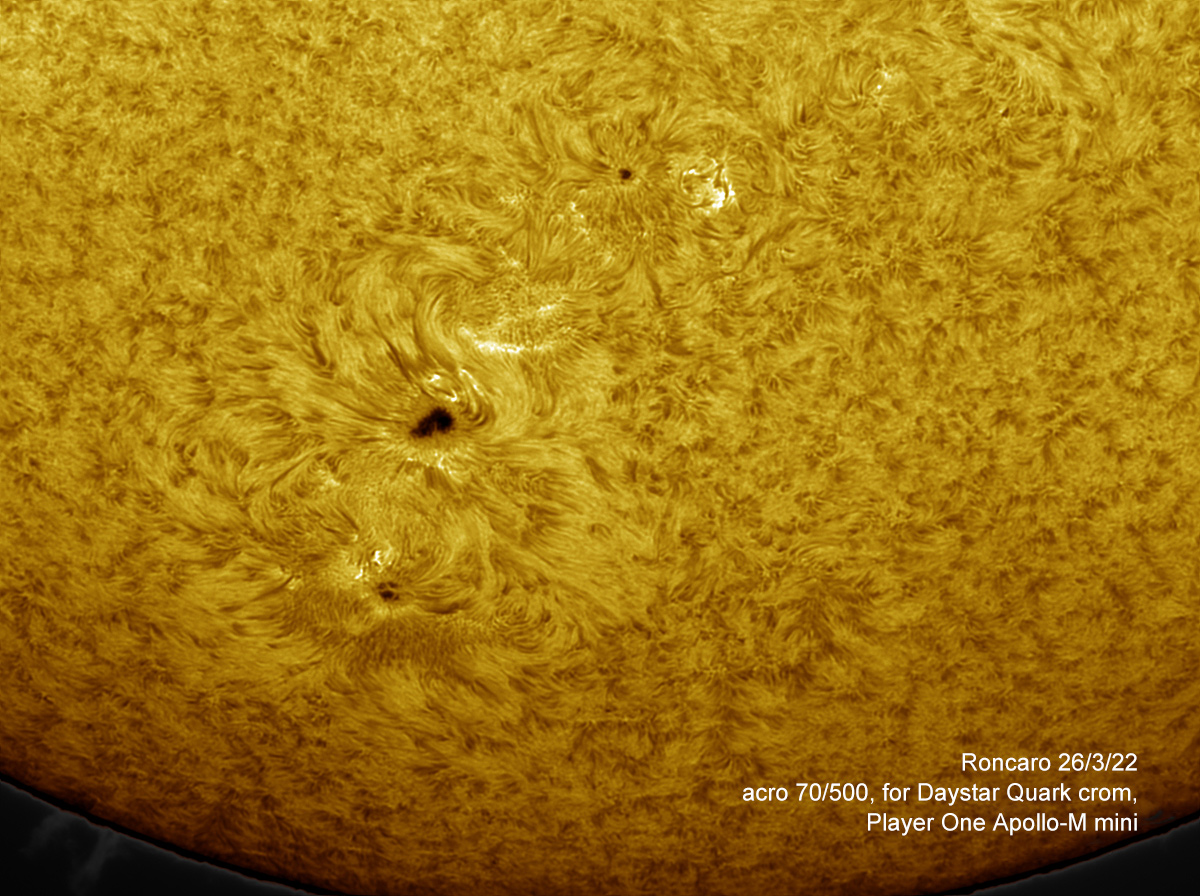
Andrea Cuozzo: acro 70/500, for Daystar Quark, Apollo-M MINI

Khisamutdinov Maksim: LX200 16", Apollo-M MINI.
Reference setup: LXY80APO F6, for Quark Chromosphere, Apollo-M MINI.
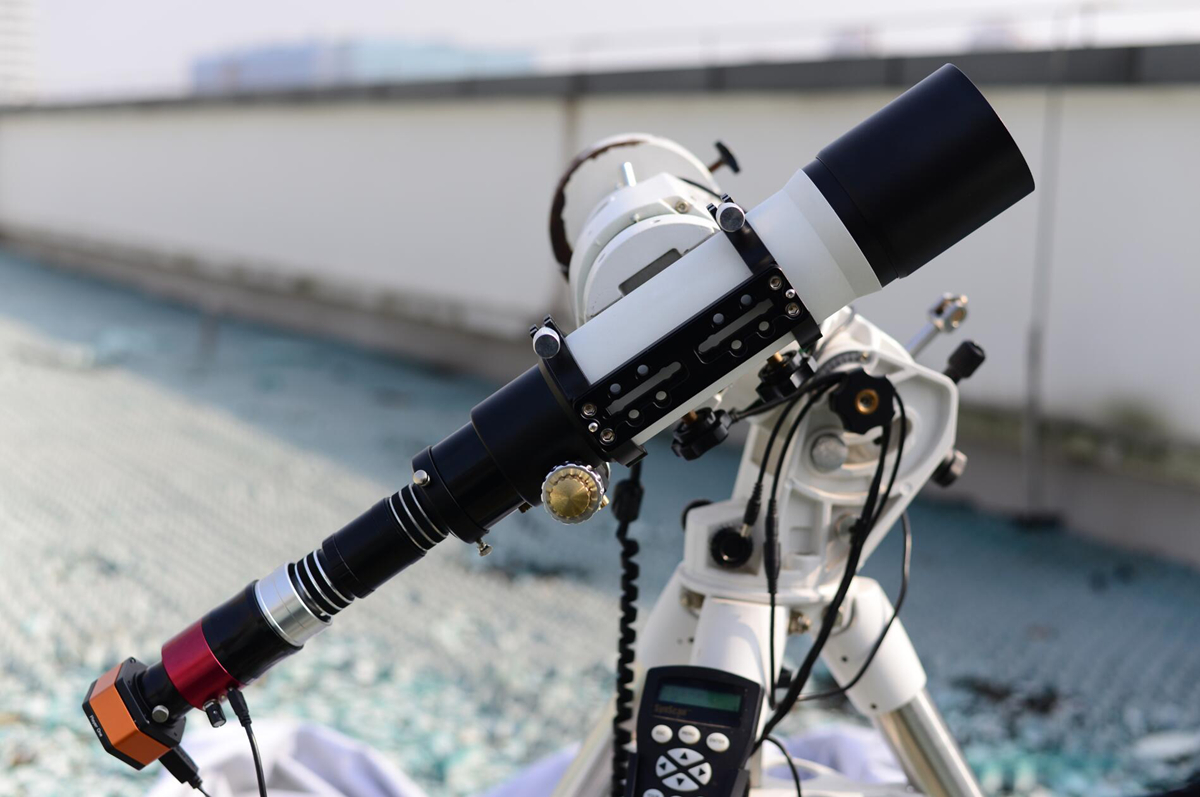


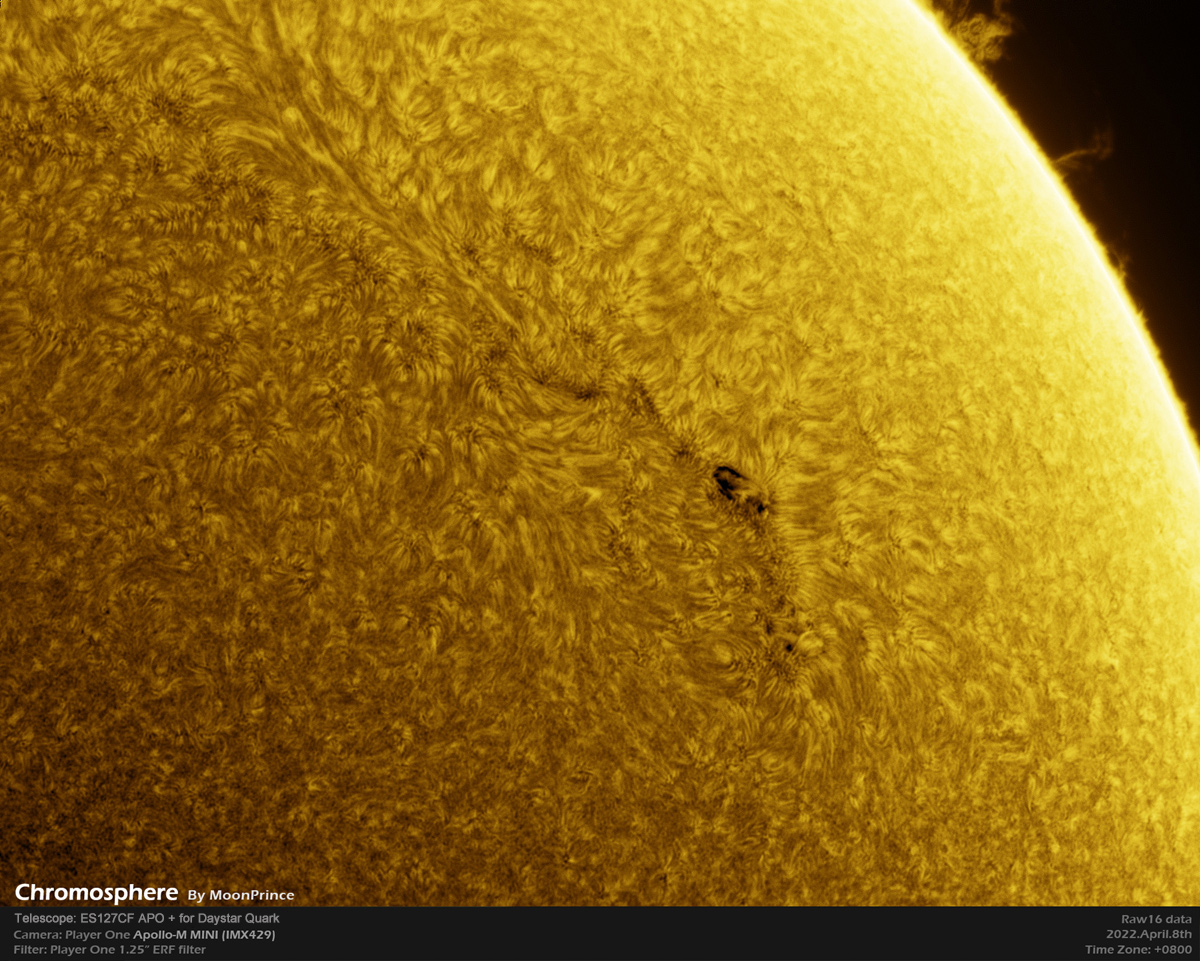

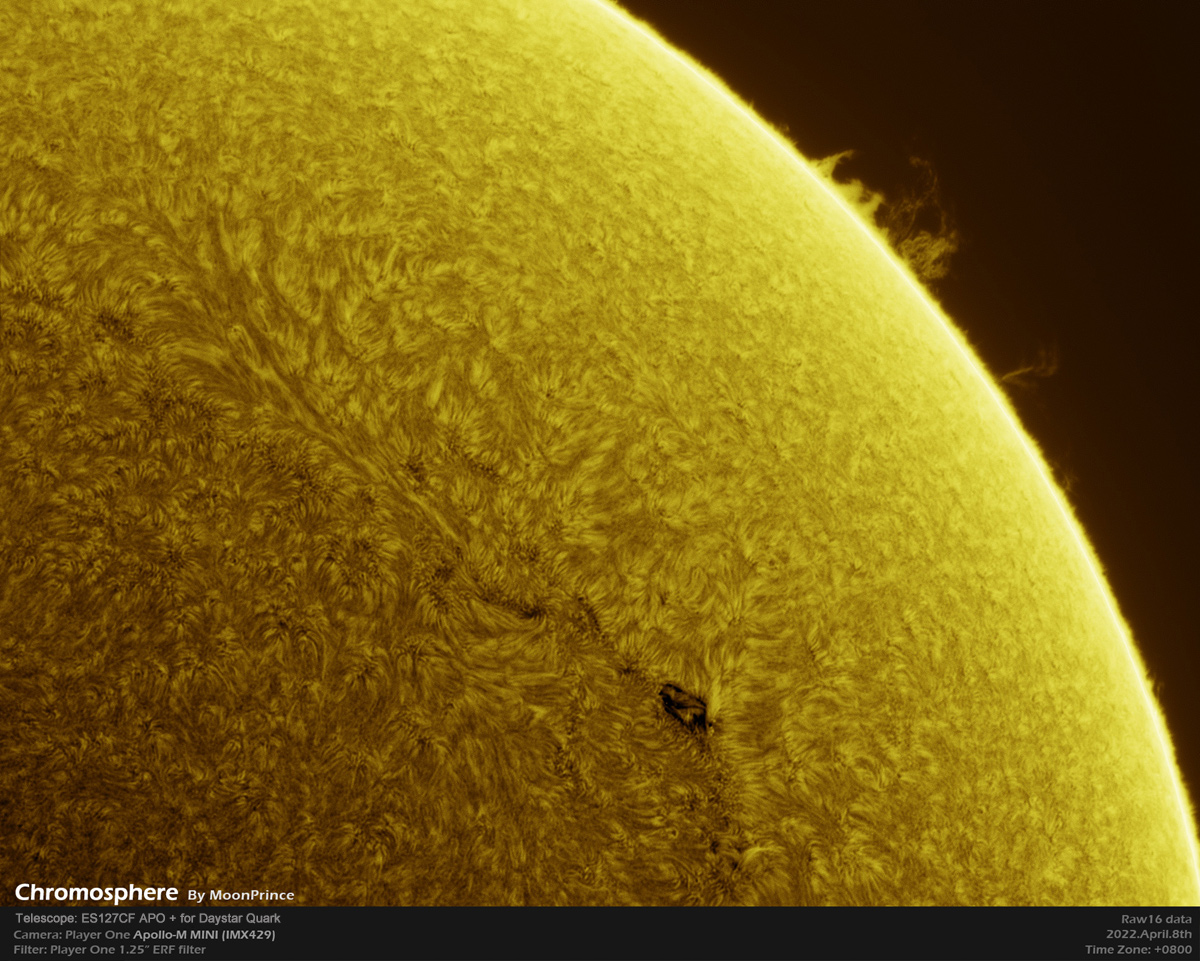
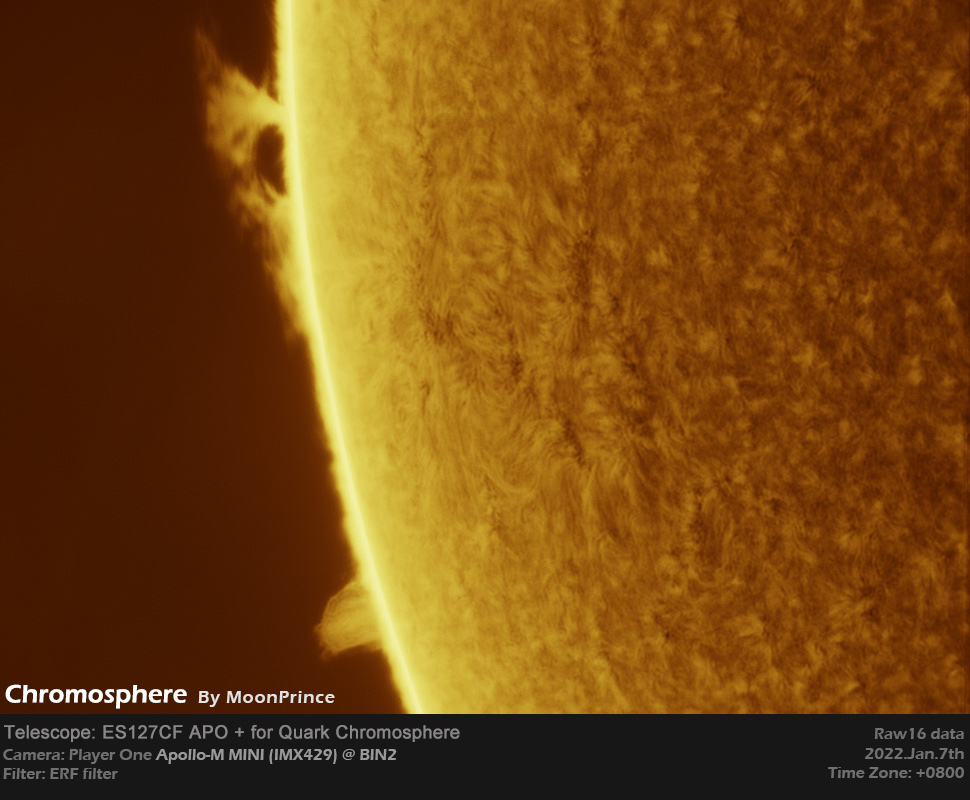
When it was used with a Hα filter for QUARK Chromosphere (4.2X built-in barrow version), we found that in BIN2 mode, the pixel binning was changed from 4.5um to 9um, and the full well and image brightness were increased to 4 times.
Recording in 16-bit RAW format, BIN2 mode can provide 14-bit data for better results in photographing and post-processing.
Features:
The naming of Player One Astronomy cameras is unique. Solar camera line is named after Apollo, the god of the sun. The suffix of the name describes the camera's biggest feature.

Download drivers and software: http://player-one-astronomy.com/service/software/
Download manuals: http://player-one-astronomy.com/service/manuals/
Cutting-edge Design
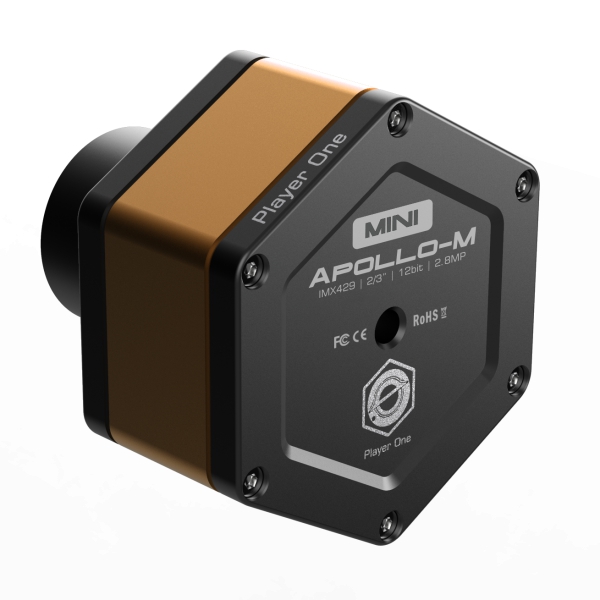
The planetary cameras developed by Player One Astronomy use a scientific and technological regular hexagon to construct the main body line, supplemented by round chamfers to achieve both rigidity and flexibility. The positive orange, which is imply solar, is matched with the low-key and steady black. And the super-fine frosting process on the entire surface makes the camera look luxurious and cool, highlighting the style of high-end players.
2nd Gen - Sensor Tilt Plate
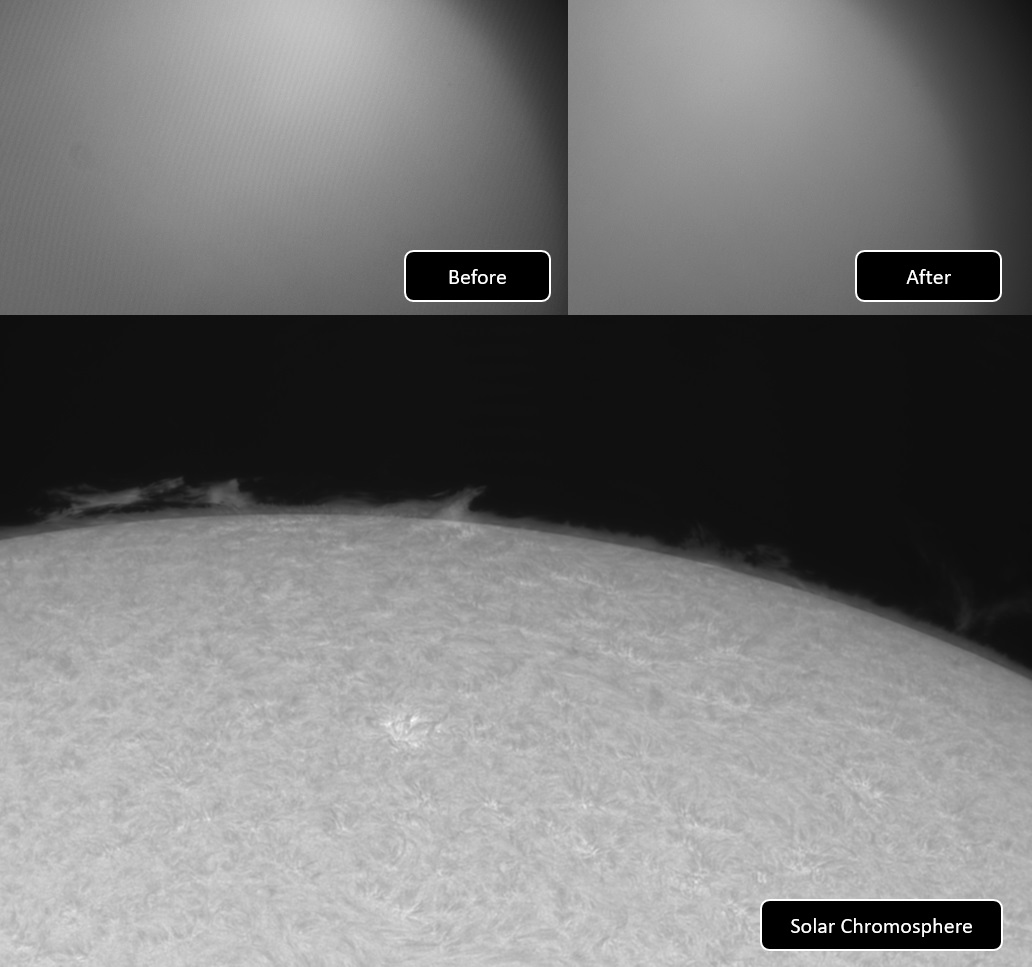
When you are taking photographs of the sun with a prominence telescope, the Newton ring will be annoying. Smoother solar images without Newton ring could be taken by adjusting the focal plate. Get a much smaller field curvature of the telescope.

Built-in high-density sponge shading pad can block the light from the side slits without any side leakage.

Passive Cooling System
The temperature of solar cameras working in daylight could be higher than the temperature when they are used at night. Heat of global shutter sensors will be a problem, especially for some big formats like IMX432. Player One adds a new feature called Passive Cooling System to conduct the heat from the sensor out.
256M DDR3 Cache
Player One Astronomy cameras are the first one of planetary cameras to use the DDR3 cache in the world! It helps stabilize and secure data transmission, effectively avoids frame dropping and greatly reduces read noise.
With the DDR3 cache, the cameras do not have high demands on computing any longer. But the cameras still have an excellent performance even if they are connected to a USB 2.0 port.
DPS Technology
The planetary cameras from Player One Astronomy have DPS (Dead Pixel Suppression) technology. The DPS can analyze many dark frames to find out those fixed abnormal pixels and record the map in camera memory. In imaging, each exposure frame and those positions of dead pixels will be given a median value according to the active pixels around the abnormal pixels.

Over-voltage and Over-current Protection Mechanisms
Player One cameras ensure the safety of your camera and other equipment through over-voltage and over-current protection mechanisms.
Data Port
When the camera is connected to the USB3.0 interface and full-resolution preview is used, it can reach 84 FPS in RAW8 mode (12bit ADC). For recording images, the actual writing speed will be affected by the writing speed of the hard disk itself. When the hard disk writing speed is slow, the recording may not reach the theoretical speed. It is recommended that you use a high-quality solid state drive to record data to give full play to the performance of the camera.
Use an ST4 guide cable to connect the camera and the AUTO GUIDE port of the equatorial mount to do guiding.

Performance:
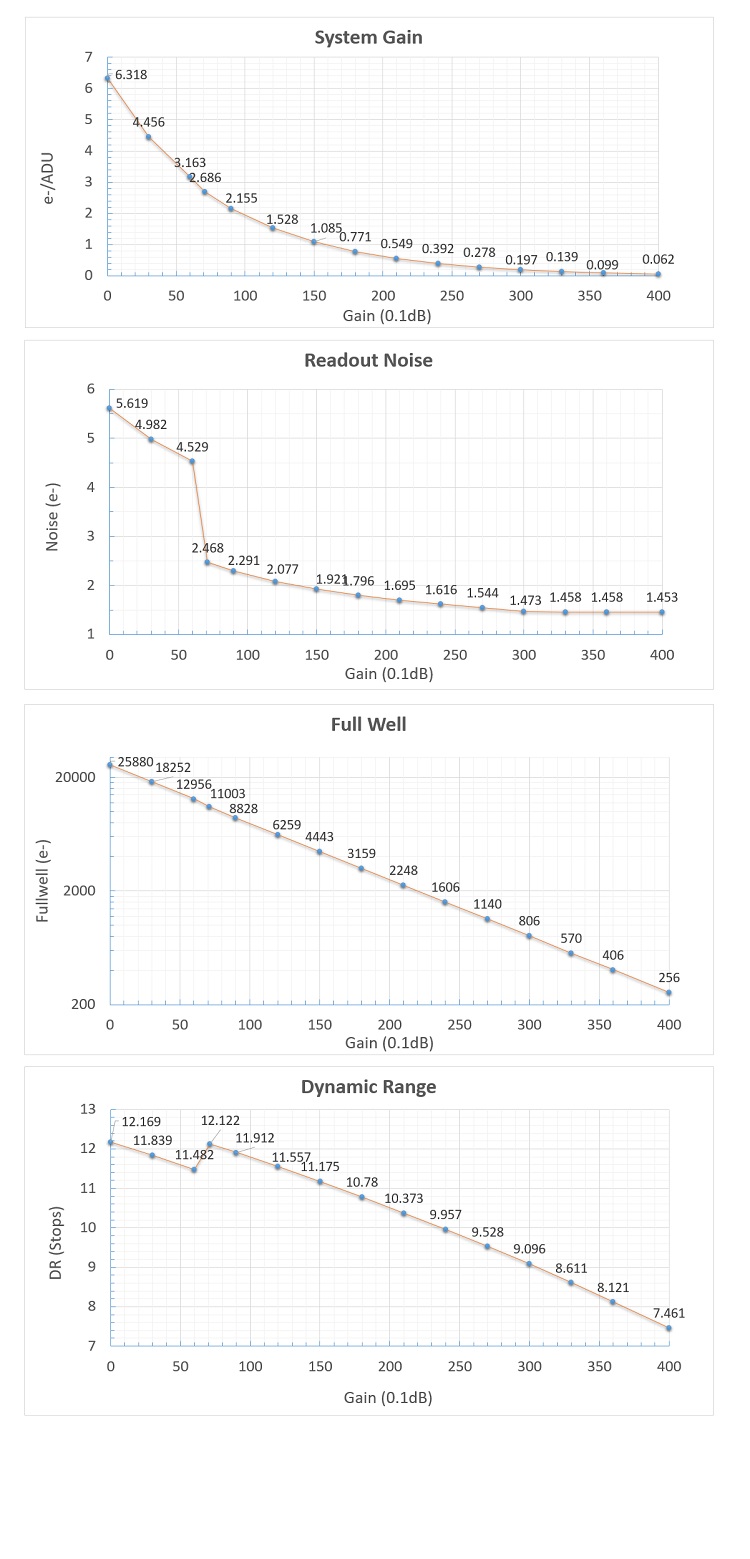
Readout Noise
Regarding readout noise, we solemnly promise that all values are obtained from actual tests. You can use the software for Sharpcap 4 for testing. SC4 has a function called Sensor Analysis, providing a very simple way to test readout noise.
We wrote a tutorial on website: https://player-one-astronomy.com/service/manuals/
After many rigorous readout noise tests, this camera can get a low readout noise of 1.45e at a gain of 380.
If you are interested in readout noise testing, you can try it by yourselves because it is very simple.
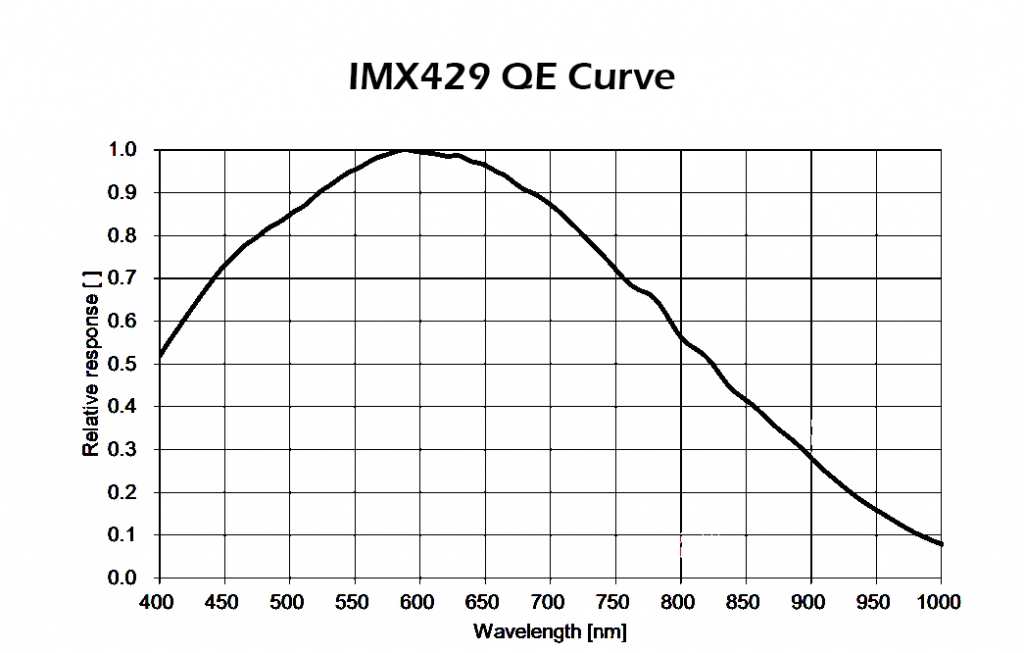
QE Curve
Absolute peak value is about 79%.
HCG Mode
The Apollo-M MINI camera has a unique HCG mode. The HCG mode can greatly reduce the readout noise and retain the same high dynamic range as the low gain.
Mechanical Drawing:


Package Included (without ACS):
- 1 x Camera and 1.25" T-mount
- 1 x 2M USB3.0 cable
- 1 x 2M ST4 cable
- 1 x 1.25" dust-proof cover
- 1 x Air blower
- 1 x M2 hex wrench
- 3 x M1.2 hex wrenches
Packaging Details (without ACS):
- G.W.: 0.75kg
2. We ship to your eBay or Paypal address. Please make sure your eBay and Paypal address is correct before you pay.
2. For remote regions of DHL/FedEx..., extra shipping costs might be charged. Usually it costs about 30USD-50USD. We will contact you if shipping company informed us your address belongs to remote area. Thanks for your understanding.
2. Please check with your country's customs office and inform us what/how much should declare before shipping.
2. If you are dissatisfied for any reason, please don't be quick to leave us neutral or negative feedback. We work hard to make sure EVERY CUSTOMER 100% SATISFIED and resolve any problem for you and always leave positive feedback to all our customers.
On Jul 25, 2024 at 06:24:06 PDT, seller added the following information:
On Sep 13, 2024 at 07:29:55 PDT, seller added the following information:
