 |
|
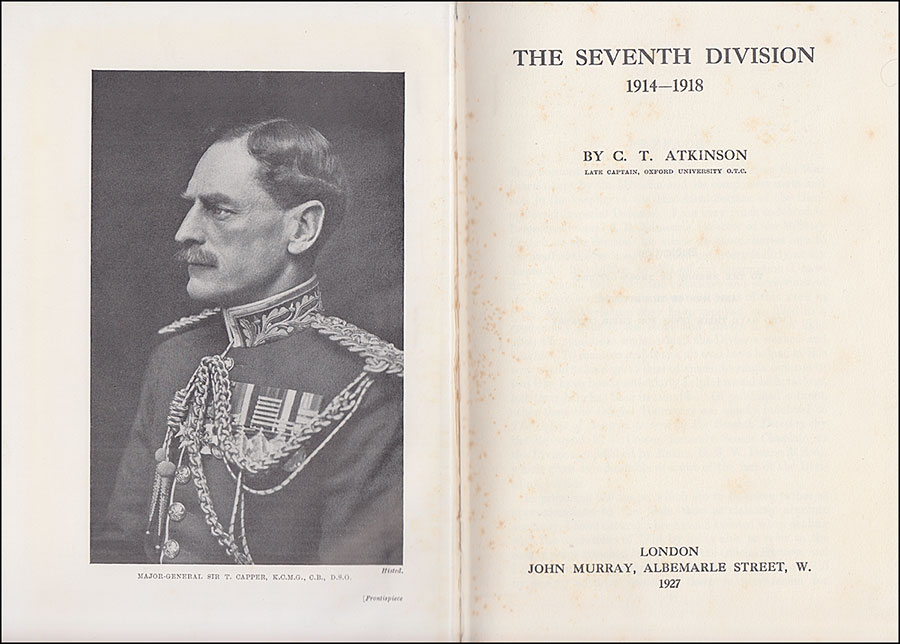
The Seventh Division
1914 - 1918
by
Captain C. T. Atkinson
Late Captain,
Oxford University O.T.C.
|
|
 |
|
This is
the 1927 First Edition
“This
account has been put together mainly from the War
Diaries kept by the Division and its component units and
now in the keeping of the Historical Section of the
Committee of Imperial Defence”
A First Edition of this
excellent Divisional History, which Cyril Falls regarded
as one of the greatest fighting formations Britain ever
sent to war: “This is a clear and well-balanced
narrative . . . The most interesting part of its long
and honourable record is that immediately after its
landing at Zeebrugge as part of the force which was to
have relieved Antwerp. It did not, as all the world
knows, do that, but in October joined the main British
Expeditionary Force, which had moved north after the
Battle of the Aisne, and was thrown into the turmoil of
“First Ypres.” In almost every great battle of the
Western Front it played its part, till in the winter of
1917-1918 it was sent to Italy as a result of the recent
Italian disaster. There it had a quiet time, but took
part in the following October in the final victorious
offensive.” Cyril Falls (War Books)
|
|
|
|

Front cover and spine
Further images of this book are
shown below
|
|
|
|
|
 |
|
|
|
|
|
Publisher and place of
publication |
|
Dimensions in inches (to
the nearest quarter-inch) |
|
London: John Murray |
|
6 inches wide x 9 inches tall |
| |
|
|
|
Edition |
|
Length |
|
1927 First Edition |
|
[x] + 529 pages |
| |
|
|
|
Condition of covers |
|
Internal condition |
|
Original blue cloth blocked in gilt on the
spine and with the Divisional insignia (a white circle) on the front cover
(which shows definite signs of having been retouched at some stage). The covers are rubbed
and dull with some old staining and surface scratching, together with
occasional patchy loss of colour. The spine has darkened with age and is
quite dull.
The spine ends and corners are bumped and frayed with some generally minor
splitting of the cloth. There are some indentations along the edges of the
boards. |
|
The end-papers are browned and discoloured.
The front inner hinge is cracked at the Title-Page. The text itself is clean
throughout, on tanned paper, with scattered foxing, which is occasionally
heavy and sometimes very heavy, particularly affecting the first few pages. The edge of the text block is dust-stained and foxed with the foxing
occasionally extending into the margins. The illustrations have acquired a
yellowish tinge. |
| |
|
|
|
Dust-jacket present? |
|
Other
comments |
|
No |
|
This is a good solid example of the First
Edition with mainly age-related issues, including dull covers and some
occasionally heavy foxing. |
| |
|
|
|
Illustrations,
maps, etc |
|
Contents |
|
Please see below for details |
|
Please see below for details |
| |
|
|
|
Post & shipping
information |
|
Payment options |
|
The packed weight is approximately
1200 grams.
Full shipping/postage information is
provided in a panel
at the end of this listing.
 |
|
Payment options
:
-
UK buyers: cheque (in
GBP), debit card, credit card (Visa, MasterCard but
not Amex), PayPal
-
International buyers: credit card
(Visa, MasterCard but not Amex), PayPal
Full payment information is provided in a
panel at the end of this listing. |
|
|
|
|
|
 |
|
 |
|
|
|
The Seventh Division
1914 - 1918
Contents
I. Mobilization and Antwerp
II. First Ypres : Menin, Zonnebeke, Polygon Wood
III. First Ypres (continued) : Kritiseik
IV. First Ypres (concluded): Zandvoorde and Zillbeke
V. Trench Warfare in the First Winter
VI. Neuve Chapelle
VII. Aubers Ridge and Festubert
VIII. From Festubert to Loos
IX. Loos
X. After Loos
XL Preparing for the Somme
XII. The Somme : Mametz
XIII. The Somme : Bazentin and High Wood
XIV. The Somme : Ginchy
XV. After the Somme : Beaumont Hamel
XVI. The German Retreat to the Hindenburg Line
XVII. The Retreat to the Hindenburg Line (continued) : Croisilles
and Ecoust
XVIII. Bullecourt
XIX. After Bullecourt
XX. Third Ypres : Noordemdhoek and Reutel
XXI. Third Ypres (continued): Gheluvelt
XXII. The Move to Italy
XXIII. The Asiago Plateau
XXIV. The Grave di Papadopoli
XXV. Vittorio Veneto
Appendixes
I. Order of Battle or Division in October 1914
II. Changes in Composition of Division
III. Changes in Command and Staff.
IV. Changes in Command of Units
V. Victoria Crosses
Indexes
Battles and Actions
Persons
Units
List of Illustrations
-
Maj.-General Sir T. Capper, K.C.M.G., C.B.,
D.S.O.
-
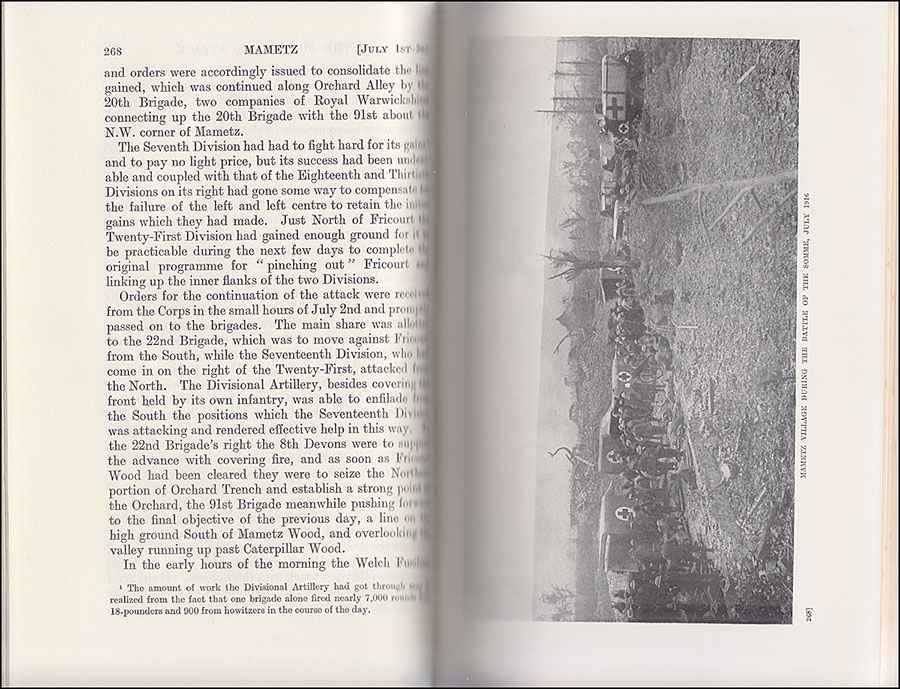
Mametz Village during Battle of Somme, July
1916
-
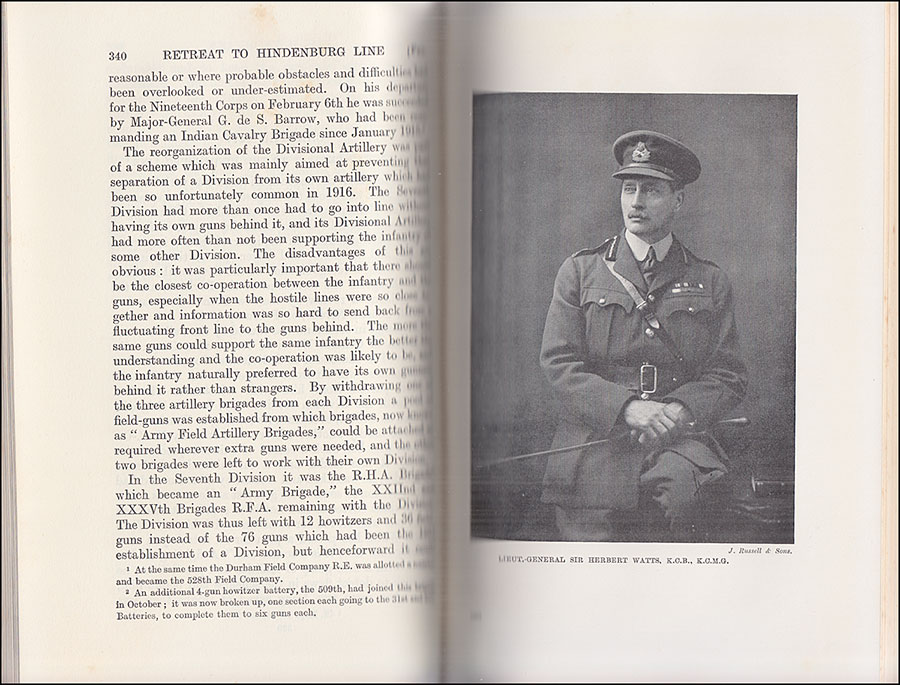
Lt.-General Sir Herbert Watts, K.C.B.,
K.C.M.G.
-
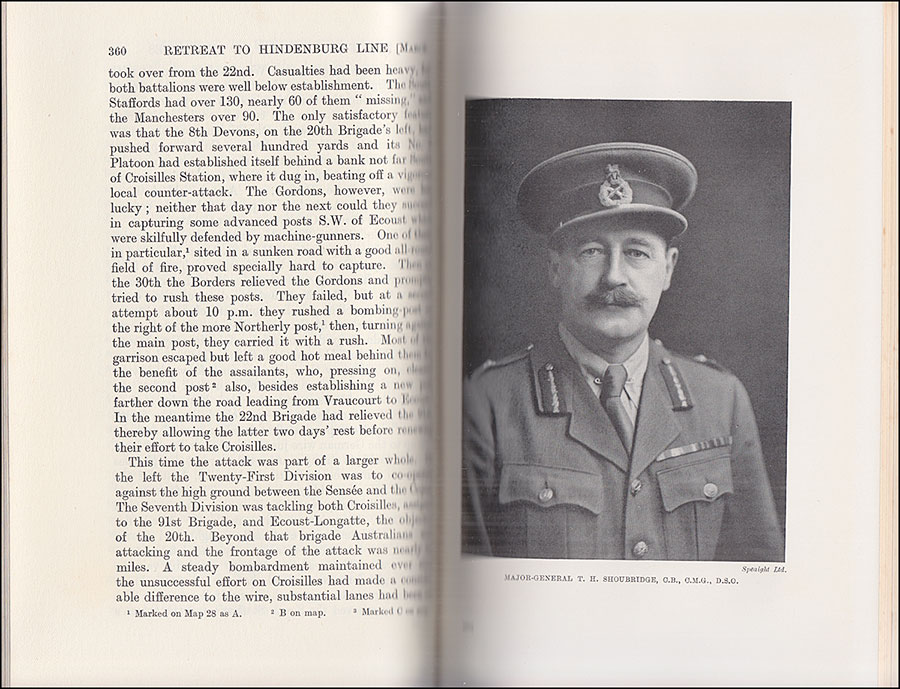
Maj.-General Shoubridge
-
Bullecourt
-
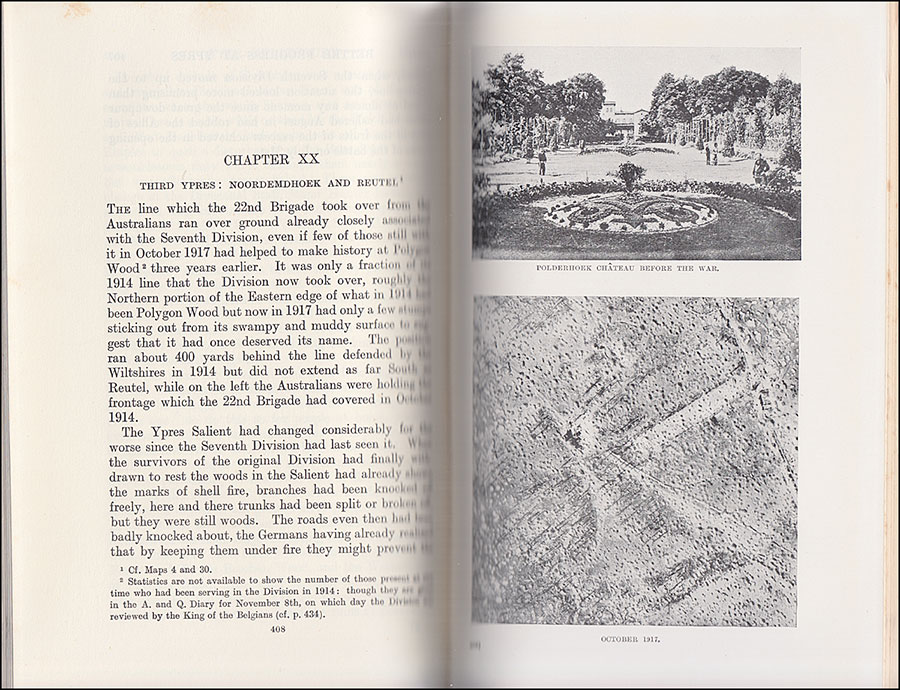
Polderhoek Chateau, Before and After
-
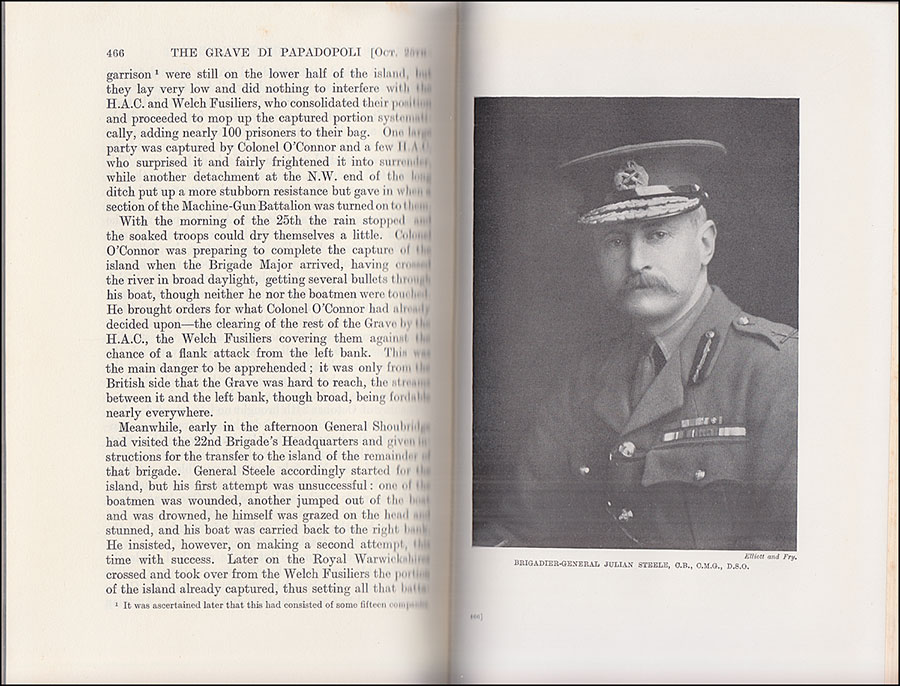
Brig.-General Julian Steele, C.B., C.M.G.,
D.S.O.
-
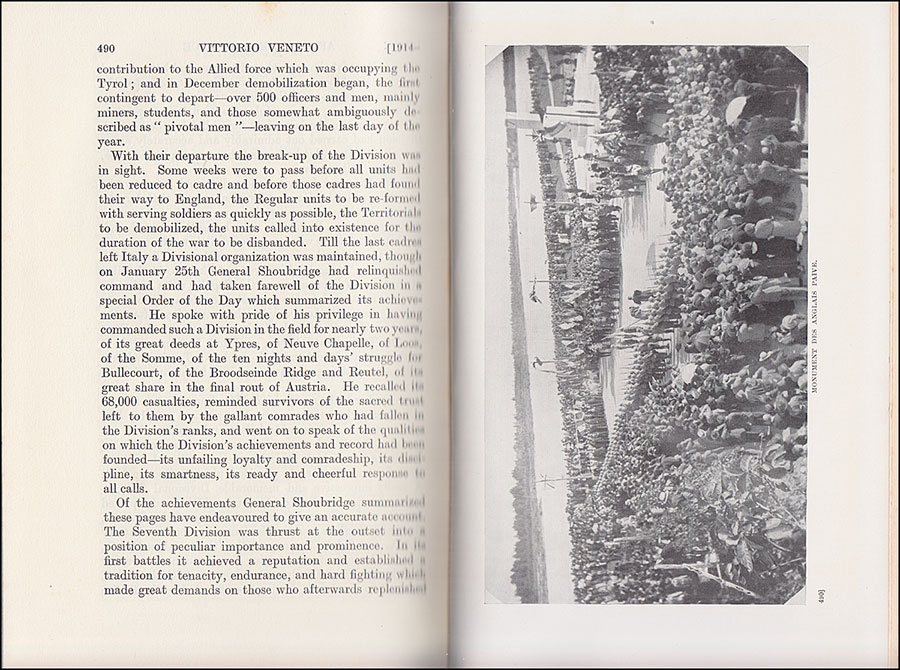
Monument des Anglais, Papadopoli
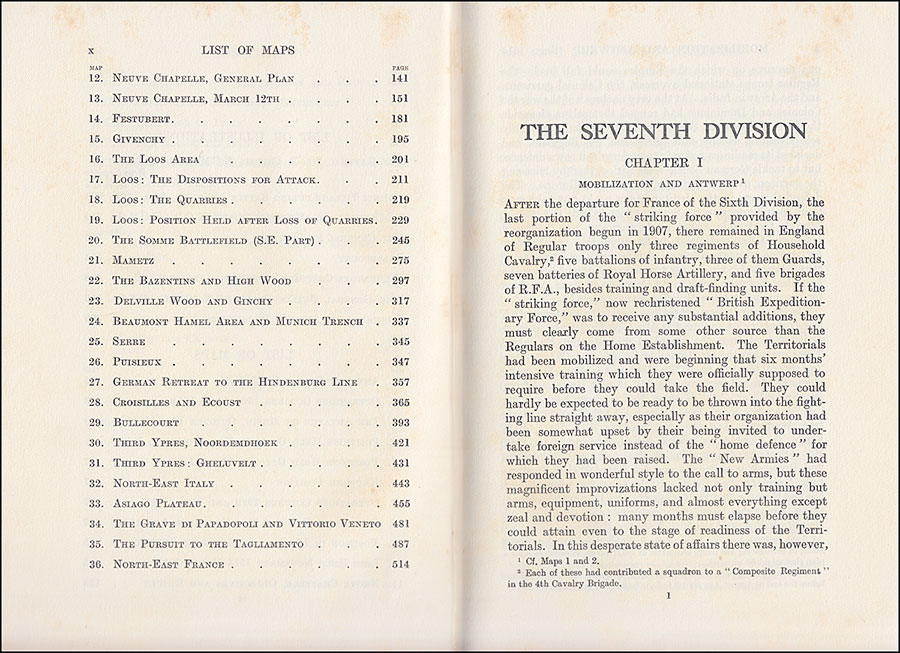
List of Maps
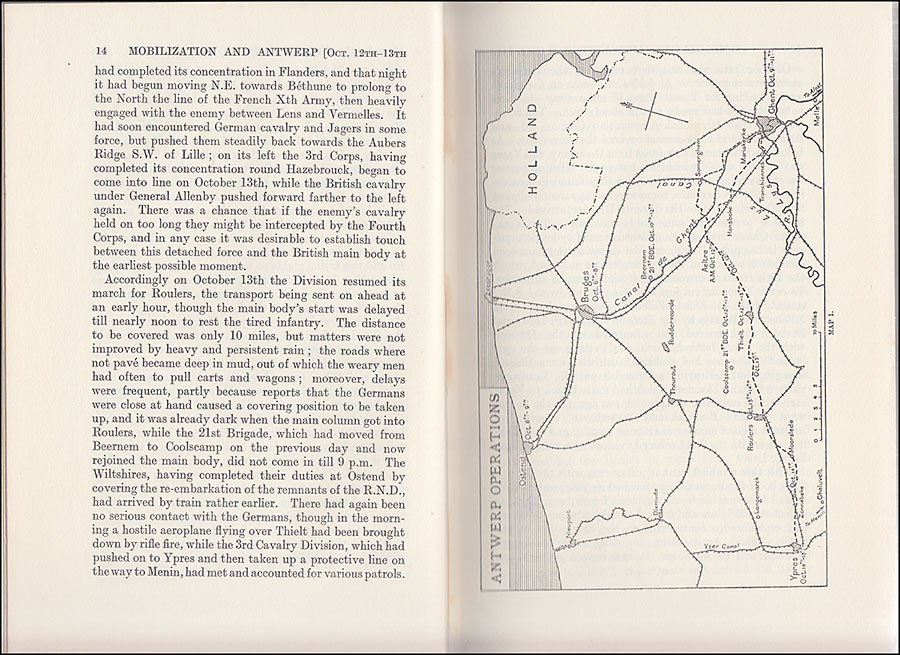
1. Antwerp Operations
2. Operations October 15th-18th, 1914
3. The Advance on Menin, October 19th, 1914
4. Positions Held October 21st and 24th, 1914
5. Positions Held October 24th, 1914
6. Kruiseik Position
7. Operations October 29th and 30th, 1914
8. Operations October 31st-November 6th, 1914
9. Position in Lys Valley November 1914-15
10. Line Held November 1914-March 1915
11. Neuve Chapelle, Objectives and Result
12. Neuve Chapelle, General Plan
13. Neuve Chapelle, March 12th .
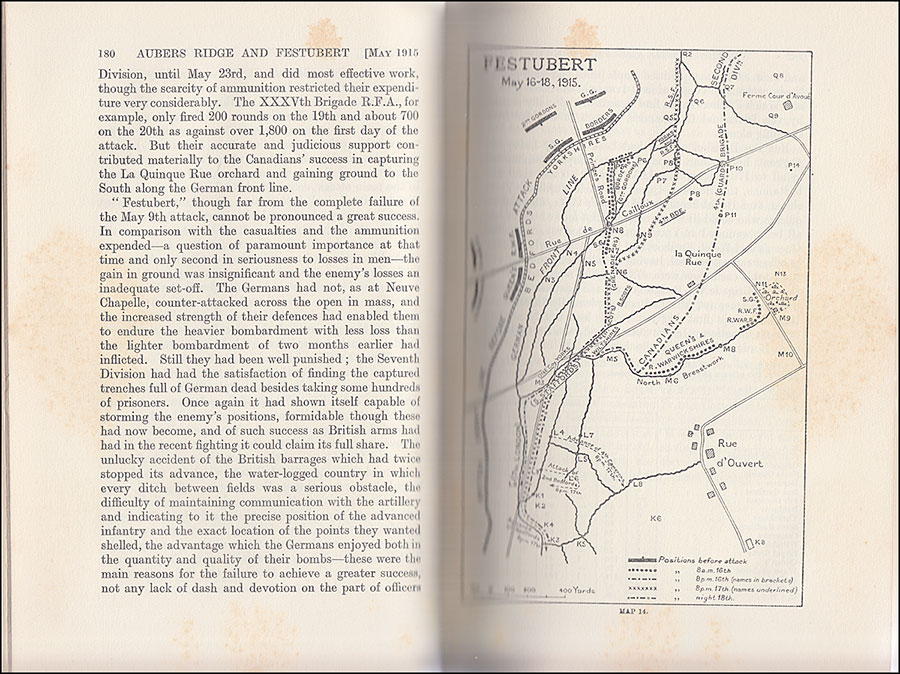
14. Festubert
15. Givenchy
16. The Loos Area
17. Loos: The Dispositions for Attack.
18. Loos: The Quarries
19. Loos: Position Held after Loss of Quarries
20. The Somme Battlefield (S.E. Part)
21. Mametz
22. The Bazentins and High Wood
23. Delvtlle Wood and Ginchy
24. Beaumont Hamel Area and Munich Trench
25. Serre
26. Puisieux
27. German Retreat to the Hindenburg Line
28. Croisilles and Ecoust
29. Bullecourt
30. Third Ypres, Noordemdhoek
31. Third Ypres: Gheluvelt
32. North-East Italy
33. Asiago Plateau
34. The Grave di Papadopoli and Vittorio Veneto
35. The Pursuit to the Tagliamento
36. North-East France
|
|
|
|
|
|
|
The Seventh Division
1914 - 1918
Preface
This account has been put together
mainly from the War Diaries kept by the Division and its component
units and now in the keeping of the Historical Section of the
Committee of Imperial Defence. I am very much indebted to
Brigadier-General J. B. Edmonds, Director of the Military Branch of
the Section, for access to those diaries and to the Staff of the
Section, who have put every facility at my disposal. In addition to
this official information I have derived much help from the
criticisms and corrections of the numerous officers who have read
parts of this work in type ; the information they have supplied has
filled in a good many gaps in the story and thrown a lot of light
upon the conditions under which the Division worked and fought. To
mention and thank all who have helped in this way would take a great
deal of space, to single out one or two who have been particularly
helpful would be invidious, but their help has been invaluable. Of
published sources, other than the Official History, I am chiefly
indebted to The Defeat of Austria as seen by the Seventh Division
(by the Reverend E. C. Crosse, formerly Senior Chaplain to the
Division, published by Messrs. H. F. W. Deane & Son), which gives an
admirable account of the last of the Division's battles.
In preparing the maps, which are to be taken rather as
approximations to the facts than as claiming absolute accuracy, I
have naturally been much assisted when dealing with the operations
of 1914 by being able to refer to the case of maps attached to Vol.
II of the Official History, and I have been also greatly helped for
the operations of 1915 by seeing advance copies of those in
preparation for Vols. Ill and IV of that History. The others are
nearly-all copied or adapted from maps in the Diaries.
The appendixes giving the changes in the Staff and in the command of
units are as nearly correct as it has been possible to make them,
but it is not claimed that absolute accuracy has been attained.
Diaries do not always record changes in command or the departure and
arrival of a new Staff Officer. Temporary changes due to absence on
leave or at courses have not been noticed.
In conclusion I would like to express my thanks to the Divisional
History Committee for their forbearance over the time it has taken
to produce this story and in particular to the Secretary of the
Committee, Colonel the Hon. M. Wingfield, for his ready and
unfailing help.
C. T. A.
November 1926.
|
|
|
|
|
|
|
The Seventh Division
1914 - 1918
Mobilization and Antwerp
After the departure for France of the
Sixth Division, the last portion of the "striking force" provided
by the reorganization begun in 1907, there remained in England of
Regular troops only three regiments of Household Cavalry, five
battalions of infantry, three of them Guards, seven batteries of
Royal Horse Artillery, and five brigades of R.F.A., besides training
and draft-finding units. If the "striking force"' now rechristened
"British Expeditionary Force," was to receive any substantial
additions, they must clearly come from some other source than the
Regulars on the Home Establishment. The Territorials had been
mobilized and were beginning that six months intensive training
which they were officially supposed to require before they could
take the field. They could hardly be expected to be ready to be
thrown into the fighting line straight away, especially as their
organization had been somewhat upset by their being invited to
undertake foreign service instead of the "home defence" for which
they had been raised. The "New Armies" had responded in wonderful
style to the call to arms, but these magnificent improvizations
lacked not only training but arms, equipment, uniforms, and almost
everything except zeal and devotion : many months must elapse before
they could attain even to the stage of readiness of the
Territorials. In this desperate state of affairs there was, however,
one resource on which the Empire could fall back—the Regular troops
stationed overseas, the Colonial garrisons, and the Army in India.
At the very outbreak of the war the Colonies and Dominions had
ranged themselves alongside the Mother Country; South Africa in
particular, the only self-governing colony still garrisoned by
Regulars, had declared its readiness not only to undertake its own
defence, but to tackle German South-West Africa, thereby releasing
the garrison, over 6,000 strong, for service in Europe. The defended
ports in the Mediterranean could not take over their own protection
as South Africa could, nor was it possible to denude Egypt of its
garrison, but the ready response of the Territorials to the
invitation to volunteer for service overseas allowed of relieving
the Regulars at these stations by less highly trained troops, and
before the first clash between British and Germans at Mons measures
for organizing another Division were on foot.
The Seventh Division therefore came into existence with the assembly
at Lyndhurst in the New Forest of the units assigned to it from the
Regulars remaining in England.2 These included the 1st Grenadier
Guards from Warley, the 2nd Scots Guards from the Tower, the 2nd
Yorkshire Regiment from Guernsey, the 2nd Border Regiment from
Pembroke Dock, " C " Battery R.H.A. from Canterbury, " F " from St.
John's Wood, the XXXVth Brigade R.F.A. from Woolwich, and the 54th
Field Co. R.E. from Chatham. To these were added during September
the 2nd Royal Scots Fusiliers and 2nd Wiltshires from Gibraltar, the
2nd Royal Warwickshires and 1st Royal Welch Fusiliers from Malta,
the 2nd Gordon Highlanders from Egypt, and the 2nd Queen's, 2nd
Bedfordshires, and 1st South Stafford-shires from the Cape, whence
came also the XXIInd Brigade R.F.A. and the 55th Field Co. R.E.
The R.H.A. batteries took the place of the third brigade of
18-pounders that should normally have formed part of the Division,
while as neither field howitzers nor 60-pounders were forthcoming it
was provided with two Heavy Batteries, armed with the none too
reliable 4-7-inch guns, the " cow-gun " of the South African War, a
thoroughly inadequate substitute, but all that the unprepared
country could produce. No Regular cavalry being available, a whole
Yeomanry regiment, the Northumberland Hussars, took the place of the
usual Divisional squadron, a cyclist company being formed from the
infantry units, as had been done in the original " B.E.F." The
Divisional Ammunition Column, the Heavy Batteries, and the Signal
Company were also improvized, and the three Field Ambulances and the
Divisional Train had to be specially brought together.
Command of the Division was given to Major-General T. Capper, C.B.,
D.S.O.,1 who was holding the appointment of Inspector of Infantry,
having recently relinquished command of the 13th Infantry Brigade at
Dublin. With him came Colonel H. M. Montgomery as G.S.O.1. ; the
C.R.A. was Brigadier-General H. K. Jackson, and as C.R.E. Colonel A.
T. Moore was appointed.
As commanders of the infantry brigades there were appointed
Brigadier-Generals H. G. Ruggles-Brise, H. E. Watts, and S. T. B.
Lawford. General Ruggles-Brise, himself an old Grenadier Guardsman,
was given the 20th Brigade, which comprised the two Guards
battalions together with the Gordons and the Borders. The two
battalions from Gibraltar together with the Yorkshires and Bedfords
formed the 21st Brigade under General Watts, the two from Malta with
the Queen's and South Staffords from South Africa making up General
Lawford's 22nd Brigade . . .
______________________________
The Somme : Mametz
Though the Somme offensive is by
convention dated as beginning on July 1st when the often postponed
infantry attack was finally launched, it might with equal justice be
reckoned from the start of the great bombardment a week earlier. The
18-pounders had opened the ball on June 24th when they started
wire-cutting, the heavy guns registering prior to joining in next
day. For days before this ammunition had been systematically dumped
round the gun positions to the tune of 1,100 rounds per 18-pounder,
1,010 per 4-5-inch howitzer, 500 per 2-inch trench-mortar, and 300
per Stokes mortar. The accumulation of these dumps was a most
laborious process, especially as the Decauville railways proved a
disappointment, their use involving more labour and risk without any
saving of time. Accordingly the plan was changed and the ammunition
transported by lorries direct from rail-head to the gun positions.
All through the 26th the heavy howitzers were at it, with a special
concentration of fire between 9 and 10.30 a.m. Then at 11.30 gas was
released and at 12.54 the guns lifted on to the German support line,
in the hope that the enemy would man their front trenches in
anticipation of our attack and would be caught there by the guns
shifting back after two minutes. Similar tactics were pursued next
day, the concentration of fire being from 4.30 to 5 a.m. Good
progress had been made with the wire-cutting, though the "
knife-rests " defied attack by shrapnel and could only be destroyed
by using high explosive. At night patrols were pushed out to
investigate the wire and German trenches. Thus on the night of June
26th/27th a patrol of the Gordons got into the enemy's trenches,
bringing back useful information, and the Borders examined Danube
Trench and reported it much damaged. The Seventeenth Division, which
was in reserve to the Corps, had lent two battalions to hold the
Seventh's line during the bombardment and so allow the assaulting
troops to go into the fight as fresh as possible ; but the attack,
originally intended for June 29th, had to be postponed 48 hours,
partly because of the rain, partly to allow of completing the
wire-cutting where it had been unsuccessful. Accordingly these two
battalions had to be relieved on the 28th as intended and the
attacking Brigades, the 20th and 91st, took over the portions of
fine allotted to them each with one battalion.
During these days the Germans had been far from inactive : their
guns had replied most vigorously to the bombardment and had rendered
the British front and support lines quite useless as jumping-off
places. This had been provided against, however, by digging special
assembly trenches 250 yards farther back; and though this gave the
assaulting battalions that extra distance to cover as well as No
Man's Land they escaped almost without any casualties before "Zero,"
as the starting time was now known, whereas had they assembled in
the old front fine they must have lost heavily long before it came.
The objective of the Fifteenth Corps on July 1st was a line running
South and S.W. of Mametz Wood. The Seventh Division on its right was
attacking Mametz village, advancing due North, while the
Twenty-First was to strike Eastward on the other side of Fricourt,
which village was not to be attacked direct but to be " pinched out"
by the inner flanks of the attack uniting in rear of it in Willow
Avenue. From this point the Seventh Division's line was to run
Eastward to a track leading N.E. from Mametz to Caterpillar Wood.
The 91st Brigade on the right had
first to capture Bucket Trench and Bulgar Alley, then to reach
Dantzig Alley and secure that trench as far Westward as Mametz. Its
second objective was formed by Fritz Trench, Valley Trench, and
Bunny Alley, its third the line assigned as the Division's final
objective. In the later stages this advance would find its left
protected by the 20th Brigade, whose duty it was, after capturing
the German trenches immediately in its front, South and S.W. of
Mametz, to form a defensive flank facing N.W. and running along
Bunny Alley, Orchard Alley, and Apple Alley. After the final
objective had been secured two battalions of the 22nd Brigade would
make a subsidiary attack on the 20th's left, aimed at clearing the
trenches North of Bois Francais. Their first objective was Rose
Alley from its junction with Orchard Alley, which would involve
capturing Sunken Road Trench, Bois Francais Trench and its support
trench, and an area known as the Rectangle ; its second objective
was a line from Willow Avenue to Bunny Wood.
The 91st Brigade was employing two battalions to attack its first
and second objectives, the 22nd Manchesters on the right with Bucket
Trench and Dantzig Alley as first objective, the South Staffords on
the left making for the N.E. part of Mametz. These units were to
keep reserves in hand for the capture of the second objective, and
two hours after " Zero "the Queen's were to go through and take the
third objective. The 21st Manchesters less one company detailed for
" mopping up " formed the Brigade reserve. The 20th Brigade was
using three battalions in the first attack, the Gordons on the right
with Mametz as objective, the 9th Devons in the centre, the Borders
on the left with Hidden Wood as the chief landmark on their
frontage. This left General Deverell with the 8th Devons as his
reserve. The 22nd Brigade was entrusting its attack to the 20th
Manchesters with the Welch Fusiliers in support, the Royal
Warwickshires and Royal Irish forming the Divisional Reserve along
with six platoons of the 24th Manchesters and the 54th Field
Company. The R.H.A.
brigade and two batteries of the LXXIst Brigade R.F.A. from the
Seventeenth Division were detailed to support the 20th Brigade, the
XXIInd Brigade R.F.A. and another battery of the LXXIst were
covering the 91st, the XXXVth Brigade R.F.A. was helping the 22nd
Brigade, and the LXXXth R.F.A. from the Twenty-First Division was in
reserve, there being thus seventy-four 18-pounders and sixteen
howitzers under General Watts. The Durham Field Company and a
company of Pioneers were to establish strong points along the final
objective, in Fritz Trench and at Bunny Wood. The 95th Field Company
and another company of Pioneers were to place Mametz in a state of
defence, while half a company of Pioneers opened up communication
tunnels across No Man's Land to Bulgar Point and Mametz Trench.
Shallow galleries had already been driven out at five points and
mines placed ready to be exploded 15 minutes before " Zero."
The administrative arrangements for a set-piece of this magnitude
had been elaborate and complicated and the orders filled many pages.
Careful provision had been made for replenishing ammunition,
especially bombs, for forwarding water and rations, for the wounded,
for the reception of prisoners, for traffic control, for
transmitting messages and reports. The orders were the product of
weeks of careful work and had been constantly revised, indeed as far
as was humanly possible nothing had been left to chance. But
everything really depended on the success of the bombardment in
breaking down the elaborate and carefully constructed German
defences; and heavy as had been the weight of metal concentrated
against them, their formidable nature left that success an open
question.
On the evening of June 30th all battalions had taken up their
allotted positions. A steady fire was kept up all night, and then at
6.25 a.m. (July 1st), an hour and five minutes before " Zero," the
final intense bombardment began. The din was tremendous, the heavy
guns pounding away at the trenches at an incredible rate . . .
|
|
|
|
|
|
|
|
|

Please note: to avoid opening the book out, with the
risk of damaging the spine, some of the pages were slightly raised on the
inner edge when being scanned, which has resulted in some blurring to the
text and a
shadow on the inside edge of the final images. Colour reproduction is shown
as accurately as possible but please be aware that some colours
are difficult to scan and may result in a slight variation from
the colour shown below to the actual colour.
In line with eBay guidelines on picture sizes, some of the illustrations may
be shown enlarged for greater detail and clarity.


|
|
|
|
|

|
|
|
|
U.K. buyers:
|
To estimate the
“packed
weight” each book is first weighed and then
an additional amount of 150 grams is added to allow for the packaging
material (all
books are securely wrapped and posted in a cardboard book-mailer).
The weight of the book and packaging is then rounded up to the
nearest hundred grams to arrive at the postage figure. I make no charge for packaging materials and
do not seek to profit
from postage and packaging. Postage can be combined for multiple purchases. |
Packed weight of this item : approximately 1200 grams
|
Postage and payment options to U.K. addresses: |
-
Details of the various postage options can be obtained by selecting
the “Postage and payments” option at the head of this
listing (above).
-
Payment can be made by: debit card, credit
card (Visa or MasterCard, but not Amex), cheque (payable to
"G Miller", please), or PayPal.
-
Please contact me with name,
address and payment details within seven days of the end of the
listing; otherwise I reserve the right to cancel the sale and
re-list the item.
-
Finally, this should be an
enjoyable experience for both the buyer and seller and I hope
you will find me very easy to deal with. If you have a question
or query about any aspect (postage, payment, delivery options
and so on), please do not hesitate to contact me.
|
|
|
|
|
|
|
International
buyers:
|
To estimate the
“packed
weight” each book is first weighed and then
an additional amount of 150 grams is added to allow for the packaging
material (all
books are securely wrapped and posted in a cardboard book-mailer).
The weight of the book and packaging is then rounded up to the
nearest hundred grams to arrive at the shipping figure.
I make no charge for packaging materials and do not
seek to profit
from shipping and handling.
Shipping can
usually be combined for multiple purchases
(to a
maximum
of 5 kilograms in any one parcel with the exception of Canada, where
the limit is 2 kilograms). |
Packed weight of this item : approximately 1200 grams
Please be aware that this is a large and heavy book, making international
postage expensive
| International Shipping options: |
Details of the postage options
to various countries (via Air Mail) can be obtained by selecting
the “Postage and payments” option at the head of this listing
(above) and then selecting your country of residence from the drop-down
list. For destinations not shown or other requirements, please contact me before buying.
Due to the
extreme length of time now taken for deliveries, surface mail is no longer
a viable option and I am unable to offer it even in the case of heavy items.
I am afraid that I cannot make any exceptions to this rule.
|
Payment options for international buyers: |
-
Payment can be made by: credit card (Visa
or MasterCard, but not Amex) or PayPal. I can also accept a cheque in GBP [British
Pounds Sterling] but only if drawn on a major British bank.
-
Regretfully, due to extremely
high conversion charges, I CANNOT accept foreign currency : all payments
must be made in GBP [British Pounds Sterling]. This can be accomplished easily
using a credit card, which I am able to accept as I have a separate,
well-established business, or PayPal.
-
Please contact me with name, address and
payment details within seven days of the end of the listing; otherwise I
reserve the right to cancel the sale and re-list the item.
-
Finally, this should be an enjoyable experience for
both the buyer and seller and I hope you will find me very easy to deal
with. If you have a question or query about any aspect (shipping,
payment, delivery options and so on), please do not hesitate to contact
me.
Prospective international
buyers should ensure that they are able to provide credit card details or
pay by PayPal within 7 days from the end of the auction (or inform me that
they will be sending a cheque in GBP drawn on a major British bank). Thank you.
|
|
|
|
|
|
|

(please note that the
book shown is for illustrative purposes only and forms no part of this
auction)
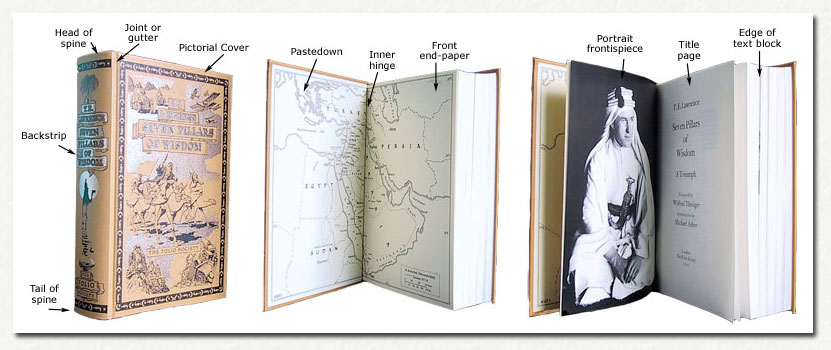
Book dimensions are given in
inches, to the nearest quarter-inch, in the format width x height.
Please
note that, to differentiate them from soft-covers and paperbacks, modern
hardbacks are still invariably described as being ‘cloth’ when they are, in
fact, predominantly bound in paper-covered boards pressed to resemble cloth. |
|
|
|
|
|
|

Fine Books for Fine Minds |
I value your custom (and my
feedback rating) but I am also a bibliophile : I want books to arrive in the
same condition in which they were dispatched. For this reason, all books are
securely wrapped in tissue and a protective covering and are
then posted in a cardboard container. If any book is
significantly not as
described, I will offer a full refund. Unless the
size of the book precludes this, hardback books with a dust-jacket are
usually provided with a clear film protective cover, while
hardback books without a dust-jacket are usually provided with a rigid clear cover.
The Royal Mail, in my experience, offers an excellent service, but things
can occasionally go wrong.
However, I believe it is my responsibility to guarantee delivery.
If any book is lost or damaged in transit, I will offer a full refund.
Thank you for looking.
|
|
|
|
|
|
|
Please also
view my other listings for
a range of interesting books
and feel free to contact me if you require any additional information

Design and content © Geoffrey Miller |
|
|
|
|
|
|