 |
|
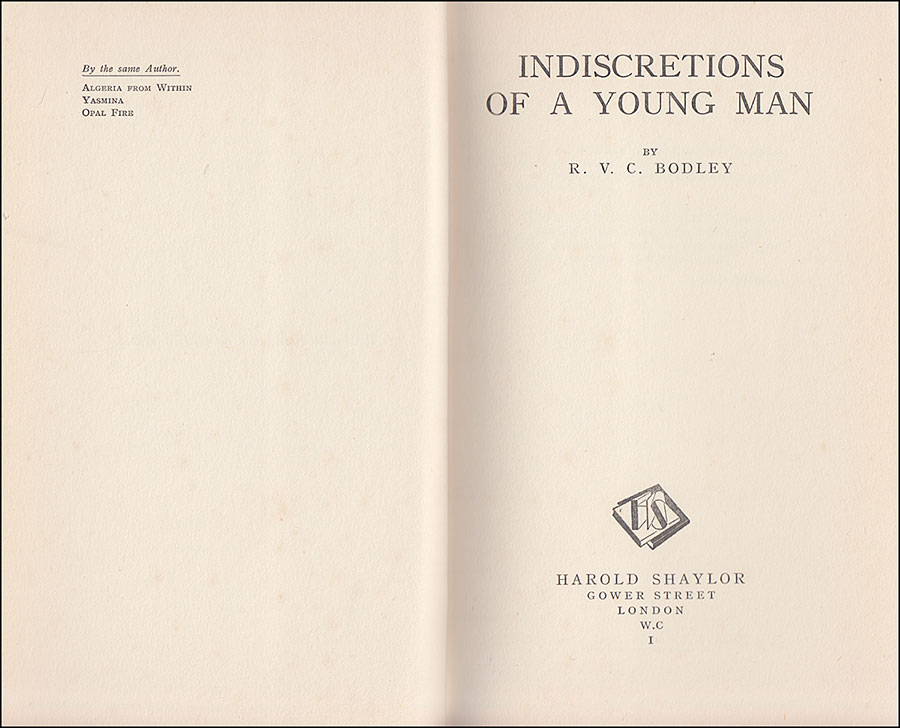
Indiscretions of a Young Man
by
R. V. C. Bodley,
M.C.
|
|
 |
|
This is
the scarce November 1931 First Edition (complete with damaged
dust-jacket)
Ronald
Victor Courtenay Bodley, M.C. (3 March 1892 – 26 May 1970)
was a British Army officer, author and journalist. Born to
English parents in Paris, he lived in France until he was
nine, before attending Eton College and then the Royal
Military College, Sandhurst. He was commissioned in the
King's Royal Rifle Corps and served with them during the
First World War. After the war he spent seven years in the
Sahara desert, and then travelled through Asia. Bodley wrote
several books about his travels. He was considered among the
most distinguished British writers on the Sahara, as well as
one of the main western sources of information on the South
Pacific Mandate. Bodley moved to the United States in 1935,
where he worked as a screenwriter. He rejoined the British
Army at the outbreak of the Second World War and was sent to
Paris to work for the Ministry of Information. He later
immigrated to the United States, where he continued to work
as a writer and also as an advisor to the United States
Office of War Information.
|
|
|
|
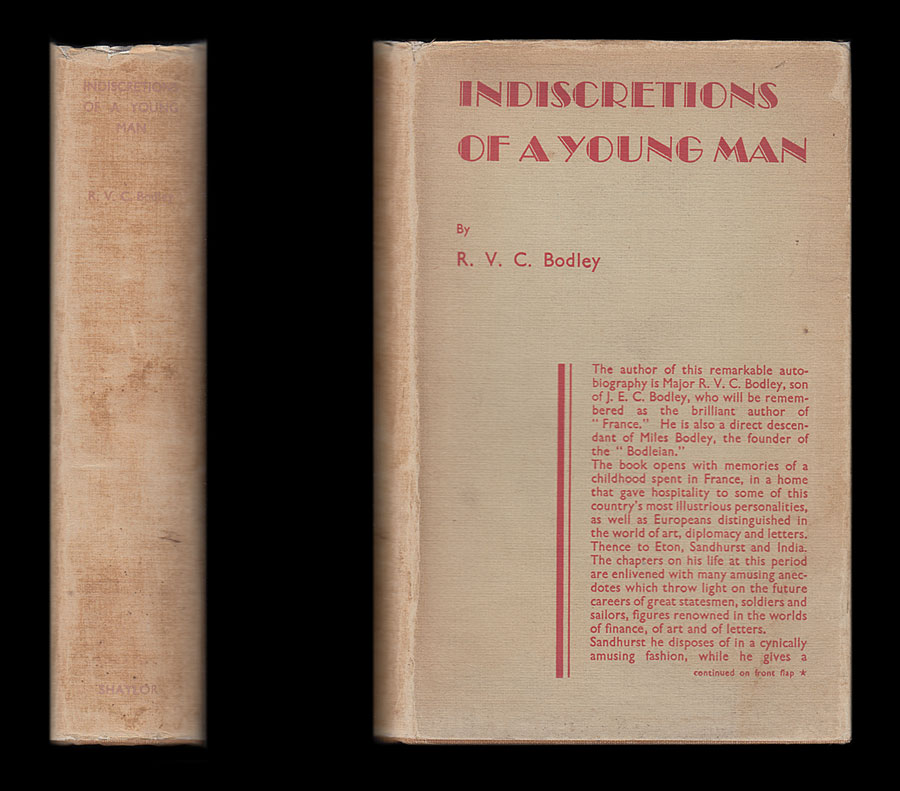
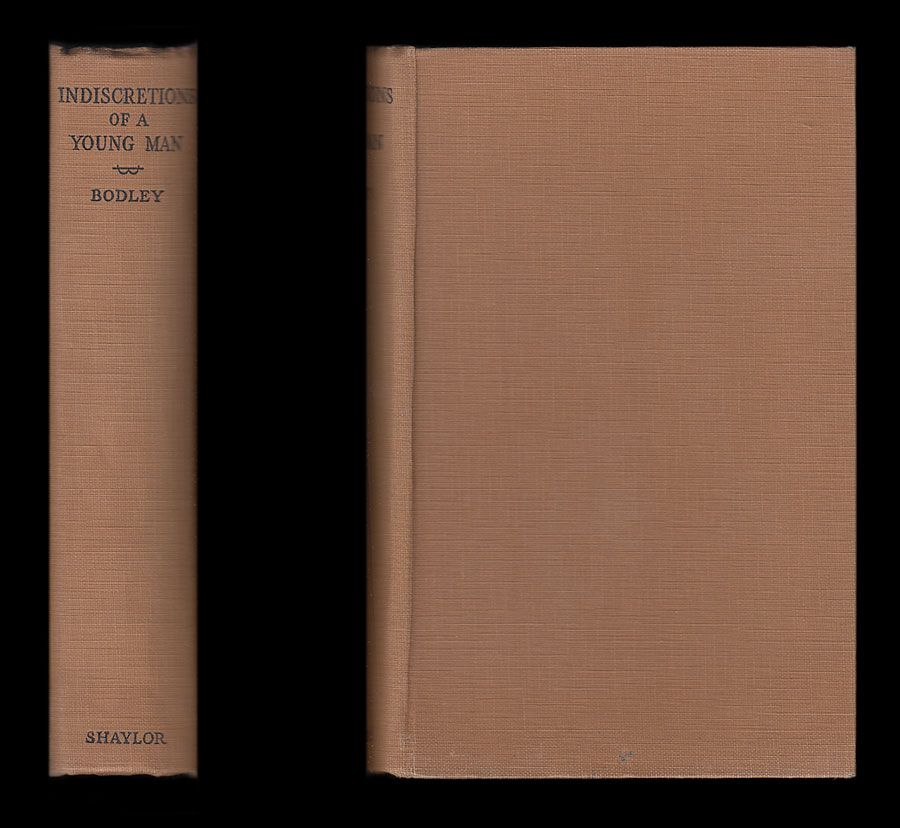
Front cover and spine
Further images of this book are
shown below
|
|
|
|
|
 |
|
|
|
|
|
Publisher and place of
publication |
|
Dimensions in inches (to
the nearest quarter-inch) |
|
London: Harold Shaylor |
|
5½ inches wide x 8¾ inches tall |
| |
|
|
|
Edition |
|
Length |
|
November 1931 |
|
[xii] + 251 pages |
| |
|
|
|
Condition of covers |
|
Internal condition |
|
Original brown cloth blocked in black on the
spine. The covers are rubbed with a few minor marks, but have been generally
protected by the dust-jacket over the years. The spine ends and corners are
bumped and there is a forward spine lean. |
|
There are no internal markings and the text is
very clean throughout on tanned paper. There is offsetting to the end-papers
from the dust-jacket and some light foxing also affecting the end-papers.
The edge of the text block is dust-stained and lightly foxed. |
| |
|
|
|
Dust-jacket present? |
|
Other
comments |
|
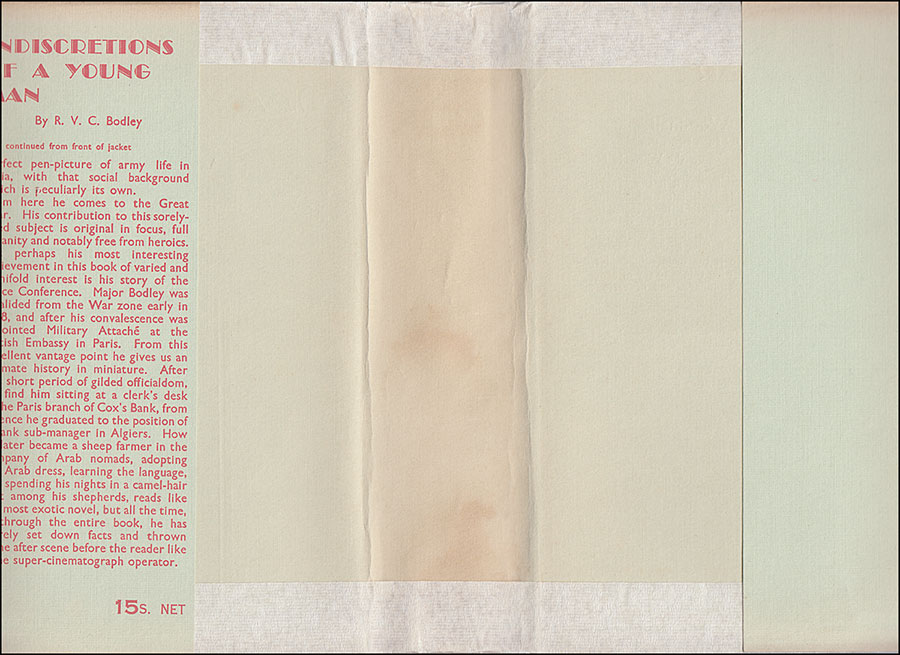
Yes: however, the dust-jacket is very heavily
scuffed and rubbed, particularly around the edges, while the spine panel is
badly discoloured to the extent that the title and author details are
difficult to read. There is some chipping to the edges and a small tear on
the top edge of the rear panel. Internally, a previous owner has applied
masking tape along the top and bottom edges as a strengthening measure and
this can be seen in the final image below. |
|
This is a scarce First Edition which is in
very clean condition internally, and, although the rare dust-jacket is
substantially intact, there is some damage, a taped repair, and a very badly
discoloured spine panel. |
| |
|
|
|
Illustrations,
maps, etc |
|
Contents |
|
NONE : No illustrations are called
for |
|
Please see below for details |
| |
|
|
|
Post & shipping
information |
|
Payment options |
|
The packed weight is approximately
750 grams.
Full shipping/postage information is
provided in a panel
at the end of this listing.
 |
|
Payment options
:
-
UK buyers: cheque (in
GBP), debit card, credit card (Visa, MasterCard but
not Amex), PayPal
-
International buyers: credit card
(Visa, MasterCard but not Amex), PayPal
Full payment information is provided in a
panel at the end of this listing. |
|
|
|
|
|
 |
|
 |
|
|
|
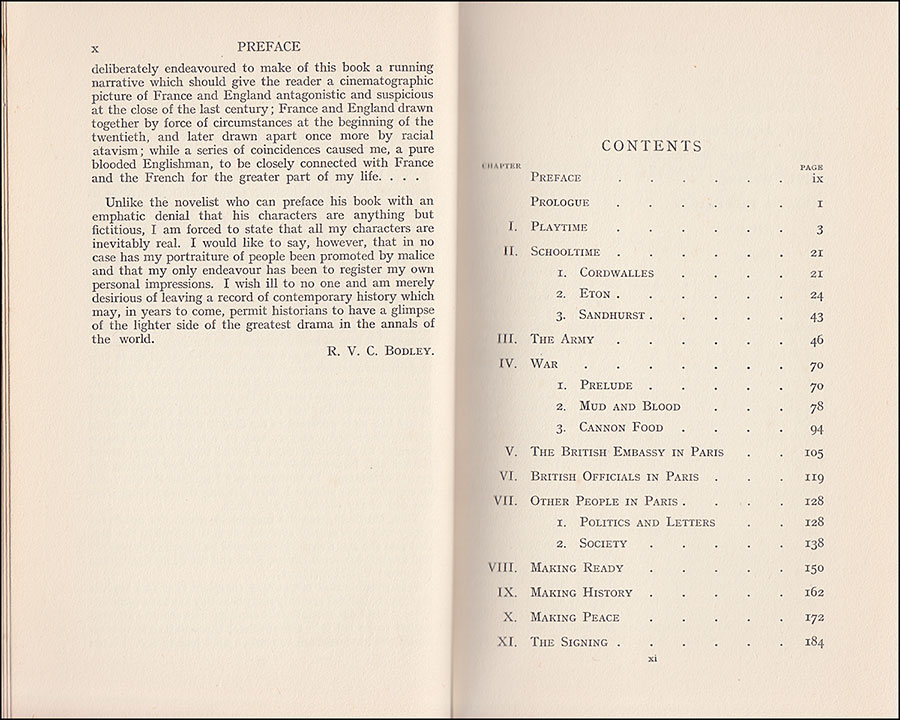
Indiscretions of a Young Man
Contents
Preface
Prologue
I. Playtime
II. Schooltime
1. Cordwalles
2. Eton
3. Sandhurst
III. The Army
IV. War
1. Prelude
2. Mud and Blood
3. Cannon Food
V. The British Embassy in Paris
VI. British Officials in Paris
VII. Other People in Paris
1. Politics and Letters
2. Society
VIII. Making Ready
IX. Making History
X. Making Peace
XI. The Signing
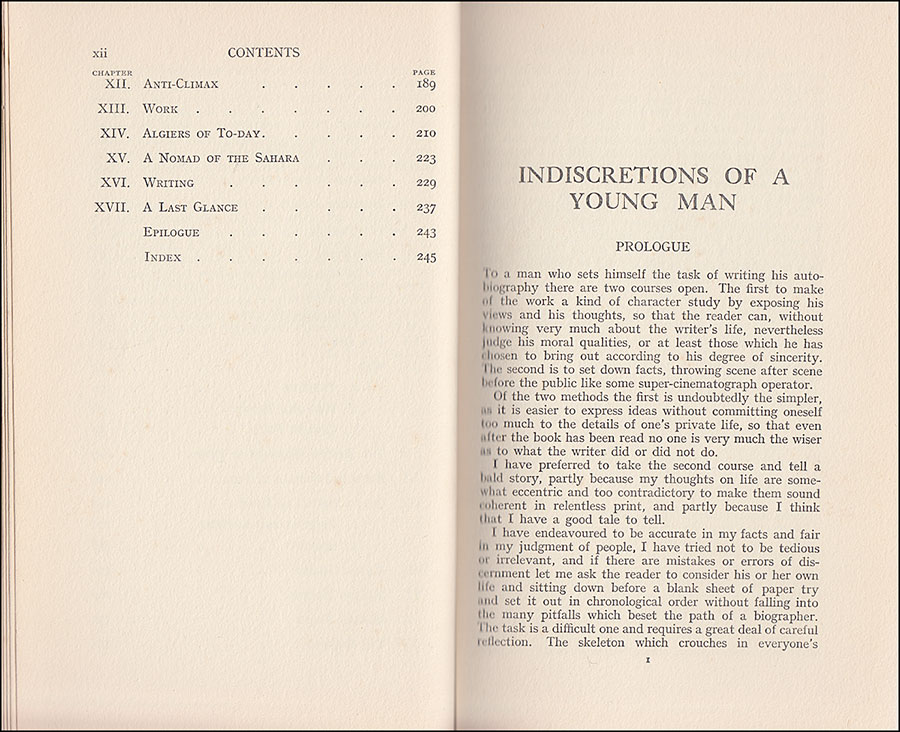
XII. Anti-Climax
XIII. Work
XIV. Algiers of To-day
XV. A Nomad of the Sahara
XVI. Writing
XVII. A Last Glance
Epilogue
Index
|
|
|
|
|
|
|
Indiscretions of a Young Man
Preface
This book was originally intended as
an eye witness's impressions of certain historic events which took
place in Paris between the Autumn of 1918 and the Spring of 1920,
but with no idea of making of it an autobiography.
However, after finishing the story of the Armistice, the Peace
Conference and those numerous incidents, forerunners of the
unanticipated post-war troubles, I felt that to bring my picture of
contemporary history into focus I must preface it with a chapter on
the war which then appeared incomplete without comments on the
European situation immediately preceding the outbreak of
hostilities. My manuscript was beginning to assume unexpected
proportions so I decided to expunge all figures and statistics from
the chapters on Paris, and confine myself to the salient occurrences
of those two momentous years developing the intimate side of the
story with pen pictures of people with whom I had come in contact. I
discovered then that many of the actors who were to appear in the
drama of War and Peace in Paris had already figured m my life, so it
occurred to me that it would be interesting to introduce them
earlier, and as some of these people belonged to childhood days I
found myself being carried Luther and farther back until my story
had reached the period of infancy! In the same way I realised that
in order in complete the picture I must prolong the narrative after
the end of my official stay in Paris.
This, therefore, was the manner in which the autobiography was
accidentally evolved, so that in reality the first four and the last
five chapters should be regarded as prelude and finale to the main
theme, Paris and the Peace Conference (Chapters V-XII inclusive).
It is possible that critics may complain that this book is sketchy,
to which I can only reply that this has been unavoidable as, had I
not made drastic expurgations or had I allowed myself to be led into
controversial theorising, one volume would not have sufficed to
contain all I had to say. I have deliberately endeavoured to make of
this book a running narrative which should give the reader a
cinematographic picture of France and England antagonistic and
suspicious at the close of the last century; France and England
drawn together by force of circumstances at the beginning of the
twentieth, and later drawn apart once more by racial atavism; while
a series of coincidences caused me, a pure blooded Englishman, to be
closely connected with France and the French for the greater part of
my life . . .
Unlike the novelist who can preface his book with an emphatic denial
that his characters are anything but fictitious, I am forced to
state that all my characters are inevitably real. I would like to
say, however, that in no case has my portraiture of people been
promoted by malice and that my only endeavour has been to register
my own personal impressions. I wish ill to no one and am merely
desirious of leaving a record of contemporary history which may, in
years to come, permit historians to have a glimpse of the lighter
side of the greatest drama in the annals of the world.
R. V. C. Bodley.
|
|
|
|
|
|
|
Indiscretions of a Young Man
From the dust-jacket:
The author of this remarkable
autobiography is Major R. V. C. Bodley, son of J. E. C. Bodley, who
will be remembered as the brilliant author of " France." He is also
a direct descendant of Miles Bodley, the founder of the " Bodleian."
The book opens with memories of a childhood spent in France, in a
home that gave hospitality to some of this country's most
illustrious personalities, as well as Europeans distinguished in the
world of art, diplomacy and letters. Thence to Eton, Sandhurst and
India. The chapters on his life at this period are enlivened with
many amusing anecdotes which throw light on the future careers of
great statesmen, soldiers and sailors, figures renowned in the
worlds of finance, of art and of letters. Sandhurst he disposes of
in a cynically amusing fashion, while he gives a perfect pen-picture
of army life In India, with that social background which is
peculiarly its own. From here he comes to the Great War. His
contribution to this sorely-tried subject is original in focus, full
of sanity and notably free from heroics. But perhaps his most
interesting achievement in this book of varied and manifold interest
is his story of the Peace Conference, Major Bodley was invalided
from the War zone early in 1918, and after his convalescence was
appointed Military Attache at the British Embassy in Paris. From
this excellent vantage point he gives us an intimate history in
miniature. After this short period of gilded officialdom, we find
him sitting at a clerk's desk at the Paris branch of Cox's Bank,
from whence he graduated to the position of a Bank sub-manager in
Algiers. How he later became a sheep farmer in the company of Arab
nomads, adopting the Arab dress, learning the language, and spending
his nights in a camel-hair tent among his shepherds, reads like the
most exotic novel, but all the time, as through the entire book, he
has merely set down facts and thrown scene after scene before the
reader like some super-cinematograph operator.

Biographical Information
Bodley was born, the eldest of three
children, in Paris on 3 March 1892 to Civil Servant and Writer John
Edward Courtenay Bodley and Evelyn Frances Bodley (née Bell); his
parents divorced in 1908. Bodley was a descendant of Diplomat and
Scholar Sir Thomas Bodley, founder of the Bodleian Library, and was,
through his mother, a cousin of Gertrude Bell, the writer and
archaeologist who helped establish the Hashemite dynasties. He lived
in France with his parents until he was nine.
Bodley was educated at a Lycée in Paris before he was sent to Eton
College and then to the Royal Military College, Sandhurst. From
Sandhurst he was commissioned in the King's Royal Rifle Corps as a
Second Lieutenant in September 1911; he spent three years serving in
the Regiment (4th Battalion) in India.
Bodley happened to be in England
in August 1914 and was appointed Adjutant of the 10th (S) Battalion,
20th (Light) Division, going to France in July 1915. He was wounded
several times (including being gassed) and, at the age of 26, was
promoted Lieutenant-Colonel in command of a Battalion.
Invalided out, he was appointed
Assistant Military Attaché to Paris on 15 August 1918, and attended
the 1919 Paris Peace Conference. What he heard there reportedly made
him feel that he and the millions of other soldiers had fought for
nothing; he wrote later that "selfish politicians [were] laying the
groundwork for the Second World War – each country grabbing all it
could for itself, creating national antagonisms, and reviving the
intrigues of secret."
Gertrude Bell had introduced Bodley to T. E. Lawrence. Bodley met
Lawrence one day outside the Paris Peace Conference and told him of
his intent to move into politics. Lawrence responded furiously,
calling him a moron and a traitor. When he replied that he had no
other prospects now that the war was over and asked what he should
do, Lawrence suggested "Go live with the Arabs." Bodley said his
conversation with Lawrence, which lasted "less than 200 seconds",
proved to be life-changing. He promptly sorted his affairs, and with
a total of £300 and no prospects of further income, went to live in
the Sahara. His bemused friends held him a farewell party. They all
agreed he would be back in six weeks; he stayed in the Sahara for
seven years.
|
|
|
|
|
|
|
|
|

Please note: to avoid opening the book out, with the
risk of damaging the spine, some of the pages were slightly raised on the
inner edge when being scanned, which has resulted in some blurring to the
text and a
shadow on the inside edge of the final images. Colour reproduction is shown
as accurately as possible but please be aware that some colours
are difficult to scan and may result in a slight variation from
the colour shown below to the actual colour.
In line with eBay guidelines on picture sizes, some of the illustrations may
be shown enlarged for greater detail and clarity.
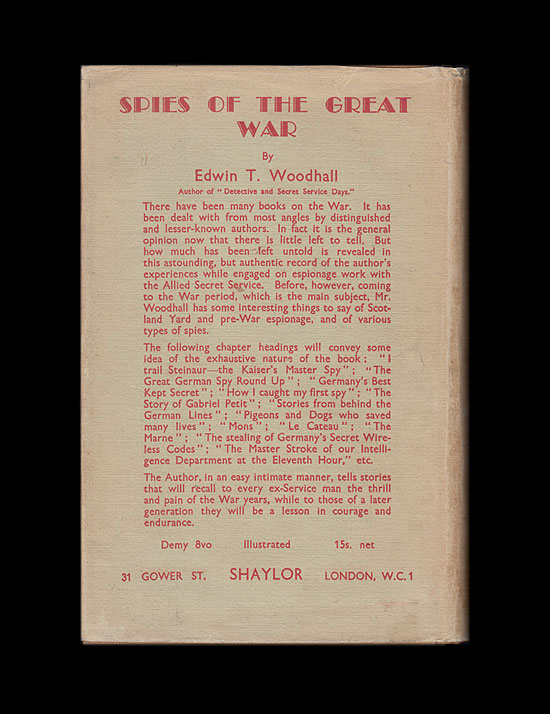

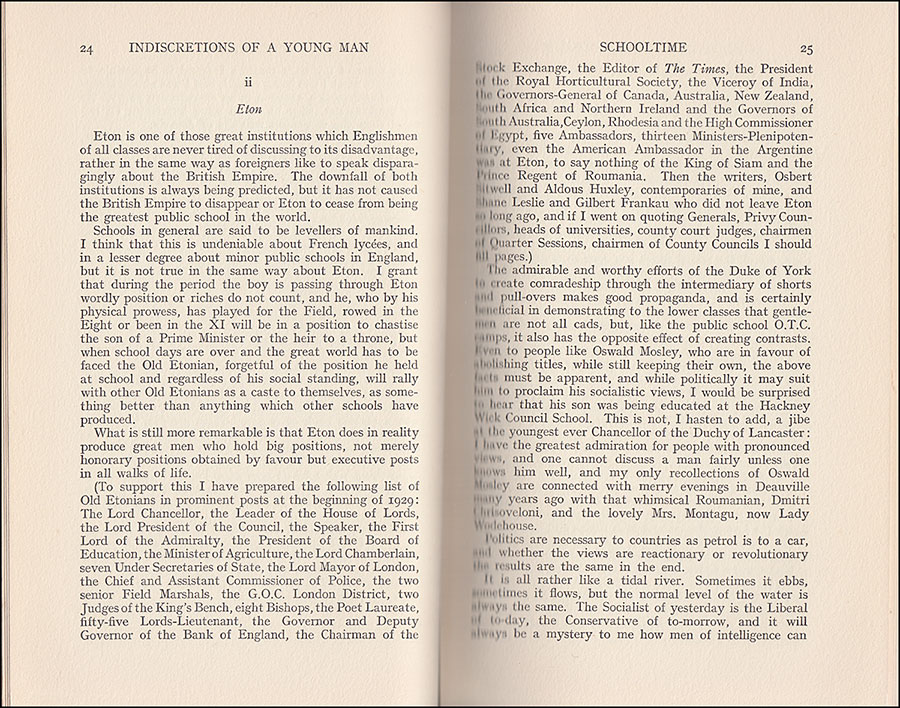
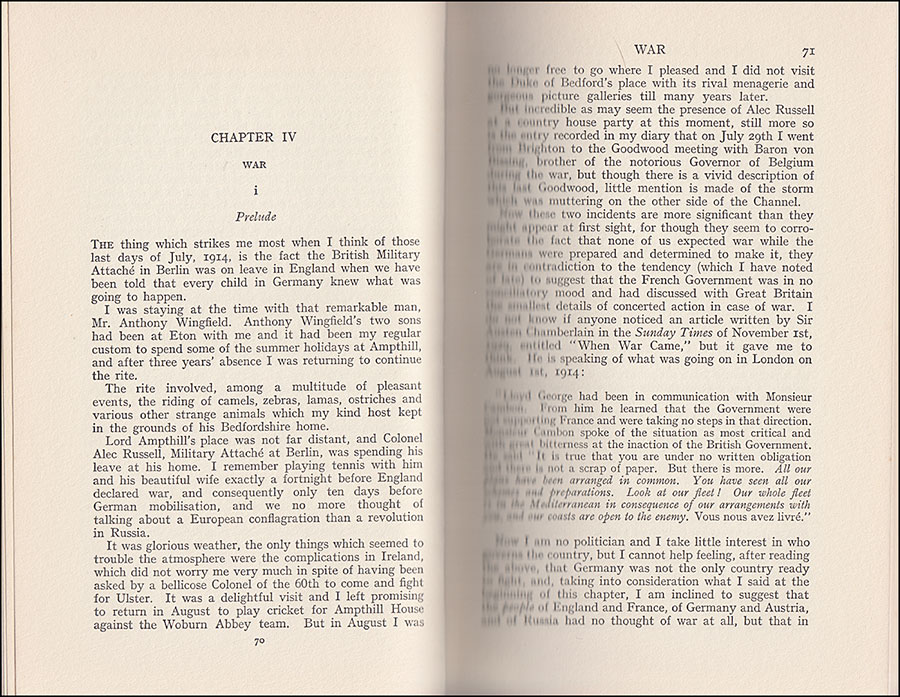
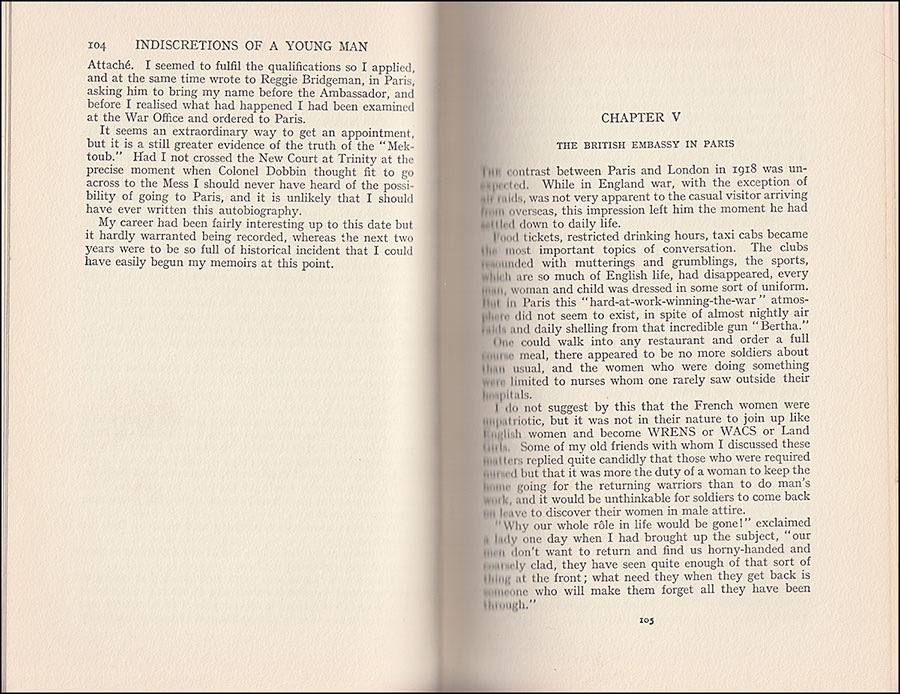
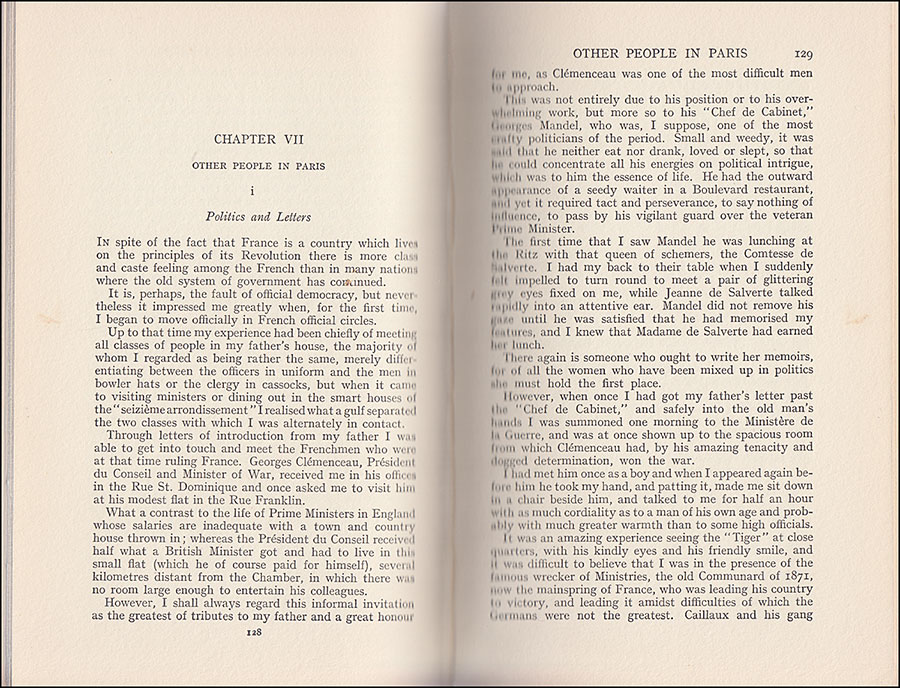
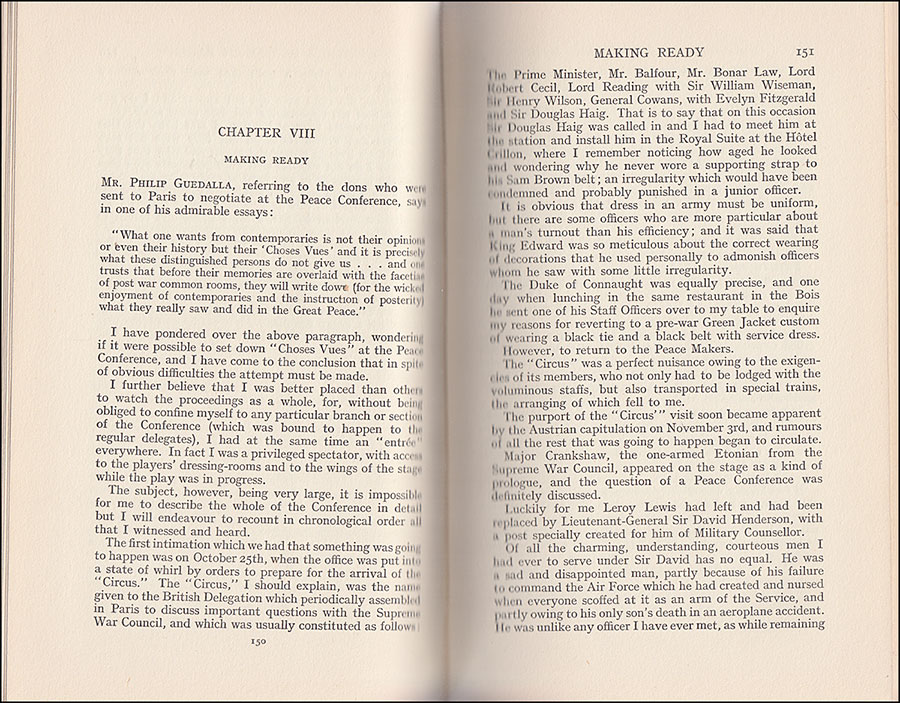
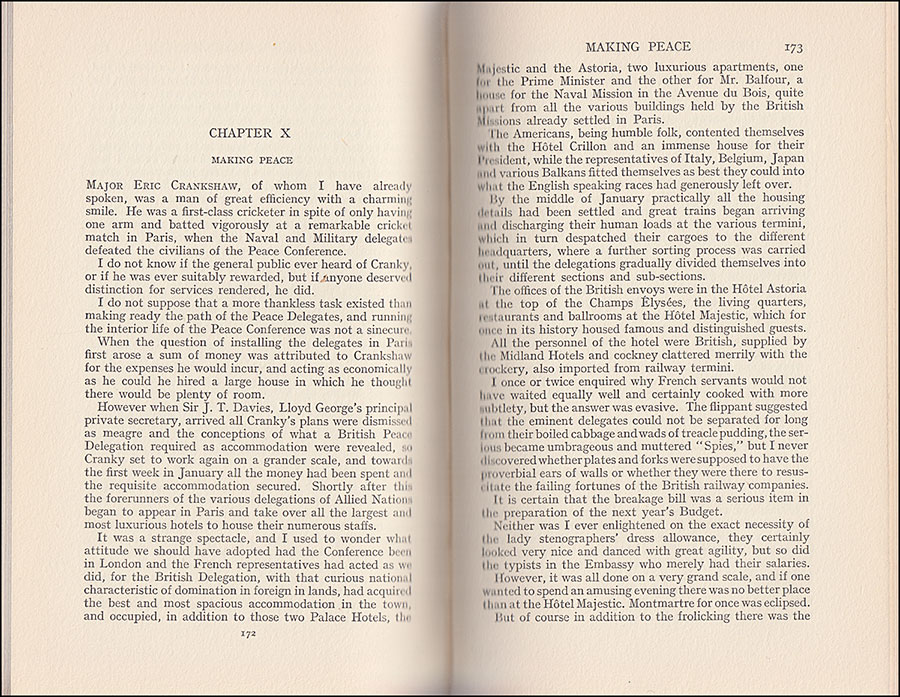
Internally,
a previous owner has applied masking tape along the top and
bottom edges as a strengthening measure and this can be seen
in the final image below:
|
|
|
|
|

|
|
|
|
U.K. buyers:
|
To estimate the
“packed
weight” each book is first weighed and then
an additional amount of 150 grams is added to allow for the packaging
material (all
books are securely wrapped and posted in a cardboard book-mailer).
The weight of the book and packaging is then rounded up to the
nearest hundred grams to arrive at the postage figure. I make no charge for packaging materials and
do not seek to profit
from postage and packaging. Postage can be combined for multiple purchases. |
Packed weight of this item : approximately 750 grams
|
Postage and payment options to U.K. addresses: |
-
Details of the various postage options can be obtained by selecting
the “Postage and payments” option at the head of this
listing (above).
-
Payment can be made by: debit card, credit
card (Visa or MasterCard, but not Amex), cheque (payable to
"G Miller", please), or PayPal.
-
Please contact me with name,
address and payment details within seven days of the end of the
listing;
otherwise I reserve the right to cancel the sale and re-list the item.
-
Finally, this should be an
enjoyable experience for both the buyer and seller and I hope
you will find me very easy to deal with. If you have a question
or query about any aspect (postage, payment, delivery options
and so on), please do not hesitate to contact me.
|
|
|
|
|
|
|
International
buyers:
|
To estimate the
“packed
weight” each book is first weighed and then
an additional amount of 150 grams is added to allow for the packaging
material (all
books are securely wrapped and posted in a cardboard book-mailer).
The weight of the book and packaging is then rounded up to the
nearest hundred grams to arrive at the shipping figure.
I make no charge for packaging materials and do not
seek to profit
from shipping and handling.
Shipping can
usually be combined for multiple purchases
(to a
maximum
of 5 kilograms in any one parcel with the exception of Canada, where
the limit is 2 kilograms). |
Packed weight of this item : approximately 750 grams
| International Shipping options: |
Details of the postage options
to various countries (via Air Mail) can be obtained by selecting
the “Postage and payments” option at the head of this listing
(above) and then selecting your country of residence from the drop-down
list. For destinations not shown or other requirements, please contact me before buying.
Due to the
extreme length of time now taken for deliveries, surface mail is no longer
a viable option and I am unable to offer it even in the case of heavy items.
I am afraid that I cannot make any exceptions to this rule.
|
Payment options for international buyers: |
-
Payment can be made by: credit card (Visa
or MasterCard, but not Amex) or PayPal. I can also accept a cheque in GBP [British
Pounds Sterling] but only if drawn on a major British bank.
-
Regretfully, due to extremely
high conversion charges, I CANNOT accept foreign currency : all payments
must be made in GBP [British Pounds Sterling]. This can be accomplished easily
using a credit card, which I am able to accept as I have a separate,
well-established business, or PayPal.
-
Please contact me with your name and address and payment details within
seven days of the end of the listing; otherwise I reserve the right to
cancel the sale and re-list the item.
-
Finally, this should be an enjoyable experience for
both the buyer and seller and I hope you will find me very easy to deal
with. If you have a question or query about any aspect (shipping,
payment, delivery options and so on), please do not hesitate to contact
me.
Prospective international
buyers should ensure that they are able to provide credit card details or
pay by PayPal within 7 days from the end of the listing (or inform me that
they will be sending a cheque in GBP drawn on a major British bank). Thank you.
|
|
|
|
|
|
|

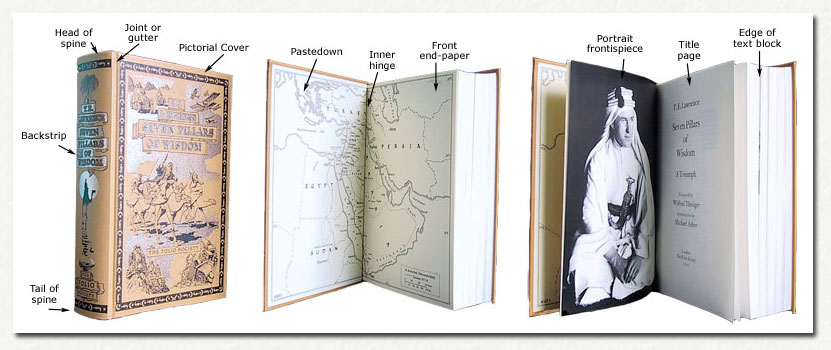
(please note that the
book shown is for illustrative purposes only and forms no part of this
listing)
Book dimensions are given in
inches, to the nearest quarter-inch, in the format width x height.
Please
note that, to differentiate them from soft-covers and paperbacks, modern
hardbacks are still invariably described as being ‘cloth’ when they are, in
fact, predominantly bound in paper-covered boards pressed to resemble cloth. |
|
|
|
|
|
|
Fine Books for Fine Minds |
I value your custom (and my
feedback rating) but I am also a bibliophile : I want books to arrive in the
same condition in which they were dispatched. For this reason, all books are
securely wrapped in tissue and a protective covering and are
then posted in a cardboard container. If any book is
significantly not as
described, I will offer a full refund. Unless the
size of the book precludes this, hardback books with a dust-jacket are
usually provided with a clear film protective cover, while
hardback books without a dust-jacket are usually provided with a rigid clear cover.
The Royal Mail, in my experience, offers an excellent service, but things
can occasionally go wrong.
However, I believe it is my responsibility to guarantee delivery.
If any book is lost or damaged in transit, I will offer a full refund.
Thank you for looking.
|
|
|
|
|
|
|
Please also
view my other listings for
a range of interesting books
and feel free to contact me if you require any additional information

Design and content © Geoffrey Miller |
|
|
|
|
|
|