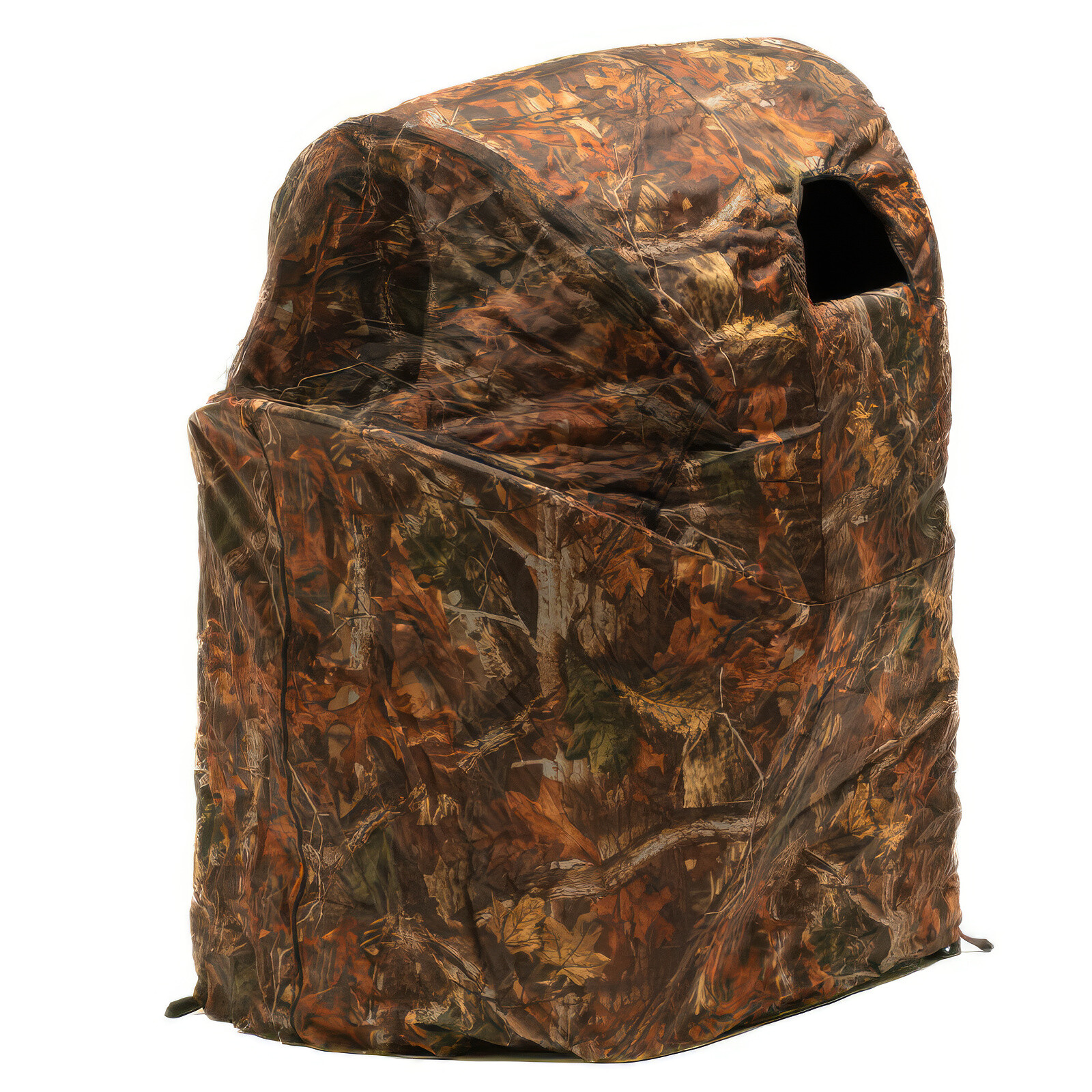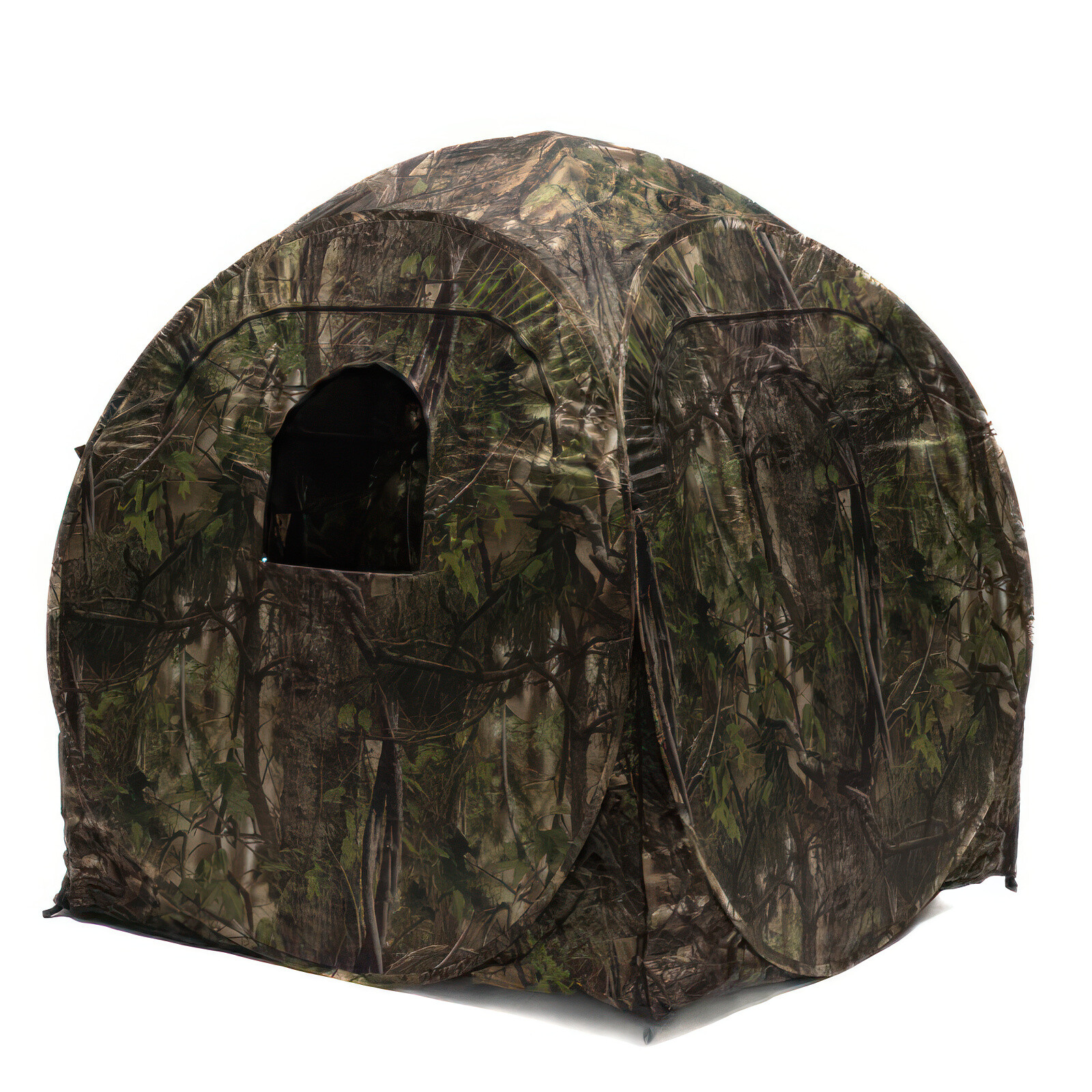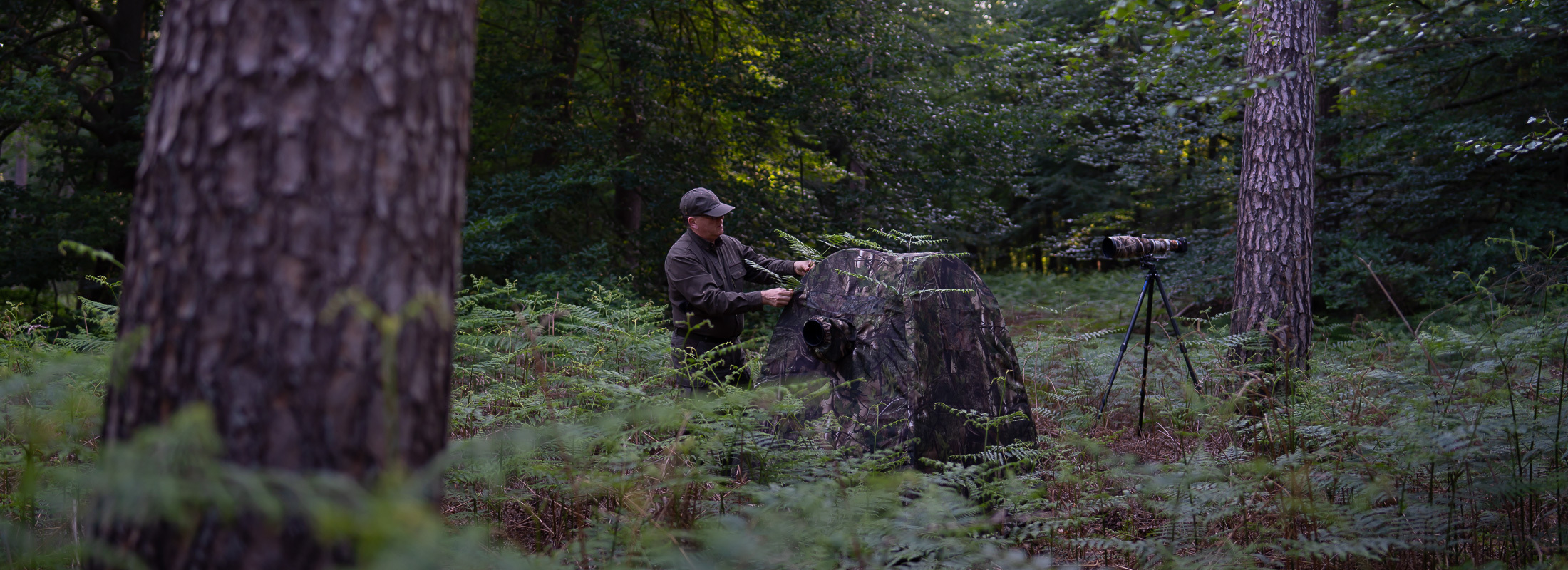
Buteo Photo Gear Hide Tent Buteo Mark III (Brown)
- Several improvements over the Buteo Mark II, see description below.
- Room for yourself, chair, photo equipment, and backpack.
- Keep yourself and your equipment perfectly dry.
- Sturdy construction.
- No noise from the tent, invisible from within the tent.
- Waterproof with a hydrostatic head of 2,500 mm.
- Perfectly camouflages you and your equipment with 4 different camouflage patterns.
- Perfect new window and snoot/lens cover system.
Designed by Nature Photographers for Nature Photographers
The Buteo Mark III is the latest version of our one-person hide tent. We carefully examined possible improvements and closely followed the feedback from many users and ambassadors of this mammal and bird hide. Thanks to some clever applications, the Buteo Mark III is much more resistant to precipitation, keeps you perfectly dry in "bad" weather, and offers better photo and viewing windows.
The Tent's Exterior
- Smarter applications make the tent much more resistant to moisture from precipitation:
- There is an additional front protective roof that prevents precipitation from entering through the insect net and also better protects your lens from rain.
In addition to providing rain protection, this hood also acts as sun protection, shading the photo window with your lens and making it less noticeable.
This hood can be folded down when not in use or if not needed. This is also useful when setting up the tent for an extended period, as it makes the tent less conspicuous and less wind-sensitive. - Improved roof design to prevent water accumulation on the roof.
- 8 pegs: Longer and stronger than previous versions. 18 cm long, black aluminum, triangular shape.
- Using (thicker) cords on all zipper sliders and the absence of Velcro prevents disturbing noises.
- All windows are closable with a zipper, ensuring no windows allow water to enter easily.
- Buteo Photo Gear optionally offers:
- A matching snoot/lens cover (see below).
- An additional rain cover (see below).
- A matching groundsheet (see below).
The Tent's Interior
- All windows and insect nets can also be operated from the inside.
- Ropes and pockets (storage pockets and pockets for the roof poles) inside the hide are in lighter colors to make them easily visible in the dark.
- Small fiberglass poles on the inside of the roof keep it round and allow water to drain.
- Label with instructions.
Photo and Viewing Windows
- All photo windows are much wider than before, at 40x36 cm (W x H). The photo windows also double as viewing windows (upper part), and are therefore much wider than in the Buteo Mark II. There are no longer small, separate viewing windows like in the previous version.
A two-sided zipper allows you to adjust the viewing window to your desired size. - All windows are fully closable with high-quality zippers, allowing them to be waterproof. (Operable from both inside and outside).
- No Velcro is used, so there are no disturbing noises.
- The insect nets in the windows consist of 2 overlapping parts in the center, with elastic to securely enclose your lens.
- These insect nets are attached with a zipper to the tent fabric, so you can fully open the tent if desired, or if you want to use a snoot as an alternative photo window (see snoot description below).
- The insect nets are alternately positioned vertically or horizontally.
- The advantage of vertical positioning is that there is more height range, allowing you to adjust your lens height, which is also helpful for taller or shorter people.
The insect nets at the front are vertical. - The advantage of horizontal positioning is that it's easier to pan left and right, especially for filmmakers.
The insect nets on the left and right sides are horizontal.
- Photo windows at 3 alternating heights distributed over 3 sides.
- In rainy weather, it is even possible to close the outer fabric of the front photo windows and zip it around the lens in the center, so the tent remains sealed, but you can still take photos (see photos).
- You can use the sides that you’re not photographing through as viewing windows by partially opening the zipper, adjusting the size as you wish.
Carrying Bag
- The strap of the carrying/folding bag is longer (and adjustable), making it easier to carry.
- Separate compartment on top of the bag for accessories such as pegs, guy ropes, etc.
Accessories (optional):
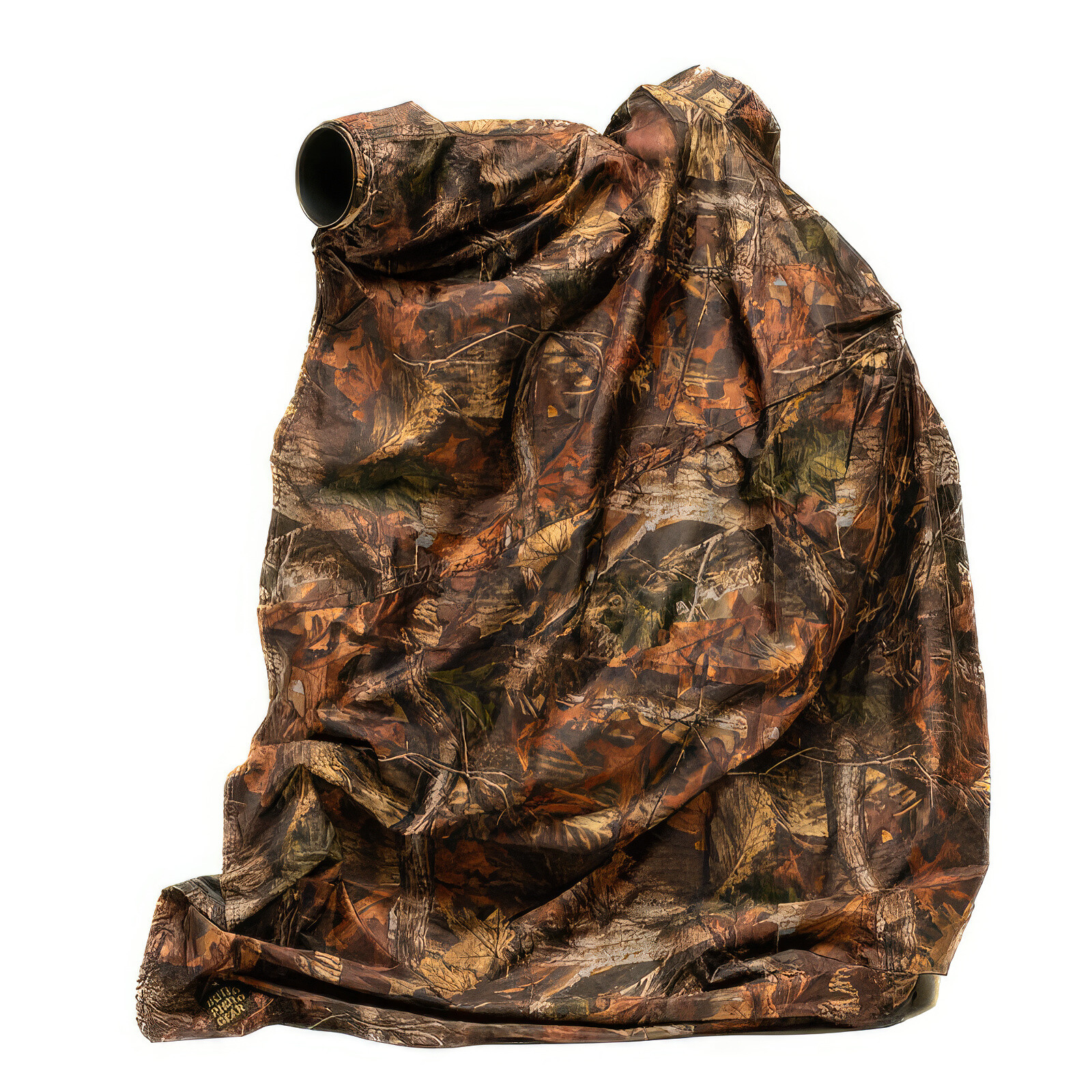
Snoot / Lens Cover:
Buteo Photo Gear offers an optional matching snoot/lens cover as a replacement for the original photo window. The snoot provides additional camouflage for your lens with the same waterproof fabric and pattern as the tent, also protecting it from rain, snow, and dust. Another advantage is that your hands are less visible when operating the camera. The snoot fits perfectly in each photo window, can be zipped up easily, and has its own viewing window with a fixed insect net. This window can also be partially or fully closed on the inside and adjusted in size with a zipper operable from either side. The larger insect net inside the tent can be unzipped when using the snoot, or used as is, allowing your lens to pass through. This way, you have two layers of insect protection. During bad weather, you can use the external polyester cover with a zipper that encloses the lens for maximum protection from the elements.
Rain Cover
An additional rain cover can make the Mark III even more watertight. Ideal for long-term setups or for ensuring no moisture seeps through the roof, it provides an additional layer of 2,500 mm hydrostatic waterproof polyester. It fits directly over the roof and secures easily at four corners with hooks.
Ground Sheet
The ground sheet used with the previous version is also compatible with the Mark III. It measures 115x115 cm, made from 0.4 mm thick PVC fabric (Oxford polyester) with a 10,000 mm water column for optimal waterproofing.
Setup and Preparation:
It’s beneficial to visit a nature area in advance and plan accordingly for targeted photography. Make use of the environment as much as possible; if possible, set up the tent near or under existing vegetation so that it blends in naturally. For best results, set up one or two days in advance, allowing animals to acclimate. The hide can be secured with the supplied stakes and guy lines, though this is often unnecessary.
The Mark III also allows for additional camouflage, such as branches, leaves, or reeds, which can be attached with the provided cords. Properly camouflaging your photo hide helps it integrate seamlessly with the surroundings. You may also consider using an additional camouflage net, but make sure you maintain a clear view for your camera.
The Mark III is suitable for short-term use (up to several months). Over long exposure to direct sunlight, slight fading may occur. However, in rainy conditions, you stay dry. The rain guards, the ability to seal everything tightly (while still photographing), and the optional additional rain cover make this tent more weatherproof than ever. The tent material itself is made from durable, waterproof polyester (150D with a 2,500 mm water column) for long-lasting performance. Note that weatherproofing may slightly diminish if the tent remains outdoors for extended periods.
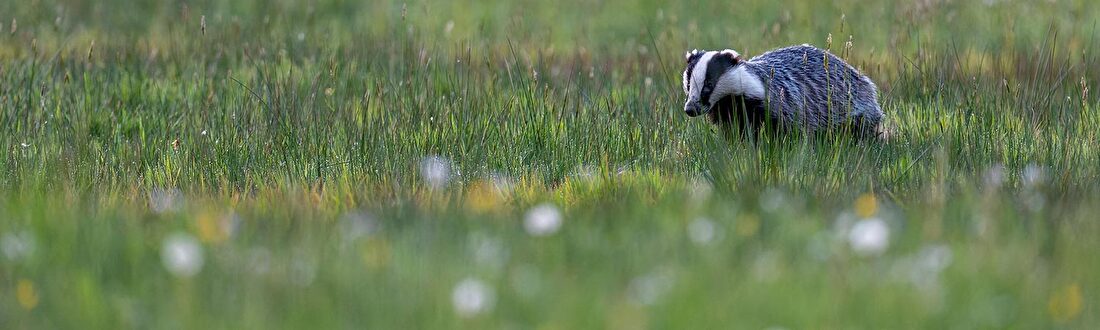
Shooting from the Hide
The spacious entrance features a quality zipper, stays neatly to the side when opened, and includes an insect net with the same camouflage print. This keeps the tent camouflaged even with the door slightly open. Inside, it’s very dark thanks to the black interior coating. However, the zipper cords, storage edges, and "tunnels" for the fiberglass rods in the roof are highlighted for visibility, even in low light.
The photo and observation windows are placed at three different levels:
- Two on the front side (at eye level).
- A wider window with an insect net on the left side, which contains a standard photo window. A low-level window on the lower left allows for low-angle shots.
- Two additional eye-level photo windows on the right, 10 cm lower than the front windows.
Each photo window includes an insect net with two overlapping sections, secured with an elastic band to snugly enclose your lens. During rain, you can close the outer net and pass your lens through a zippered opening for continued photography, fully protected from the elements.
All insect nets in these windows can be opened partially or completely to adjust the observation window size as needed. The wide windows offer a perfect view outside, and similar options are available on the left and right sides for an unobstructed view. A small waterproof observation window is located in the back door.
The photo hide provides ample space for seating, camera tripods, and storage bags. A storage compartment at the front is ideal for small items.
Standard Delivery
- Mark III Brown Camo Tent
- Carrying Bag
- Fiberglass Tent Poles
- 8 Pegs, 18 cm long, black aluminum
- Guy Lines
Optional Accessories
- Additional Rain Cover with Storage Bag
- Brown Snoot/Lens Cover
- Replacement Storage Bag with 8 Pegs and Guy Lines
- Replacement Fiberglass Poles
- Replacement Carry Bag for Tent
- Aquila Ground Sheet
Video
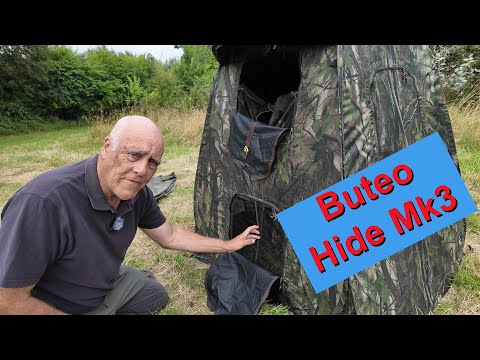 The Mk 3 Photo Hide for one person and the Aquila two person hide. The video opens in a new window. |
Technical Specifications
| Specification | Description |
|---|
| Capacity | Single-person tent |
| Pattern | See title/description |
| Interior Design | Black coated |
| Frame Material | Spring steel + fiberglass |
| Construction | Spring steel construction |
| Tent Length | 115 cm |
| Tent Width | 115 cm |
| Tent Height | 150 cm |
| Total Weight | 3.4 kg |
| Weight of Tent Without Accessories | 2.9 kg |
| Tent Material | Polyester 150D |
| Waterproof Rating | Hydrostatic head 2,500 mm |
| Front Camera Windows | 2x at 103 cm & 36 cm (middle window), size 40x36 cm |
| Right Camera Window | 1x at 93 cm (middle window), size 40x36 cm |
| Left Camera Window | 1x at 93 cm (middle window), size 40x36 cm |
| Front Viewing Windows | 2x, above the photo window |
| Right Viewing Window | 1x, above the photo window |
| Left Viewing Window | 1x, above the photo window |
| Rear Window | 1x, at eye level |
| Included | Photo tent, tent pegs, carrying bag, folding instructions |
In the Box
- 1x Buteo Photo Gear camouflage tent Buteo Mark III (brown)
- 1x transport bag
- 1x set of pegs
- » photoshop-becker.de « SKU 15962 | EUR 189,00