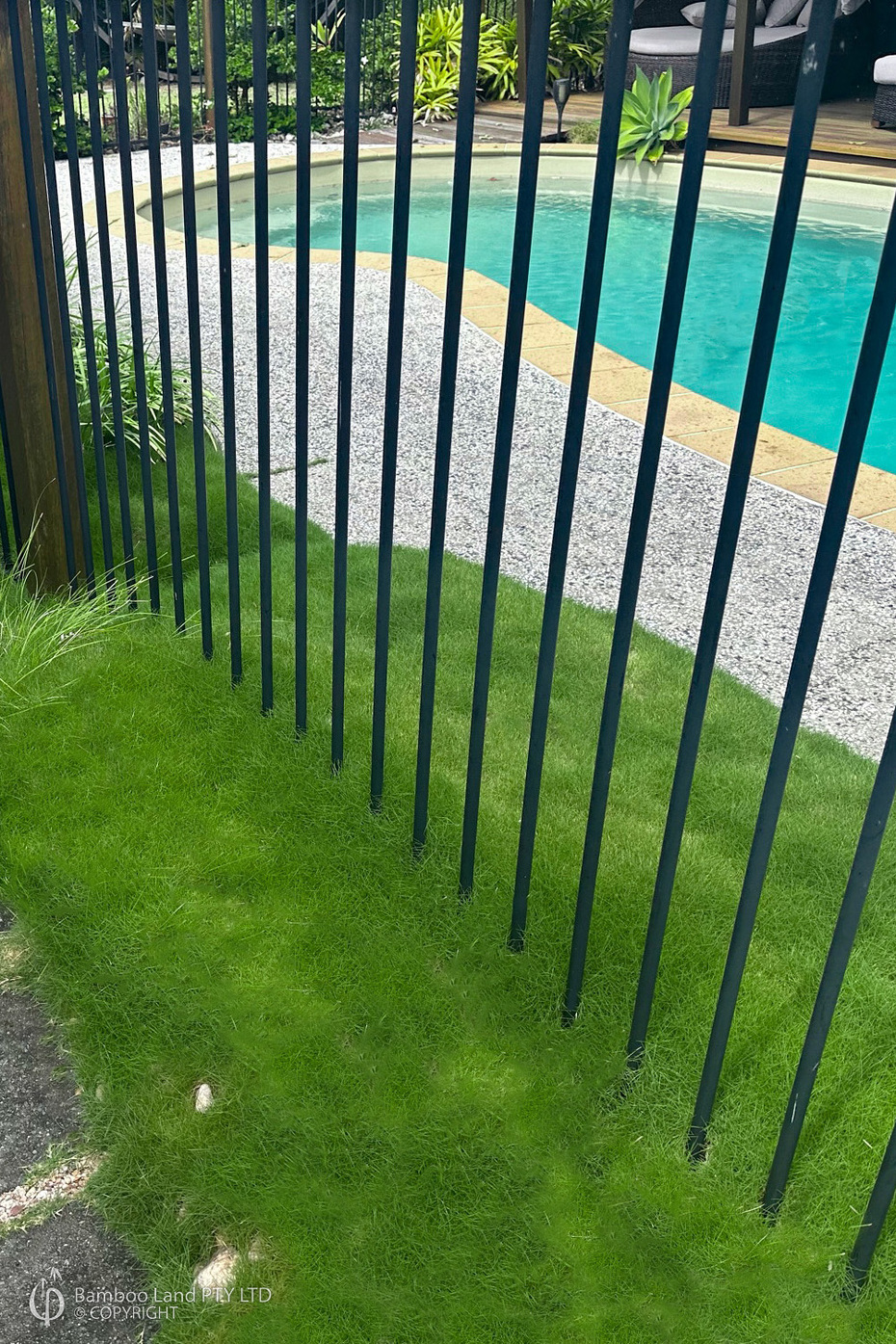
Zoysia tenuifolia Korean Grass
A fantastic fine leafed grass which makes excellent ground covers, especially around rocks and ponds, as well as plantings between stepping stones. Its low growing growth habit and sometimes wavy appearance makes it a great architectural plant.
Zoysia grass is a warm season grass that is common in the southern region of the United States. In the northern areas of the U.S., its growing season is much shorter than bluegrass or fescue, but it still found a place in some yards because its dense carpet prevented most weed growth, and its aggressive growth pattern, although slow, let it spread and take over undesirable weeds and grasses. Due to its thick canopy, Zenith® does require a high amount of mowing.
Zenith® zoysia grass uses less water than bluegrass or fescue and in general requires less maintenance. Since turf-type buffalograss was developed, the use of zoysia in the north has declined but there is still a demand for it, mainly for repairing older zoysia lawns. Zenith® is also an improved variety with excellent color and exhibits good cold tolerance.
Zoysia grass is a warm season grass that is common in the southern region of the United States. In the northern areas of the U.S., its growing season is much shorter than bluegrass or fescue, but it still found a place in some yards because its dense carpet prevented most weed growth, and its aggressive growth pattern, although slow, let it spread and take over undesirable weeds and grasses. Due to its thick canopy, Zenith® does require a high amount of mowing.
Zenith® zoysia grass uses less water than bluegrass or fescue and in general requires less maintenance. Since turf-type buffalograss was developed, the use of zoysia in the north has declined but there is still a demand for it, mainly for repairing older zoysia lawns. Zenith® is also an improved variety with excellent color and exhibits good cold tolerance.
Zoysia grass is a warm season grass that is common in the southern region of the United States. In the northern areas of the U.S., its growing season is much shorter than bluegrass or fescue, but it still found a place in some yards because its dense carpet prevented most weed growth, and its aggressive growth pattern, although slow, let it spread and take over undesirable weeds and grasses. Due to its thick canopy, Zenith® does require a high amount of mowing.
Zenith® zoysia grass uses less water than bluegrass or fescue and in general requires less maintenance. Since turf-type buffalograss was developed, the use of zoysia in the north has declined but there is still a demand for it, mainly for repairing older zoysia lawns. Zenith® is also an improved variety with excellent color and exhibits good cold tolerance.